
Zinc,
does it really help with Prostate, sperm, and male reproduction?
research showsCorrecting zinc deficiency is a separate nutritional issue. In general men without confirmed deficiency, the large Steiner 2020 JAMA RCT (2,370 men) found that folic acid 5 mg plus zinc 30 mg supplementation did not improve live birth rate (34% vs 35%) or semen quality, and DNA fragmentation was higher in the supplemented group.
ads claimAdvertisements mention 'prostate,' 'sperm count,' 'virility,' and 'male vitality.' Actual high-quality clinical evidence needs to distinguish deficiency correction from general efficacy claims.
Useful facts when choosing a product
- The recommended intake for adult men is 11 mg/day, and the U.S. UL is 40 mg/day.
- Long-term high doses can inhibit copper absorption and cause copper deficiency, anemia, neurologic symptoms, gastrointestinal symptoms, and reduced HDL.
- It is difficult to view this as evidence for prostate-cancer prevention or BPH improvement.
- This evaluated only male reproduction and prostate claims, separately from the existing 042 immunity judgment.
What the research actually shows
The Steiner 2020 JAMA RCT administered folic acid 5 mg plus zinc 30 mg or placebo to 2,370 men in couples undergoing infertility treatment, and the live birth rate did not differ at 34% vs 35%. Semen quality also did not improve, and sperm DNA fragmentation was higher in the supplemented group. Small meta-analyses report signals of improvement in surrogate markers such as sperm concentration and motility, but pregnancy and birth outcomes remain uncertain. For prostate-health claims, observational signals such as Leitzmann 2003 reporting increased risk of advanced prostate cancer with long-term high-dose zinc supplementation are more conspicuous than RCT efficacy evidence.
Why this is classified as D (32)
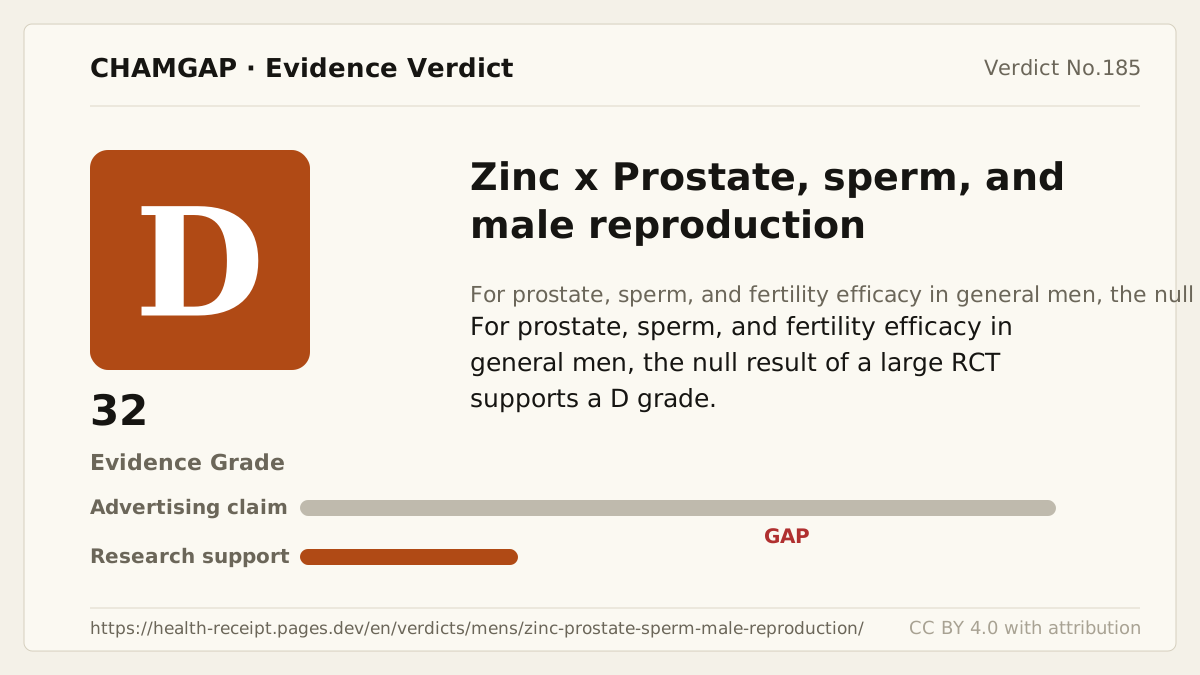
For general male supplement efficacy, a large RCT did not confirm improvement in live birth rate or semen quality, so the grade is D, 32 points.
Counterpoint. In individuals with confirmed blood zinc deficiency, the effects of deficiency correction should be separated from general supplement advertising efficacy.
Rejudgment record. Draft — For general male supplement efficacy, a large RCT did not confirm improvement in live birth rate or semen quality, so the grade is D, 32 points.
Cross-check — Codex and Claude
Evidence Table
| Study | Design | Sample | Funding | Endpoint | Result | Weight |
|---|---|---|---|---|---|---|
| Steiner AZ et al. 2020 | Large randomized placebo-controlled trial | 2,370 | NIH | Live birth rate and semen quality | Folic acid plus zinc did not improve live birth rate or semen quality. | Core |
| Salas-Huetos A et al. 2018/2019 | Systematic review and meta-analysis | Academic | Semen surrogate markers | Some micronutrient combinations showed signals of improved semen markers, but the number and quality of studies were limited. | Supporting | |
| Leitzmann MF et al. 2003 | Prospective observational study | Health Professionals Follow-up Study | Public/academic | Prostate cancer risk | There was a signal linking long-term high-dose zinc supplementation with increased risk of advanced prostate cancer. | Safety |
Receipt — 4 References
All 4 cited sources were verified for existence at the original page (as of 2026-07-10).
Reviewed and approved: Chamgap Editorial Team · Approval date: 2026-07-10 · Corrections: none
Cite this verdict
[Chamgap] Zinc × Prostate, Sperm, and Male Reproduction — Evidence Grade D·32. 4 cited sources checked. Source: https://chamgap.com/en/verdicts/mens/zinc-prostate-sperm-male-reproduction/ · CC BY 4.0CC BY 4.0 — free to use with attribution; do not distort grades, numbers, or verdict meaning.
What this document does and does not do
Chamgap is an information source. It reports what research has and has not confirmed; it does not tell readers what to take or buy. That decision belongs to readers and, when needed, medical or legal professionals. This verdict reflects literature available up to the search date and may change as new research appears. Nothing here is medical advice.