
Loxoprofen sodium hydrogel transdermal patch,
does it really help with Noninferior improvement of myalgia symptoms versus oral loxoprofen?
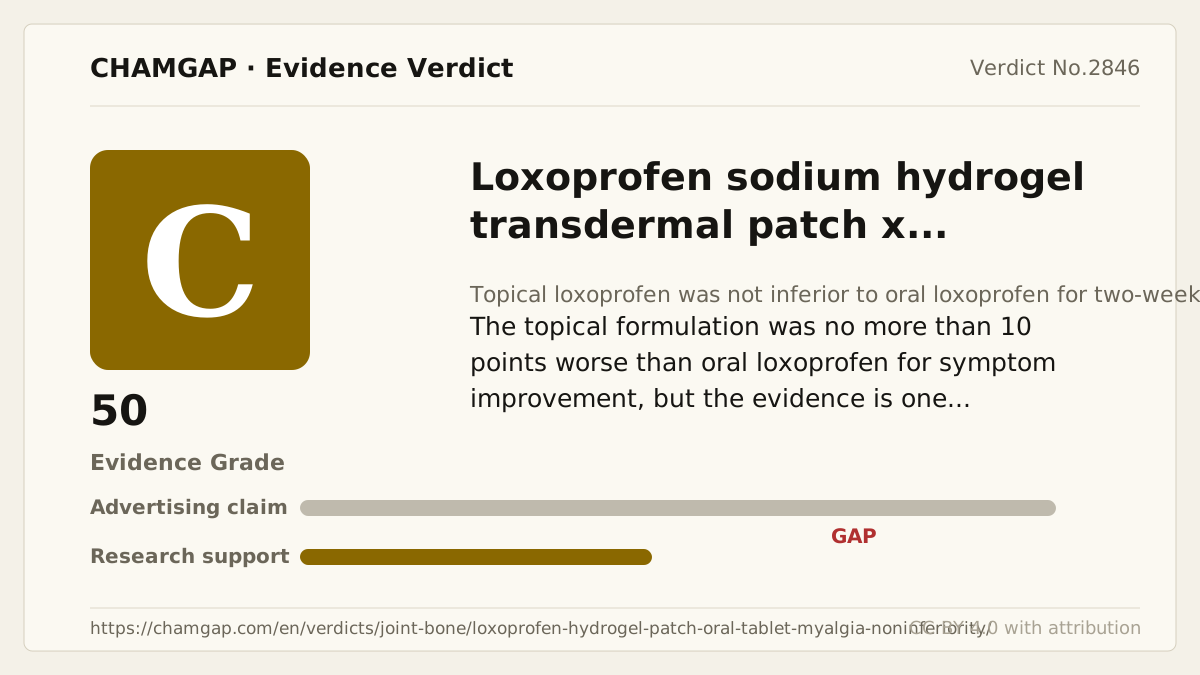
research showsThe grade is C. In a 182-participant randomized trial, at least 50% improvement in a four-symptom composite occurred in 81.3% with the patch and 72.2% with oral loxoprofen at two weeks. The 95% CI for the 9.1-point difference had a lower bound of -3.1 points, above the prespecified -10-point noninferiority margin. The benefit is noninferiority, not superiority.
ads claimLoxoprofen patches and gels are readily available in Korean pharmacies, but this result means noninferior two-week symptom improvement. It does not establish superiority or prove lower gastrointestinal, renal, or cardiovascular harm.
Useful facts when choosing a product
- The patch delivered 100 mg once daily; oral loxoprofen was 60 mg three times daily.
- Local erythema and pruritus occurred, and topical delivery does not eliminate systemic NSAID risk.
- Unlike prior knee-osteoarthritis patch trials, this verdict asks about myalgia from varied causes versus oral loxoprofen.
What the research actually shows
Fifteen Chinese centers randomized 182 participants in a double-blind, double-dummy design; the full analysis set included 91 patch and 88 oral participants. The report stated, 'The cutoff value of a non-inferiority difference was set as -10%.' Limitation name: noninferiority design. Listed item: noninferiority design. Avoidability: avoidable - a superiority comparison could have been added. Limitation name: small study. Listed item: small study below 200 total - 182 randomized. Avoidability: avoidable - at least 200 participants could have been recruited. Limitation name: short duration. Listed item: shorter than 12 weeks - two weeks. Avoidability: avoidable - follow-up could have extended to 12 weeks for persistence and safety. Limitation name: active comparator only. Listed item: active comparator without placebo. Avoidability: avoidable - a placebo comparison could have been added while preserving standard care. Attrition was 7/182, 3.8%, below the 15% threshold. Funding and Acknowledgements twice state, 'The study was funded by Daiichi Sankyo Co., Ltd.' The paper declared no conflicts, and all listed authors had hospital affiliations; no company-employed author was identified.
Why this is classified as C (50)
The prespecified symptom noninferiority margin was met, but one manufacturer-funded trial with 182 participants, two weeks of follow-up, and four listed design limitations gives C with 50 points.
Counterpoint. Superiority was not established, and the pain-on-motion secondary endpoint crossed the -10-point noninferiority margin, 95% CI -12.2 to 10.9.
Rejudgment record. Cross-check applied — The prespecified -10-point symptom noninferiority margin was met, while manufacturer funding, 182 participants, two weeks, and active-control design limit confidence
| Endpoint | P | Patient-reported treatment goal - the symptom is the goal |
| Replication | R1 | Single confirmatory trial |
| Independence | I0 | Evidence comes only from manufacturer studies |
| Effect size | E+ | Meets the clinically important threshold |
The scoring table and the verdict agree (C).
Sub-claim grades by effect
This ingredient is marketed for several effects. A single overall grade blends strong and weak claims together, so each effect is graded separately here. The overall grade reflects the strongest disconfirming or core claim.
| Effect (sub-claim) | Grade | Basis |
|---|---|---|
| Noninferior overall myalgia symptom improvement versus oral tablets | C | Rates were 81.3% versus 72.2%, with a -3.1-point lower confidence bound. |
| Superior gastrointestinal safety versus oral tablets | D | The adverse-event difference was not significant, and safety superiority was not the primary endpoint. |
Cross-check — Codex and Claude
Evidence Table
| Study | Design | Sample | Funding | Endpoint | Result | Weight |
|---|---|---|---|---|---|---|
| Study 1 | Fifteen-center double-blind, double-dummy randomized active-controlled noninferiority trial | 60 | Funded by Daiichi Sankyo Co., Ltd.; authors declared no conflicts | Proportion with at least 50% improvement in the composite of pain, tenderness, pain on motion, and activity disability at two weeks | 81.3% versus 72.2%; difference 9.1 points, 95% CI -3.1 to 21.3; met the prespecified -10-point margin | Pivotal single manufacturer-funded noninferiority evidence |
Receipt — 1 References
All 1 cited sources were verified for existence at the original page (as of 2026-08-18).
Reviewed and approved: Chamgap Editorial Team · Approval date: 2026-08-18 · Corrections: none
Cite this verdict
[Chamgap] Loxoprofen Hydrogel Patch Is Noninferior to Oral Loxoprofen for Myalgia Symptom Improvement - Benefit — Evidence Grade C·50. 1 cited sources checked. Source: https://chamgap.com/en/verdicts/joint-bone/loxoprofen-hydrogel-patch-oral-tablet-myalgia-noninferiority/ · CC BY 4.0CC BY 4.0 — free to use with attribution; do not distort grades, numbers, or verdict meaning.
What this document does and does not do
Chamgap is an information source. It reports what research has and has not confirmed; it does not tell readers what to take or buy. That decision belongs to readers and, when needed, medical or legal professionals. This verdict reflects literature available up to the search date and may change as new research appears. Nothing here is medical advice.