
Plain adhesive incise drapes,
does it really help with Prevention of surgical-site infection?
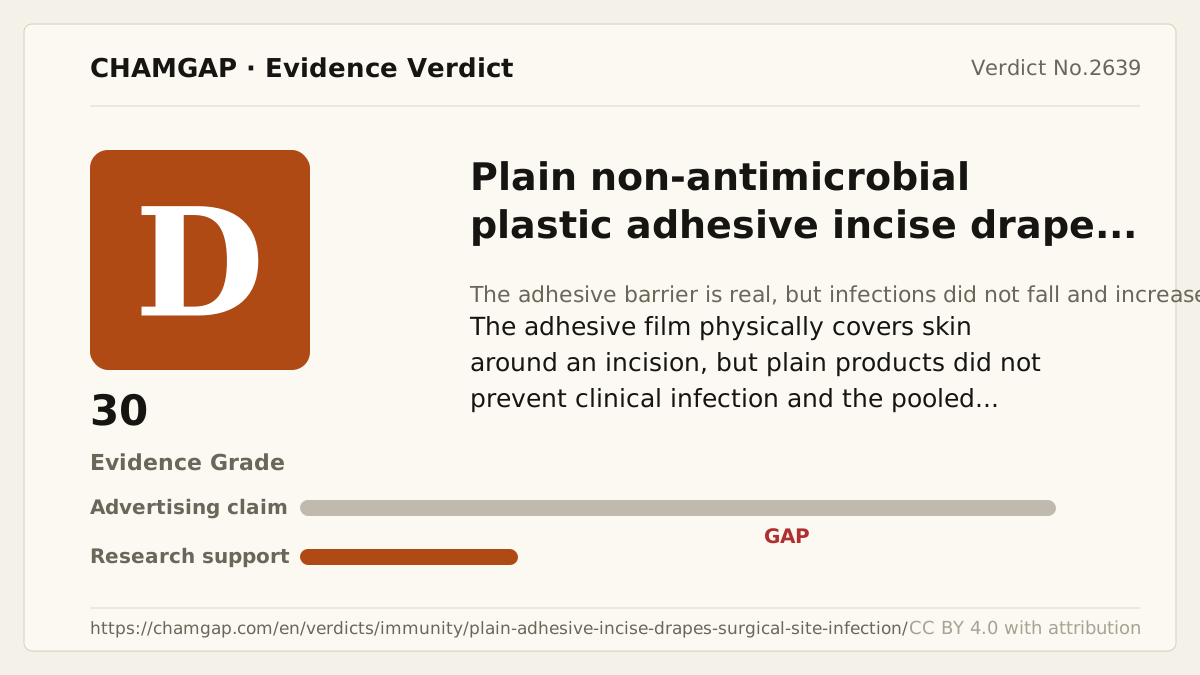
research showsThe grade is D with 30 points. Across five randomized trials and 3,082 participants, infection increased with plain drapes, RR 1.23 (95% CI 1.02 to 1.48). Harm was not independently confirmed in every trial, and most older trials did not adequately report concealment, blinded assessment, and analysis of all randomized participants.
ads claimCovering skin does not by itself establish reduced bacterial transfer or infection. Plain and iodine-impregnated drapes must not be conflated.
Useful facts when choosing a product
- This verdict covers plain adhesive plastic drapes without an antimicrobial agent and excludes iodine-impregnated products.
- Pooled infection rates were 13.7% versus 11.2%, RR 1.23 (1.02-1.48).
- The Cochrane estimate summarizes its five included trials and is not a sixth independent trial.
What the research actually shows
Webster and Alghamdi's 2015 Cochrane review pooled five trials and 3,082 participants, RR 1.23 (1.02-1.48), with no measured heterogeneity. Author teams were distinct: Jackson, Pollock, and Tindal; Psaila, Wheeler, and Crosby; Cordtz and colleagues; Chiu, Lau, Fung, and colleagues; and Ward, Jennings, Potgieter, and Lombard. Results differed, however, and individual intervals did not repeatedly confirm harm. Ward randomized 620 and analyzed 603, 305 versus 298, with 34 versus 30 infections and P=.6933. It used a randomization table, opaque envelopes, and blinded assessors, but excluded 17 people and followed participants for only five days. Most older trials did not clearly report concealment or blinded outcome assessment. Individual funding was usually unreported; the review disclosed university and NIHR support and no conflicts.
Why this is classified as D (30)
The pooled result showed more infection, but individual trials did not independently reproduce harm and older studies had multiple reporting flaws, giving D with 30 points.
Counterpoint. A physical adhesive barrier is real, but it did not translate into clinical infection prevention.
Rejudgment record. Cross-check applied — Verified all five author lists, pooled effect, heterogeneity, and bias in the Cochrane text and cross-checked Ward's randomized and analyzed counts and events
| Endpoint | H | Hard endpoint - actual events such as death |
| Replication | R1 | Single confirmatory trial |
| Independence | I1 | Mixed funding sources |
| Effect size | E- | Harm increased in the trials |
| Precision | C0 | The confidence interval leaves room for benefit |
The scoring table and the verdict agree (D).
Sub-claim grades by effect
This ingredient is marketed for several effects. A single overall grade blends strong and weak claims together, so each effect is graded separately here. The overall grade reflects the strongest disconfirming or core claim.
| Effect (sub-claim) | Grade | Basis |
|---|---|---|
| Prevention of surgical-site infection by plain adhesive drapes | D | The pooled estimate showed a significant increase rather than prevention. |
| Infection prevention by iodine-impregnated drapes | ? | This is a different intervention and was not judged here. |
Cross-check — Codex and Claude
Evidence Table
| Study | Design | Sample | Funding | Endpoint | Result | Weight |
|---|---|---|---|---|---|---|
| Webster J, Alghamdi A. Cochrane review 2015 | Systematic review of randomized trials | 3,082 | Internal QUT and Griffith support and external NIHR support; no conflicts | Surgical-site infection | RR 1.23 (1.02-1.48); measured heterogeneity 0%; 13.7% versus 11.2% | Pivotal pooled harm evidence |
| Study 2 | Randomized controlled trial | 298 | Not reported in the accessible record | Wound infection within five postoperative days | 34/305 versus 30/298, P=.6933 | Most recent individual null trial |
Receipt — 6 References
All 6 cited sources were verified for existence at the original page (as of 2026-08-15).
Reviewed and approved: Chamgap Editorial Team · Approval date: 2026-08-15 · Corrections: none
Cite this verdict
[Chamgap] Plain adhesive incise drapes x surgical-site infection — Evidence Grade D·30. 6 cited sources checked. Source: https://chamgap.com/en/verdicts/immunity/plain-adhesive-incise-drapes-surgical-site-infection/ · CC BY 4.0CC BY 4.0 — free to use with attribution; do not distort grades, numbers, or verdict meaning.
What this document does and does not do
Chamgap is an information source. It reports what research has and has not confirmed; it does not tell readers what to take or buy. That decision belongs to readers and, when needed, medical or legal professionals. This verdict reflects literature available up to the search date and may change as new research appears. Nothing here is medical advice.