
Peanut oral immunotherapy,
does it really help with Increased tolerated peanut-protein threshold during an oral food challenge while on treatment?
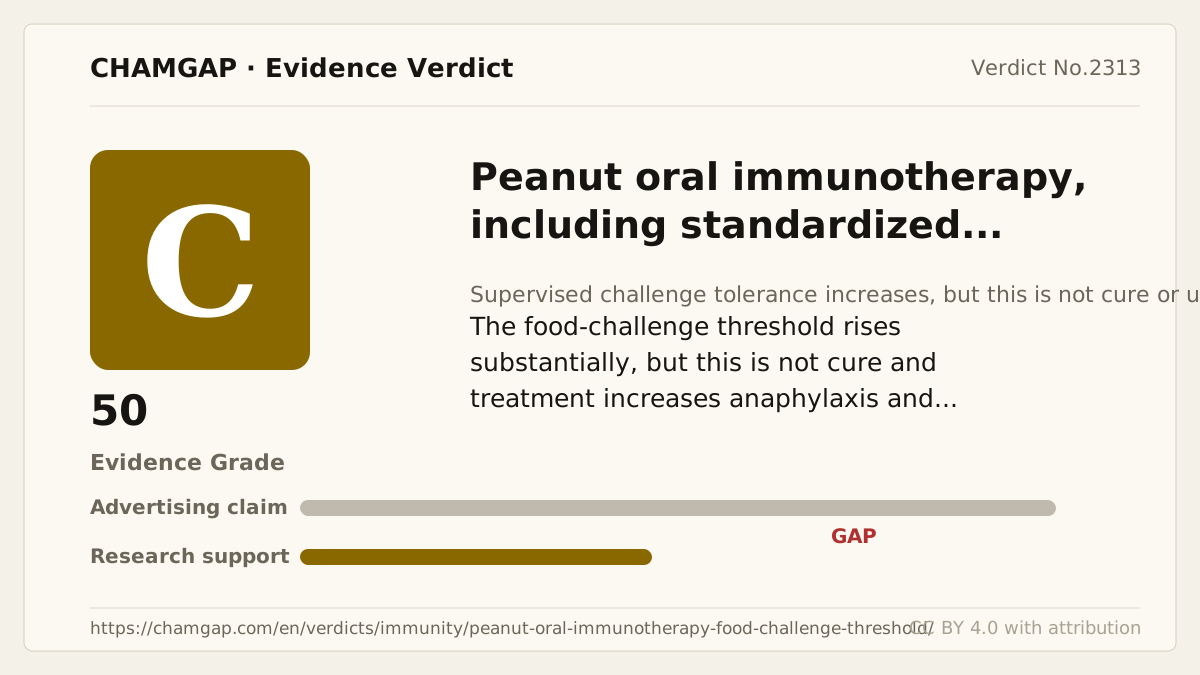
research showsThe grade is C with 50 points. In manufacturer-funded PALISADE, 496 participants aged 4 to 17 reacted to 100 mg or less at baseline. After about one year, 250/372 (67.2%) assigned AR101 versus 5/124 (4.0%) assigned placebo tolerated a single 600-mg peanut-protein dose. This is a supervised food-challenge surrogate, not cure or unrestricted eating. Across 12 trials and 1,041 participants, anaphylaxis occurred in about 22.2% versus 7.1%, and epinephrine use in about 8.2% versus 3.7%, both significantly higher with oral immunotherapy.
ads claimTolerating the equivalent of a few kernels at a scheduled supervised challenge does not mean cure, unrestricted daily peanut intake, or durable benefit after treatment stops. Verdict 1831 is A with 86 points for early introduction before allergy develops, a different claim from treating established allergy here.
Useful facts when choosing a product
- PALISADE used a 300-mg daily maintenance dose and judged tolerance of a single 600-mg challenge dose.
- Aimmune Therapeutics funded PALISADE and company employees were coauthors.
- Clinical reactivity can return after dose reduction or discontinuation, so ongoing dosing and specialist management are assumed.
What the research actually shows
PALISADE treated 551 participants aged 4 to 55, but the primary efficacy population was 496 aged 4 to 17, with 372 assigned AR101 and 124 placebo. Eligibility required dose-limiting symptoms at 100 mg or less of peanut protein at baseline. Participants up-dosed to 300 mg daily and maintained that dose for 24 weeks. A single 600-mg dose was tolerated by 67.2% versus 4.0%. The exit challenge was completed by 294/372 (79.0%) versus 115/124 (92.7%). Adverse-event withdrawal occurred in 43/372 (11.6%) versus 3/124 (2.4%), and severe adverse events occurred in 4.3% versus 0.8%. Aimmune Therapeutics funded the trial and company employees were coauthors. PACE synthesized 12 trials and 1,041 participants with median age 8.7 years; approximate absolute risks were 22.2% versus 7.1% for anaphylaxis and 8.2% versus 3.7% for epinephrine use. PALISADE and ARTEMIS shared company funding and personnel.
Why this is classified as C (50)
A large randomized trial established a substantial increase in challenge threshold, but the endpoint is a supervised surrogate, the large phase 3 evidence is concentrated in one manufacturer program, and treatment increases serious allergic reactions. The result is C with 50 points.
Counterpoint. Epinephrine use during the exit challenge was lower after active treatment, but across the whole treatment period the randomized evidence showed more anaphylaxis and epinephrine use. The different time windows should not be conflated.
Rejudgment record. Cross-check applied — Large increase in supervised food-challenge threshold, separated from cure claims and capped for a surrogate endpoint, with manufacturer concentration and treatment-period anaphylaxis considered
| Endpoint | S | Surrogate marker - laboratory or imaging measures |
| Replication | R1 | Single confirmatory trial |
| Independence | I1 | Mixed funding sources |
| Effect size | E+ | Meets the clinically important threshold |
The scoring table and the verdict agree (C).
Sub-claim grades by effect
This ingredient is marketed for several effects. A single overall grade blends strong and weak claims together, so each effect is graded separately here. The overall grade reflects the strongest disconfirming or core claim.
| Effect (sub-claim) | Grade | Basis |
|---|---|---|
| Higher food-challenge threshold while on treatment | C | PALISADE found 67.2% versus 4.0% tolerance at 600 mg. |
| Cure after treatment discontinuation | D | Only 8/60 in the discontinuation group maintained response through one year in POISED. |
| Prevention through early infant introduction | A | Verdict 1831 is A with 86 points for the separate prevention claim. |
Cross-check — Codex and Claude
Evidence Table
| Study | Design | Sample | Funding | Endpoint | Result | Weight |
|---|---|---|---|---|---|---|
| PALISADE Group. 2018 | Multinational double-blind randomized placebo-controlled phase 3 trial | 551 | Funded by Aimmune Therapeutics, with company employees as coauthors | Tolerance of a single dose of at least 600 mg at exit food challenge after about one year | 250/372 (67.2%) versus 5/124 (4.0%), difference 63.2 points (95% CI 53.0 to 73.3); adverse-event withdrawal 43/372 versus 3/124. | Pivotal large challenge-threshold trial |
| Study 2 | Systematic review and meta-analysis of randomized trials | 7 | Academic and manufacturer funding mixed across included trials | Food-challenge desensitization and treatment-period anaphylaxis and epinephrine use | Anaphylaxis RR 3.12 (1.76 to 5.55), risk difference 15.1 points; epinephrine RR 2.21 (1.27 to 3.83), risk difference 4.5 points. | Integrated efficacy and safety evidence |
| Study 3 | Double-blind randomized phase 2 discontinuation and dose-reduction trial | 60 | Public funding including the US NIH National Institute of Allergy and Infectious Diseases | Four-gram challenge at 13 weeks and one year after stopping following 4-g maintenance | 21/60 maintained response through 13 weeks and 8/60 through one year after stopping. | Supportive evidence on durability after stopping |
Receipt — 3 References
All 3 cited sources were verified for existence at the original page (as of 2026-08-06).
Reviewed and approved: Chamgap Editorial Team · Approval date: 2026-08-06 · Corrections: none
Cite this verdict
[Chamgap] Peanut oral immunotherapy x higher oral-food-challenge threshold — Evidence Grade C·50. 3 cited sources checked. Source: https://chamgap.com/en/verdicts/immunity/peanut-oral-immunotherapy-food-challenge-threshold/ · CC BY 4.0CC BY 4.0 — free to use with attribution; do not distort grades, numbers, or verdict meaning.
What this document does and does not do
Chamgap is an information source. It reports what research has and has not confirmed; it does not tell readers what to take or buy. That decision belongs to readers and, when needed, medical or legal professionals. This verdict reflects literature available up to the search date and may change as new research appears. Nothing here is medical advice.