
Peppermint oil,
does it really help with Irritable bowel syndrome (IBS)?
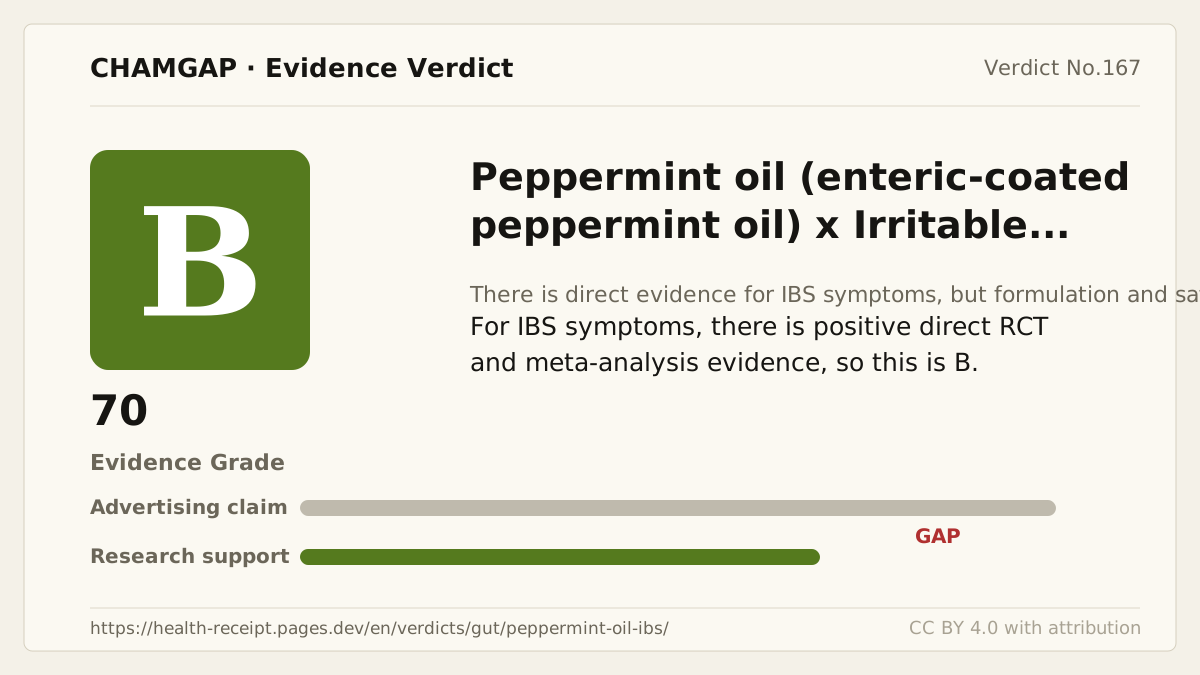
research showsEnteric-coated peppermint oil has RCT and meta-analysis evidence for reducing global IBS symptoms and abdominal pain. However, the studies are generally short-term and small, and the certainty of evidence is low or formulations differ by product, so this cannot be broadened to all abdominal pain or dyspepsia.
ads claimAdvertising mentions 'bloating,' 'abdominal pain,' 'irritable bowel,' 'intestinal spasms,' and 'digestive comfort.' The evidence is closest to short-term symptom improvement in people diagnosed with IBS.
Useful facts when choosing a product
- If enteric-coated capsules are chewed or broken, heartburn and reflux may increase.
- Caution is needed with gallstones or biliary tract disease, severe GERD, and during pregnancy or lactation.
- Evidence for pediatric IBS is more limited than for adults.
- It is difficult to apply the evidence for products and release technologies that showed effects directly to ordinary peppermint foods.
What the research actually shows
A 2008 BMJ meta-analysis reported that peppermint oil lowered the risk of persistent IBS symptoms. A 2014 J Clin Gastroenterol meta-analysis and a 2019 BMC meta-analysis also reported improvement in global IBS symptoms and abdominal pain. A 2022 Aliment Pharmacol Ther review concluded that it was superior to placebo, but the certainty of evidence was very low and adverse events may be more frequent.
Why this is classified as B (70)
Because there are direct symptom RCTs and meta-analyses, this is B. However, certainty of evidence, short-term studies, product differences, and adverse events are reflected by placing it in the middle of B, 70 points.
Counterpoint. When limited to IBS abdominal pain and global symptoms, the evidence is relatively direct for the supplement field.
Rejudgment record. Draft — Positive direct IBS symptom RCTs and meta-analyses; short-term, low certainty, product differences
Cross-check — Codex and Claude
Evidence Table
| Study | Design | Sample | Funding | Endpoint | Result | Weight |
|---|---|---|---|---|---|---|
| Ford AC et al. 2008 | Systematic review and meta-analysis | Academic/unknown | Persistent IBS symptoms | Peppermint oil lowered the risk of persistent IBS symptoms compared with placebo. | Core | |
| Khanna R et al. 2014 | Systematic review and meta-analysis | 726 | Unknown | Global IBS symptoms and abdominal pain | It was superior to placebo for improvement in global symptoms and abdominal pain. | Core |
| Ingrosso MR et al. 2022 | Systematic review and meta-analysis | Academic/unknown | IBS symptoms and adverse events | It was judged superior to placebo, but the certainty of evidence was very low and adverse events may be more frequent. | Core |
Receipt — 4 References
All 4 cited sources were verified for existence at the original page (as of 2026-07-09).
Reviewed and approved: Chamgap Editorial Team · Approval date: 2026-07-09 · Corrections: none
Cite this verdict
[Chamgap] Peppermint oil (enteric-coated) × irritable bowel syndrome (IBS) — Evidence Grade B·70. 4 cited sources checked. Source: https://chamgap.com/en/verdicts/gut/peppermint-oil-ibs/ · CC BY 4.0CC BY 4.0 — free to use with attribution; do not distort grades, numbers, or verdict meaning.
What this document does and does not do
Chamgap is an information source. It reports what research has and has not confirmed; it does not tell readers what to take or buy. That decision belongs to readers and, when needed, medical or legal professionals. This verdict reflects literature available up to the search date and may change as new research appears. Nothing here is medical advice.