
Chlorophyllin,
does it really help with Body-odor reduction and detoxification?
research showsCommercial liquid chlorophyll and the semisynthetic water-soluble chlorophyllin used in human trials are not the same substance. A 20-person crossover RCT of chlorophyllin was null versus placebo for general odor, supporting D for that subclaim. Reduction of an aflatoxin DNA adduct is a specific exposure surrogate rated C, while general detoxification has no direct human efficacy result and remains ungraded. The overall rating is C with 44 points.
ads claimAdvertisements broaden the target with 'natural internal deodorant,' 'removes sweat odor,' 'skin cleanse,' 'liver detox,' and 'waste removal.' Human data focus on urinary odor, rare trimethylaminuria, and aflatoxin adducts.
Useful facts when choosing a product
- Natural chlorophyll and semisynthetic water-soluble chlorophyllin differ; the human trials evaluated chlorophyllin.
- Some liquid chlorophyll products contain sodium copper chlorophyllin, but the label must be checked.
- Main research doses were 100 mg/day or 100 mg three times daily.
- Green stool, urine discoloration, and mild gastrointestinal symptoms can occur.
What the research actually shows
The Nahata 1983 RCT gave chlorophyllin 100 mg/day for two weeks to 20 incontinent older adults and found that urinary-odor reduction was not significant versus placebo. In the Yamazaki 2004 study, urinary TMA decreased in three patients with trimethylaminuria, but there was no control group. The Egner 2001 RCT assigned 180 adults with high aflatoxin exposure to 100 mg three times daily for four months and reduced median urinary AFB1-N7-guanine adducts by 55% versus placebo. This was a specific exposure biomarker rather than cancer incidence or a general detoxification outcome.
Why this is classified as C (44)
The positive randomized signal for a specific aflatoxin surrogate prevents a D rating. The negative odor RCT, trimethylaminuria sample of three, and absence of general detoxification clinical outcomes support C with 44 points.
Counterpoint. An aflatoxin DNA-adduct RCT and a biochemical signal in rare trimethylaminuria remain. This judgment does not extend those settings to ordinary body odor or systemic cleansing.
Rejudgment record. Reassessment (cross-check reflected) — A null general-odor RCT (D), a positive aflatoxin DNA-adduct surrogate (C), and no direct general-detoxification efficacy result (?) are separated by subclaim
Sub-claim grades by effect
This ingredient is marketed for several effects. A single overall grade blends strong and weak claims together, so each effect is graded separately here. The overall grade reflects the strongest disconfirming or core claim.
| Effect (sub-claim) | Grade | Basis |
|---|---|---|
| Reduction of general body odor | D | The urinary-odor RCT was not significant versus placebo, and no replicated trial tested sweat odor in generally healthy people. |
| Trimethylaminuria odor biomarker | C | Urinary TMA decreased in three patients, but there was no control group. |
| Reduction of an aflatoxin-exposure biomarker | C | A 180-person RCT reduced a DNA adduct, but this was a specific surrogate rather than cancer incidence or general toxin removal. |
| General detoxification | ? | No direct human efficacy trial assessed the body burden or clinical outcomes of unspecified toxins. |
Cross-check — Codex and Claude
Evidence Table
| Study | Design | Sample | Funding | Endpoint | Result | Weight |
|---|---|---|---|---|---|---|
| Nahata MC et al. 1983 | Randomized double-blind crossover placebo-controlled trial | n=20 | Non-U.S. government support | Urinary-odor intensity in catheterized incontinent older adults | Odor reduction was not statistically greater than with placebo. | Key |
| Yamazaki H et al. 2004 | Uncontrolled before-and-after human study | chlorophyllin n=3; total n=7 | Unknown | Urinary TMA in patients with trimethylaminuria | A signal of reduced urinary TMA was observed after copper chlorophyllin. | Supportive |
| Egner PA et al. 2001 | Randomized double-blind placebo-controlled trial | n=180 | Public support from the U.S. NCI and NIEHS | Urinary aflatoxin B1-N7-guanine DNA adducts | Four months of treatment reduced the median adduct level by 55% versus placebo. | Key |
Receipt — 3 References
All 3 cited sources were verified for existence at the original page (as of 2026-07-11).
Reviewed and approved: Chamgap Editorial Team · Approval date: 2026-07-11 · Corrections: none
Cite this verdict
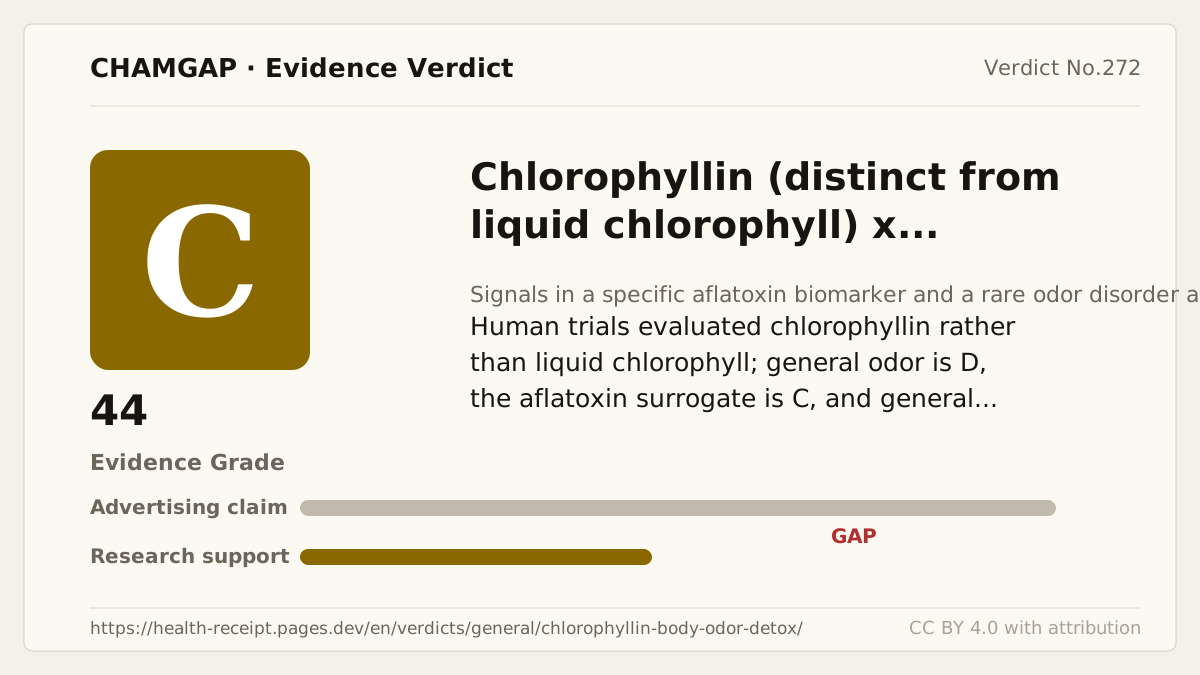
[Chamgap] Chlorophyllin x body-odor reduction and detoxification — Evidence Grade C·44. 3 cited sources checked. Source: https://chamgap.com/en/verdicts/general/chlorophyllin-body-odor-detox/ · CC BY 4.0CC BY 4.0 — free to use with attribution; do not distort grades, numbers, or verdict meaning.
What this document does and does not do
Chamgap is an information source. It reports what research has and has not confirmed; it does not tell readers what to take or buy. That decision belongs to readers and, when needed, medical or legal professionals. This verdict reflects literature available up to the search date and may change as new research appears. Nothing here is medical advice.