
Routine gastric residual-volume monitoring,
does it really help with Prevention of ventilator-associated pneumonia within 90 days?
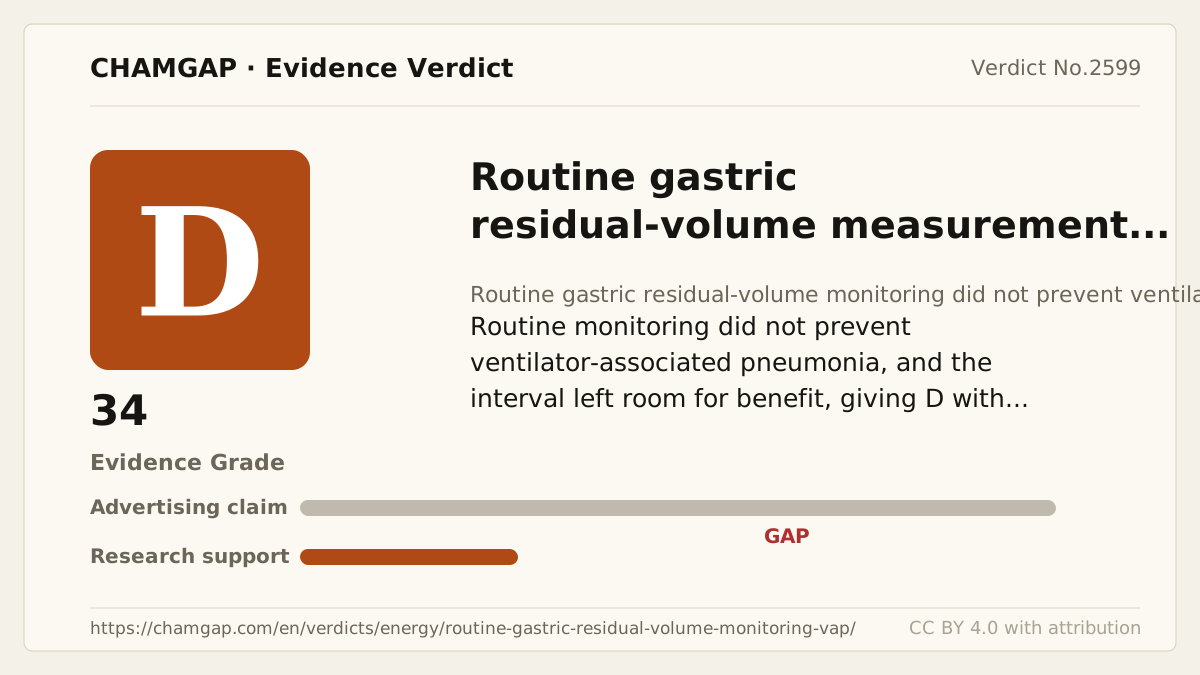
research showsThe grade is D with 34 points. NUTRIREA-1 randomized 452 patients and included 449 in the primary analysis after three withdrew consent. VAP occurred in 38/227 (16.7%) without monitoring versus 35/222 (15.8%) with routine monitoring, difference 0.9 percentage points (90% CI -4.8 to 6.7). Routine monitoring showed no preventive effect, but the interval still allowed about 4.8 points of benefit.
ads claimA syringe aspiration through the feeding tube truly measures residual volume. The trial did not show that routinely obtaining that number prevents pneumonia.
Useful facts when choosing a product
- The control group aspirated residual volume every six hours with a 50-mL syringe and treated values above 250 mL as feeding intolerance.
- The no-monitoring group used vomiting and regurgitation to identify intolerance; both groups followed the same early enteral-feeding protocol.
- A blinded committee adjudicated VAP from clinical, radiographic, and quantitative culture criteria.
What the research actually shows
Reignier and the Clinical Research in Intensive Care and Sepsis (CRICS) Group randomized 452 adults across nine French ICUs. The modified intention-to-treat analysis excluded only three consent withdrawals and included 449. An independent blinded committee adjudicated VAP using clinical, imaging, and quantitative culture data. NCT01137487 and the article matched on at least one VAP episode as the primary outcome. Centre Hospitalier Departemental de la Vendee sponsored the trial and was reported not to control data, analysis, or the manuscript. The open-label noninferiority design was retained as one limitation.
Why this is classified as D (34)
A publicly sponsored registered trial had a null primary pneumonia endpoint, but it was one noninferiority trial and left room for benefit, giving D with 34 points.
Counterpoint. No pneumonia benefit does not mean monitoring is irrelevant to every vomiting or feeding-intolerance situation; selected patients require individualized assessment.
Rejudgment record. Cross-check applied — Cross-checked randomized and analyzed counts, intervention, primary VAP endpoint, 90% interval, noninferiority margin, and sponsor role against the JAMA article and NCT01137487 protocol
| Endpoint | H | Hard endpoint - actual events such as death |
| Replication | R1 | Single confirmatory trial |
| Independence | I2 | Decisive evidence is publicly or non-profit funded |
| Effect size | E0 | Null |
| Precision | C0 | The confidence interval leaves room for benefit |
The scoring table and the verdict agree (D).
Sub-claim grades by effect
This ingredient is marketed for several effects. A single overall grade blends strong and weak claims together, so each effect is graded separately here. The overall grade reflects the strongest disconfirming or core claim.
| Effect (sub-claim) | Grade | Basis |
|---|---|---|
| Routine gastric residual-volume monitoring prevents ventilator-associated pneumonia | D | Rates were 15.8% with monitoring and 16.7% without it, with no proven preventive benefit. |
| Omitting monitoring does not increase VAP by more than 10 percentage points | B | The 90% CI upper bound of 6.7 points was within the prespecified 10-point noninferiority margin. |
Cross-check — Codex and Claude
Evidence Table
| Study | Design | Sample | Funding | Endpoint | Result | Weight |
|---|---|---|---|---|---|---|
| Study 1 | Open-label randomized noninferiority trial in nine ICUs | 222 | Sponsored by Centre Hospitalier Departemental de la Vendee | At least one ventilator-associated pneumonia episode within 90 days | 38/227 (16.7%) versus 35/222 (15.8%), difference 0.9 points (90% CI -4.8 to 6.7); noninferiority margin 10 points | Single null noninferiority trial of blinded-adjudicated infection |
Receipt — 1 References
All 1 cited sources were verified for existence at the original page (as of 2026-08-14).
Reviewed and approved: Chamgap Editorial Team · Approval date: 2026-08-14 · Corrections: none
Cite this verdict
[Chamgap] Routine gastric residual-volume monitoring x ventilator-associated pneumonia — Evidence Grade D·34. 1 cited sources checked. Source: https://chamgap.com/en/verdicts/energy/routine-gastric-residual-volume-monitoring-vap/ · CC BY 4.0CC BY 4.0 — free to use with attribution; do not distort grades, numbers, or verdict meaning.
What this document does and does not do
Chamgap is an information source. It reports what research has and has not confirmed; it does not tell readers what to take or buy. That decision belongs to readers and, when needed, medical or legal professionals. This verdict reflects literature available up to the search date and may change as new research appears. Nothing here is medical advice.