
Portion-control plate,
does it really help with Six-month weight loss in adults with obesity and type 2 diabetes?
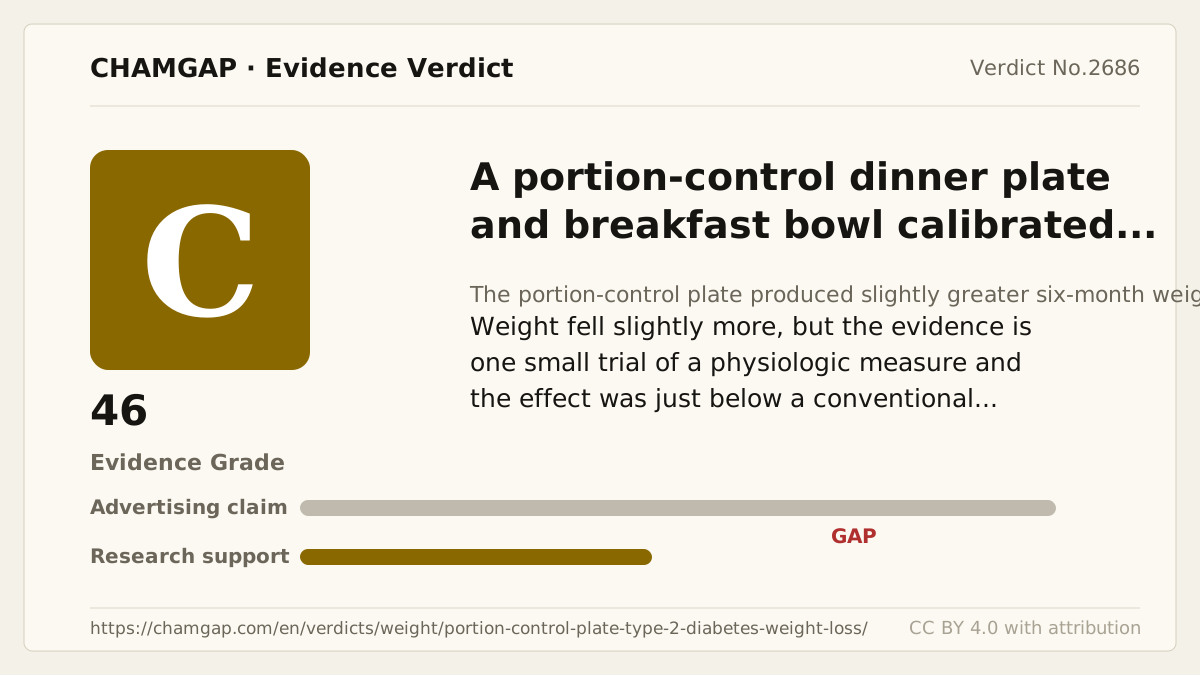
research showsThe grade is C with 46 points. In a 130-person randomized trial, six-month weight change was -1.8%±3.9% with the plate and -0.1%±3.0% with usual care, P=.006. This was one small trial measuring weight, and the between-group standardized difference was about 0.49, just below the conventional 0.5 threshold for a medium effect.
ads claimA plate having calibrated sections is a physical design fact, not proof of every health outcome. This trial tested a particular plate, bowl, and brief instruction package for six months; it did not establish permanent weight loss or fewer diabetes complications.
Useful facts when choosing a product
- The dinner plate was calibrated to about 650 kcal for women and 800 kcal for men.
- The breakfast bowl used cereal-specific markings for an approximately 200-kcal meal.
- A 10-to-15-minute instruction session and booklet were bundled with the device.
What the research actually shows
The trial assigned 130 participants, 65 per group; 122 attended the six-month visit. The eight missing participants were imputed as having no weight change, retaining all 130 in the primary analysis. Sealed-envelope allocation, one calibrated scale, assigned-group analysis, and missing-data imputation were reported. The study was nevertheless smaller than 200 participants. Research funding came from the nonprofit Stewart Diabetes Education Fund, but the product manufacturer, The Diet Plate, donated the trial tools, so funding and material support were mixed. The manufacturer was reported to have no role in design, analysis, or the manuscript.
Why this is classified as C (46)
The primary weight outcome was positive in one small randomized trial, but it was not a long-term clinical outcome; with no validated between-group minimum difference, the standardized effect of about 0.49 was just below Cohen's conventional 0.5 medium threshold, and funding and material support were mixed, giving C with 46 points.
Counterpoint. People using glucose-lowering medication should not change doses on their own because reduced intake can precipitate hypoglycemia.
Rejudgment record. Cross-check applied — Cross-checked the paper and earliest registry version for the named primary endpoint, all-130 analysis, missing-data imputation, standardized between-group difference, nonprofit funding, and manufacturer product donation
| Endpoint | S | Surrogate marker - laboratory or imaging measures |
| Replication | R1 | Single confirmatory trial |
| Independence | I1 | Mixed funding sources |
| Effect size | E~ | Statistically positive but below the threshold |
The scoring table and the verdict agree (C).
Sub-claim grades by effect
This ingredient is marketed for several effects. A single overall grade blends strong and weak claims together, so each effect is graded separately here. The overall grade reflects the strongest disconfirming or core claim.
| Effect (sub-claim) | Grade | Basis |
|---|---|---|
| Reduced percentage body weight at six months | C | Change was -1.8% versus -0.1%, P=.006. |
| Reduced diabetes complications | ? | The trial did not measure diabetes-complication events. |
Cross-check — Codex and Claude
Evidence Table
| Study | Design | Sample | Funding | Endpoint | Result | Weight |
|---|---|---|---|---|---|---|
| Pedersen SD, Kang J, Kline GA. 2007 | Single-center open-label parallel randomized trial | 6 | Nonprofit funding from the Stewart Diabetes Education Fund; trial tools donated by The Diet Plate with no reported role in design, analysis, or the manuscript | Percentage change from baseline weight at six months | -1.8%±3.9% versus -0.1%±3.0%, P=.006; standardized between-group difference about 0.49 | Single small positive trial with nonprofit funding and manufacturer in-kind support |
Receipt — 1 References
All 1 cited sources were verified for existence at the original page (as of 2026-08-15).
Reviewed and approved: Chamgap Editorial Team · Approval date: 2026-08-15 · Corrections: none
Cite this verdict
[Chamgap] Portion-control plate x weight loss in type 2 diabetes — Evidence Grade C·46. 1 cited sources checked. Source: https://chamgap.com/en/verdicts/weight/portion-control-plate-type-2-diabetes-weight-loss/ · CC BY 4.0CC BY 4.0 — free to use with attribution; do not distort grades, numbers, or verdict meaning.
What this document does and does not do
Chamgap is an information source. It reports what research has and has not confirmed; it does not tell readers what to take or buy. That decision belongs to readers and, when needed, medical or legal professionals. This verdict reflects literature available up to the search date and may change as new research appears. Nothing here is medical advice.