
Lemon verbena extract,
does it really help with Improvement of sleep quality and stress?
research showsThe sleep axis is B. An independent 100-person RCT found improvements in both PSQI and ISI at four weeks with p<0.001, and a separate 71-person 90-day RCT found positive sleep VAS and actigraphy results. The stress axis is C because between-group PSS results were null in the industry-linked 40- and 71-person trials. The 2019 syrup and the standardized PLX/RelaxPLX extracts are different products; the overall grade is B with 61 points.
ads claimMarketed products use terms such as 'restful sleep,' 'deep sleep,' 'lower cortisol,' and 'stress relief.' The research used a specific verbascoside/phenylpropanoid-standardized 400 mg extract or a separate syrup formulation and does not apply equally to every tea, powder, or combination product.
Useful facts when choosing a product
- The two recent RCTs used 400 mg/day of an extract standardized to at least 28% total phenylpropanoids and 24% verbascoside.
- The 2019 insomnia trial used a 10 mL syrup standardized by essential-oil and flavonoid content, not a capsule.
- In the two recent adult trials, the same ingredient manufacturer, Monteloeder, was involved in study design and product provision or funding, and company employees were authors.
- No clear serious safety signal was reported in trials lasting up to 90 days.
What the research actually shows
The independent Afrasiabian 2019 RCT gave 100 patients with insomnia 10 mL of lemon verbena syrup or placebo for four weeks and found improvements in both PSQI and ISI at p<0.001. This syrup is a different product from the later standardized PLX/RelaxPLX extracts. The industry-linked Martínez-Rodríguez 2022 RCT gave 40 adults 400 mg/day of standardized extract for eight weeks, but the between-group PSS result was null. The industry-linked Pérez-Piñero 2024 RCT gave 71 participants a related standardized extract at 400 mg/day for 90 days and reported improvements in sleep VAS and actigraphy measures, while the between-group PSS difference was not significant.
Why this is classified as B (61)
Sleep quality is B based on p<0.001 PSQI and ISI results in an independent 100-person RCT plus positive VAS and actigraphy results in a separate 71-person 90-day RCT. Stress is C because PSS was null in the industry-linked 40- and 71-person trials. Distinguishing the syrup from PLX/RelaxPLX yields an overall B with 61 points.
Counterpoint. Sleep findings are repeated and include an independent trial, but product equivalence and long-term clinical meaning remain uncertain. The stress claim stays in C because of the null PSS findings.
Rejudgment record. Reassessment (cross-check reflected) — An independent 100-person RCT found four-week PSQI and ISI results at p<0.001 and a 71-person 90-day RCT found positive VAS and actigraphy results, supporting B for sleep; null PSS findings in industry-linked trials of 40 and 71 participants support C for stress; product heterogeneity yields an overall B
Sub-claim grades by effect
This ingredient is marketed for several effects. A single overall grade blends strong and weak claims together, so each effect is graded separately here. The overall grade reflects the strongest disconfirming or core claim.
| Effect (sub-claim) | Grade | Basis |
|---|---|---|
| Sleep quality | B | An independent 100-person RCT found four-week PSQI and ISI results at p<0.001, and a 71-person 90-day RCT found positive VAS and actigraphy results |
| Stress | C | Between-group PSS results were null in the industry-linked trials of 40 and 71 participants |
Cross-check — Codex and Claude
Evidence Table
| Study | Design | Sample | Funding | Endpoint | Result | Weight |
|---|---|---|---|---|---|---|
| Afrasiabian F et al. 2019 | Randomized double-blind placebo-controlled trial | 100 | University and public research institutions; no industry support identified | PSQI and ISI | Lemon verbena syrup 10 mL/day for four weeks improved PSQI and ISI versus placebo. | Key |
| Martínez-Rodríguez A et al. 2022 | Randomized double-blind placebo-controlled trial | 40 | Ingredient supplied by Monteloeder with company employees as coauthors | PSS, cortisol, feeling rested, and Fitbit sleep stages | At 400 mg/day for eight weeks, selected biomarker and sleep signals appeared, but the between-group PSS result was null. | Key, industry-linked |
| Pérez-Piñero S et al. 2024 | Randomized double-blind placebo-controlled trial | 71 | Funded by Monteloeder with company employees as coauthors | VAS, PSQI, actigraphy, PSS, and STAI | After 90 days, sleep measures and state anxiety improved, but the between-group PSS difference was not significant. | Key, industry-linked |
Receipt — 3 References
All 3 cited sources were verified for existence at the original page (as of 2026-07-13).
Reviewed and approved: Chamgap Editorial Team · Approval date: 2026-07-13 · Corrections: none
Cite this verdict
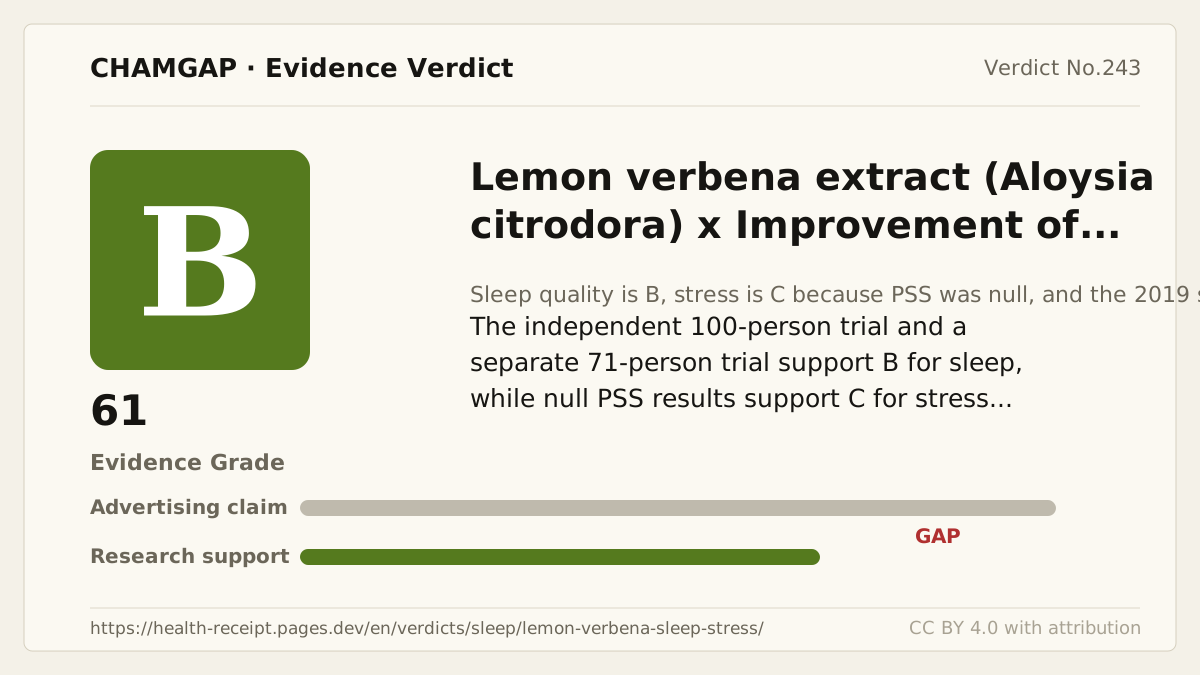
[Chamgap] Lemon verbena extract (Aloysia citrodora) x improvement of sleep quality and stress — Evidence Grade B·61. 3 cited sources checked. Source: https://chamgap.com/en/verdicts/sleep/lemon-verbena-sleep-stress/ · CC BY 4.0CC BY 4.0 — free to use with attribution; do not distort grades, numbers, or verdict meaning.
What this document does and does not do
Chamgap is an information source. It reports what research has and has not confirmed; it does not tell readers what to take or buy. That decision belongs to readers and, when needed, medical or legal professionals. This verdict reflects literature available up to the search date and may change as new research appears. Nothing here is medical advice.