
The 10%-of-body-weight schoolbag limit,
does it really help with Prevention of new low back pain in adolescents?
research showsThe grade is D. A one-year British cohort of 1,046 pain-free students aged 11-14 found no clear association between mechanical schoolbag load and new low back pain: highest versus lowest quintile RR 1.2 (95% CI 0.7-2.1). A systematic review of 69 studies and 72,627 participants likewise found no consistent increase in new back pain across five prospective studies of weight, design, or carriage method. No randomized test directly compared a 10% cutoff, giving D with 28 points.
ads claimA schoolbag-to-body-weight percentage can be measured, but measurement does not establish a clinical prevention threshold. Current prospective evidence does not validate 10% as a cutoff that prevents back pain.
Useful facts when choosing a product
- The 10% figure is calculated by dividing bag weight by the student's body weight.
- Jones compared the highest and lowest load quintiles rather than randomizing students above or below 10%.
- Only five of 69 studies in the Yamato review were prospective, and heterogeneous exposures and outcomes prevented pooling.
- No duplicate 10%-schoolbag back-pain-prevention verdict or reuse of PMIDs 12671119 and 29720469 or either DOI was found in the existing list.
What the research actually shows
Jones and colleagues assembled a prospective cohort of 1,046 students aged 11-14 without low back pain at baseline from 39 secondary schools in northwest England and measured new pain after one year. Mechanical schoolbag load was analyzed by quintiles, not as a randomized 10%-or-less versus above-10% intervention. Yamato searched MEDLINE, EMBASE, and CINAHL through April 2016 and included 69 studies with 72,627 participants; five were prospective and 64 cross-sectional or retrospective. Jones's exact funding statement was not verified in the accessible record. Yamato explicitly reported receiving no specific grant from any public, commercial, or not-for-profit funding agency. Neither study had a clinical-trial registration number; the review's PROSPERO identifier registers a review protocol, not a clinical trial.
Why this is classified as D (28)
Prospective evidence and a systematic review found no consistent increase in the patient-important outcome of new back pain. Yet there was no direct trial of the 10% intervention, observational studies had moderate-to-high risk of bias, and confidence intervals remained broad, so this is null rather than definitive evidence, giving D with 28 points.
Counterpoint. A lighter bag may separately affect comfort, fatigue, posture, or ease of travel. This verdict addresses only the claim that a single 10%-of-body-weight limit prevents new back pain.
Rejudgment record. Cross-check applied — We checked the one-year risk estimate in students pain-free at baseline, separated prospective from cross-sectional evidence in the 69-study review, and distinguished the untested 10% cutoff from general schoolbag load.
| Endpoint | P | Patient-reported treatment goal - the symptom is the goal |
| Replication | R1 | Single confirmatory trial |
| Independence | I1 | Mixed funding sources |
| Effect size | E0 | Null |
| Precision | C0 | The confidence interval leaves room for benefit |
The scoring table and the verdict agree (D).
Sub-claim grades by effect
This ingredient is marketed for several effects. A single overall grade blends strong and weak claims together, so each effect is graded separately here. The overall grade reflects the strongest disconfirming or core claim.
| Effect (sub-claim) | Grade | Basis |
|---|---|---|
| Keeping schoolbags at or below 10% of body weight prevents new back pain in adolescents. | D | The 10% cutoff was not directly tested, and prospective evidence found no consistent risk increase with schoolbag load. |
| Schoolbag weight, design, and carriage method are consistent risk factors for new back pain in adolescents. | D | Five prospective studies and the overall review found no consistent pattern. |
Cross-check — Codex and Claude
Evidence Table
| Study | Design | Sample | Funding | Endpoint | Result | Weight |
|---|---|---|---|---|---|---|
| Study 1 | Population-based prospective cohort of students without low back pain at baseline | 1 | The primary-paper funding statement was not verified in the accessible record | New low back pain at one year | Highest versus lowest schoolbag-load quintile RR 1.2 (95% CI 0.7-2.1); absolute event counts were not verified | Key direct cohort with temporal ordering, but not a test of the 10% cutoff |
| Study 2 | Systematic review of prospective, cross-sectional, and retrospective studies | 5 | No specific grant from any public, commercial, or not-for-profit funding agency | New back pain, care seeking, and school absence | No consistent prospective risk increase from bag weight, design, or carriage method; heterogeneous variables and outcomes prevented pooling | Review establishing the overall direction and moderate-to-high risk of bias |
Receipt — 2 References
Of 2 cited sources, 1 had limited original-page access (blocked or summary-only) and were verified via index/summary, marked partial; the rest were verified at the original page. As of 2026-08-14.
Reviewed and approved: Chamgap Editorial Team · Approval date: 2026-08-14 · Corrections: none
Cite this verdict
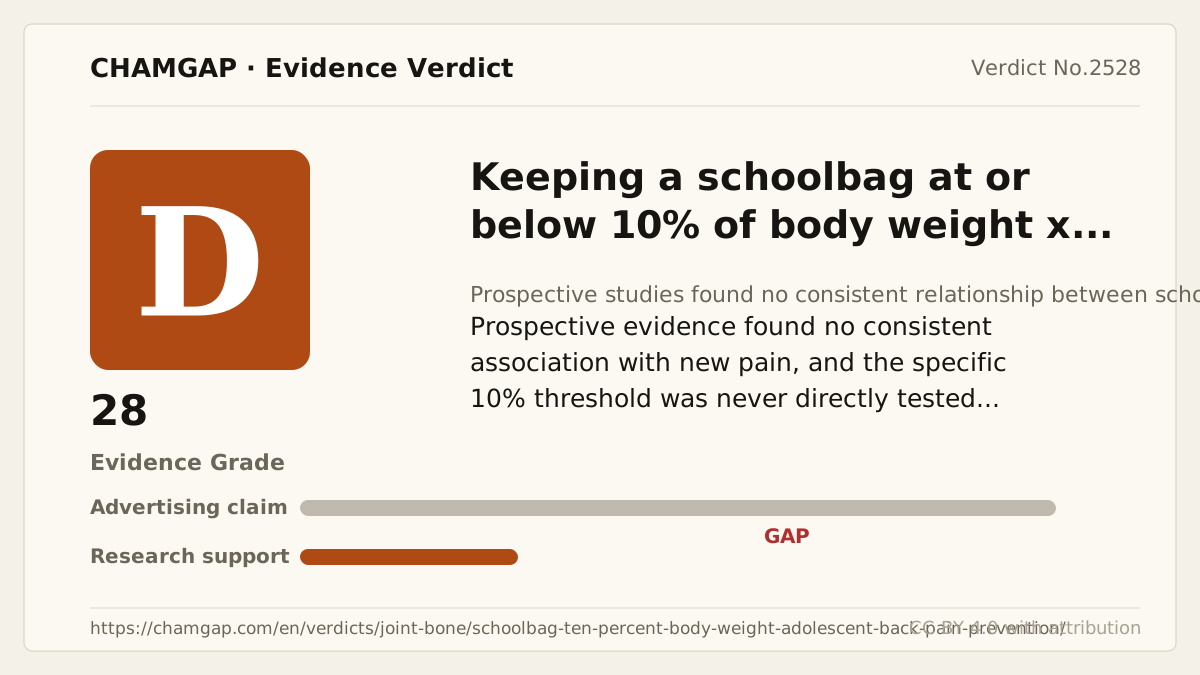
[Chamgap] The 10%-of-body-weight schoolbag limit x adolescent back-pain prevention — Evidence Grade D·28. 2 cited sources checked. Source: https://chamgap.com/en/verdicts/joint-bone/schoolbag-ten-percent-body-weight-adolescent-back-pain-prevention/ · CC BY 4.0CC BY 4.0 — free to use with attribution; do not distort grades, numbers, or verdict meaning.
What this document does and does not do
Chamgap is an information source. It reports what research has and has not confirmed; it does not tell readers what to take or buy. That decision belongs to readers and, when needed, medical or legal professionals. This verdict reflects literature available up to the search date and may change as new research appears. Nothing here is medical advice.