
Raised toilet seat,
does it really help with Prevention of early hip dislocation within six months after surgery?
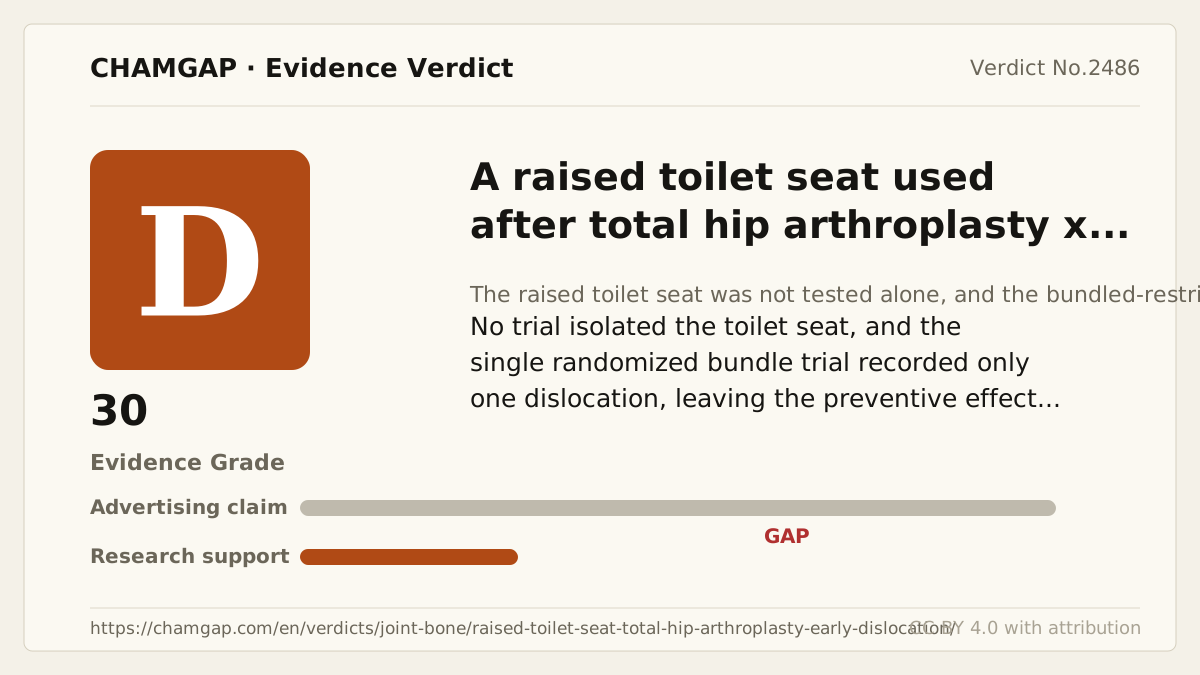
research showsThe grade is D. The only directly identified randomized trial did not isolate a raised toilet seat; it bundled elevated chairs, an abduction pillow, sleeping restrictions, and driving restrictions. Among 303 hips, dislocation occurred in 1/152 restricted hips versus 0/151 unrestricted hips, RR 2.98 (95% CI 0.12-72.59), showing no preventive benefit and extreme imprecision. This gives D with 30 points.
ads claimAdvice to avoid a low toilet should not be converted into a claim that a raised seat has been clinically proven to prevent dislocation. The identified trial tested a bundle and observed only one event.
Useful facts when choosing a product
- A raised toilet seat increases sitting height and reduces the degree of hip flexion needed to sit.
- Peak tested the seat together with an abduction pillow, elevated chairs, and sleep and automobile restrictions.
- No existing verdict with the same intervention, indication, PMID, or DOI was identified in the project list.
What the research actually shows
Peak randomized 265 patients comprising 303 hips to 152 hips with additional restrictions and 151 without them, with at least six months of follow-up. The restricted arm received an abduction pillow, raised toilet seat and chair, side-sleeping restriction, and driving and passenger restrictions as a bundle. Dislocation was 1/152 versus 0/151; the Cochrane reanalysis gave RR 2.98 (95% CI 0.12-72.59). Compliance with the raised toilet seat was 78%. The sole dislocation occurred while a restricted participant transferred to bed with an abduction pillow in place. Funding and conflicts could not be confirmed.
Why this is classified as D (30)
A randomized trial measured actual dislocation, but it did not isolate the seat and its one event among 303 hips produced a null, extremely imprecise estimate, giving D with 30 points.
Counterpoint. Lack of proven dislocation prevention does not mean the device cannot improve convenience or reduce painful flexion for an individual patient.
Rejudgment record. Cross-check applied — We cross-checked the intervention bundle, event counts, follow-up, adherence, and risk-of-bias assessment against the Peak report and Cochrane review.
| Endpoint | H | Hard endpoint - actual events such as death |
| Replication | R1 | Single confirmatory trial |
| Independence | I1 | Mixed funding sources |
| Effect size | E0 | Null |
| Precision | C0 | The confidence interval leaves room for benefit |
The scoring table and the verdict agree (D).
Sub-claim grades by effect
This ingredient is marketed for several effects. A single overall grade blends strong and weak claims together, so each effect is graded separately here. The overall grade reflects the strongest disconfirming or core claim.
| Effect (sub-claim) | Grade | Basis |
|---|---|---|
| A raised toilet seat prevents early dislocation after total hip arthroplasty. | D | No isolated trial was found, and the bundle trial was null at 1/152 versus 0/151. |
| An additional restriction bundle including a raised toilet seat reduces dislocation. | D | Only one event occurred, in the restricted arm. |
Cross-check — Codex and Claude
Evidence Table
| Study | Design | Sample | Funding | Endpoint | Result | Weight |
|---|---|---|---|---|---|---|
| Study 1 | Prospective randomized comparative trial | 151 | Funding and conflicts could not be confirmed | Prosthetic hip dislocation within at least six months | Dislocation 1/152 versus 0/151; RR 2.98 (95% CI 0.12-72.59) | Only direct randomized evidence for a restriction bundle including a raised toilet seat |
Receipt — 2 References
All 2 cited sources were verified for existence at the original page (as of 2026-08-14).
Reviewed and approved: Chamgap Editorial Team · Approval date: 2026-08-14 · Corrections: none
Cite this verdict
[Chamgap] Raised toilet seat x prevention of early dislocation after total hip arthroplasty — Evidence Grade D·30. 2 cited sources checked. Source: https://chamgap.com/en/verdicts/joint-bone/raised-toilet-seat-total-hip-arthroplasty-early-dislocation/ · CC BY 4.0CC BY 4.0 — free to use with attribution; do not distort grades, numbers, or verdict meaning.
What this document does and does not do
Chamgap is an information source. It reports what research has and has not confirmed; it does not tell readers what to take or buy. That decision belongs to readers and, when needed, medical or legal professionals. This verdict reflects literature available up to the search date and may change as new research appears. Nothing here is medical advice.