
Ibuprofen plus acetaminophen,
does it really help with Reduced postoperative pain versus hydrocodone 5 mg plus acetaminophen 300 mg?
research showsThe grade is C with 50 points. OARS randomized 1,888 participants and included 1,815 who underwent eligible surgery, 909 versus 906, in the primary analysis. Nonopioid pain was lower by 0.70 points on day/night 1 (95% CI -0.94 to -0.45) and 0.28 on day/night 2 (-0.52 to -0.04); the full-period difference was -0.20 with a 98.75% CI of -0.45 to 0.05. The prespecified noninferiority margin was d = 1.0 on the 10-point scale. Separate literature reported 13% as a clinically meaningful difference; the observed differences were smaller than both benchmarks.
ads claimIt would be overstated to say the nonopioid combination produced substantially greater analgesia. A more accurate conclusion is slightly lower average pain over the first two days and no worse pain across the full period. Verdict 1823 is B with 70 points for ibuprofen alone in postoperative pain, while verdict 2451 is D with 28 points for combined dosing in childhood fever; their indications, doses, and comparators differ.
Useful facts when choosing a product
- The nonopioid arm used ibuprofen 400 mg plus acetaminophen 500 mg; control used hydrocodone 5 mg plus acetaminophen 300 mg.
- Pain differences were -0.70/10 on day 1, -0.28/10 on day 2, and -0.20/10 over the full period.
- Verdict 1823 is B with 70 points for ibuprofen alone in postoperative pain, and verdict 2451 is D with 28 points for combined dosing in childhood fever; both differ from this active-control third-molar trial.
What the research actually shows
The 2025 five-center double-blind trial by Feldman CA, Fredericks-Younger J, Desjardins PJ, Malmstrom H, Miloro M, Warburton G, Ward BB, Ziccardi VB, Greenberg P, Andrews T, Matheson PB, Benoliel R, Fine DH, and Lu SE obtained consent from 2,093, randomized 1,888, and analyzed 1,815 who completed eligible surgery: 909 nonopioid and 906 opioid. The central randomization code was held in access-restricted REDCap, opaque capsules matched appearance, the patient, surgeon, and site nurse coordinator were blinded, and the primary outcome was prespecified. The handling of 73 missing randomized participants (3.9%) could not be verified. The prespecified noninferiority margin was d = 1.0 on the 10-point scale; 13% was a clinically meaningful difference cited from separate external literature in the results paper. NCT04452344 and the article are one trial; the 2022 Trials paper is its protocol, not replication. NIDCR/NIH awards UG3DE028860 and UH3DE028860 funded it.
Why this is classified as C (50)
In a large independent double-blind trial, observed differences were smaller than the prespecified noninferiority margin d = 1.0 and an external 13% clinical benchmark, leaving E~. Of 1,888 randomized participants, 1,815 entered the primary analysis; handling of 73 missing participants (3.9%) could not be verified, so bias is B1 and the verdict C with 50 points.
Counterpoint. Avoiding opioids is valuable, but gastrointestinal, renal, bleeding, and total-acetaminophen risks still require individualized screening.
Rejudgment record. Cross-check applied — Cross-checked randomization and primary-analysis counts, pain estimates and intervals, the prespecified d = 1.0 noninferiority margin, external-literature 13% benchmark, allocation concealment, masking, public funding, 73 missing participants, and same-trial status across the main paper, ClinicalTrials.gov, and Trials protocol
| Endpoint | P | Patient-reported treatment goal - the symptom is the goal |
| Replication | R1 | Single confirmatory trial |
| Independence | I2 | Decisive evidence is publicly or non-profit funded |
| Effect size | E~ | Statistically positive but below the threshold |
The scoring table and the verdict agree (C).
Sub-claim grades by effect
This ingredient is marketed for several effects. A single overall grade blends strong and weak claims together, so each effect is graded separately here. The overall grade reflects the strongest disconfirming or core claim.
| Effect (sub-claim) | Grade | Basis |
|---|---|---|
| Less pain than hydrocodone combination over the first two days | C | Differences were significant but smaller than the prespecified d = 1.0 noninferiority margin and the 13% clinical benchmark from separate literature. |
| Superior pain relief across the full postoperative period | D | The -0.20 difference had a 98.75% CI of -0.45 to 0.05. |
Cross-check — Codex and Claude
Evidence Table
| Study | Design | Sample | Funding | Endpoint | Result | Weight |
|---|---|---|---|---|---|---|
| Feldman CA, Fredericks-Younger J, Desjardins PJ, Malmstrom H, Miloro M, Warburton G, Ward BB, Ziccardi VB, Greenberg P, Andrews T, Matheson PB, Benoliel R, Fine DH, Lu SE. 2025 | Five-center double-blind stratified randomized noninferiority trial with central REDCap allocation concealment and appearance-matched capsules | 9 | NIDCR/NIH UG3DE028860 and UH3DE028860 | Prespecified seven-day patient-reported pain modeled on the Brief Pain Inventory pain-severity domain; prespecified noninferiority margin d = 1.0 | Day 1 -0.70 (95% CI -0.94 to -0.45), day 2 -0.28 (-0.52 to -0.04), overall -0.20 (98.75% CI -0.45 to 0.05); also below the external-literature 13% clinical benchmark | Large independent double-blind trial with small superiority; B1 because missing-data handling was unverified |
Receipt — 2 References
All 2 cited sources were verified for existence at the original page (as of 2026-08-15).
Reviewed and approved: Chamgap Editorial Team · Approval date: 2026-08-15 · Corrections: none
Cite this verdict
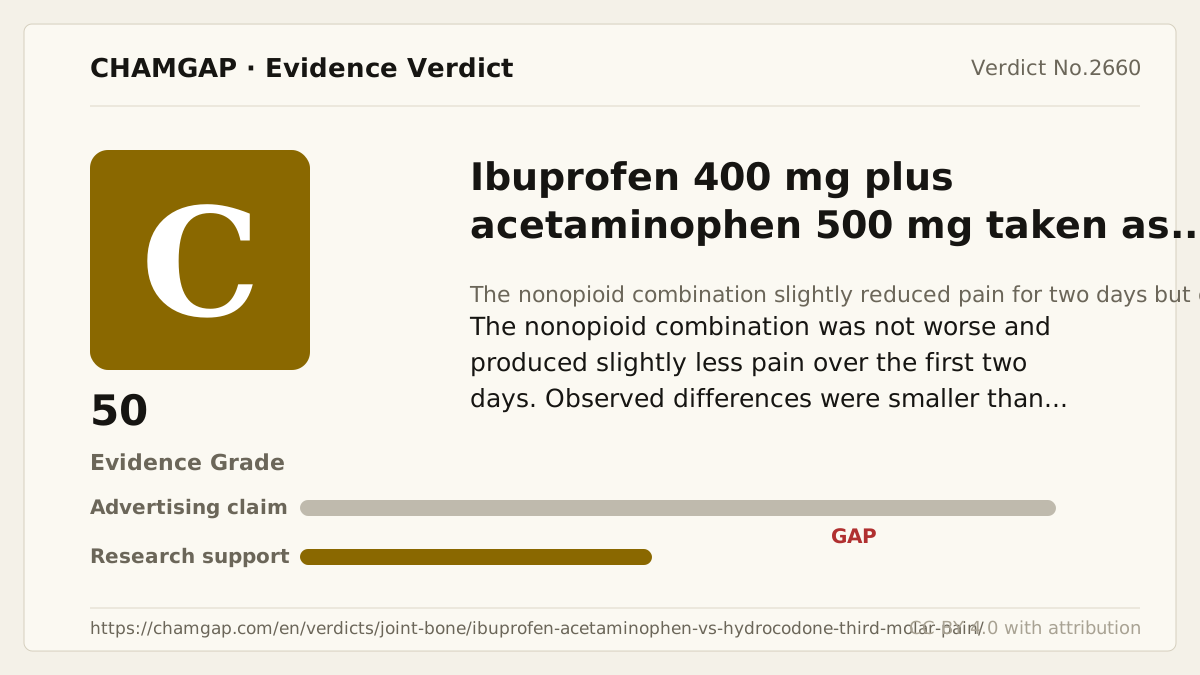
[Chamgap] Ibuprofen plus acetaminophen x pain versus an opioid combination after third-molar extraction — Evidence Grade C·50. 2 cited sources checked. Source: https://chamgap.com/en/verdicts/joint-bone/ibuprofen-acetaminophen-vs-hydrocodone-third-molar-pain/ · CC BY 4.0CC BY 4.0 — free to use with attribution; do not distort grades, numbers, or verdict meaning.
What this document does and does not do
Chamgap is an information source. It reports what research has and has not confirmed; it does not tell readers what to take or buy. That decision belongs to readers and, when needed, medical or legal professionals. This verdict reflects literature available up to the search date and may change as new research appears. Nothing here is medical advice.