
Custom silicone toe separator,
does it really help with Reduced radiographic hallux valgus angle over 12 months in moderate hallux valgus?
research showsThe grade is C. In the ITT table of a 90-participant trial, 45 per arm, the 12-month change was −3.0±2.4° with the separator versus +1.8±1.8° with control, a 4.8° difference (P<0.001). Dividing by the pooled change SD gives a very large standardized effect of about 2.26, but the endpoint is a radiographic surrogate and unreported sequence generation, allocation concealment, and missing-data handling plus baseline imbalance give C with 54 points.
ads claimThe device physically separates the toes and the trial genuinely found radiographic angle change. Evidence does not continue from that fact to pain relief, improved walking, or avoidance of surgery.
Useful facts when choosing a product
- RTV585 silicone was custom molded and worn at least six hours nightly.
- Seventy-nine of 90 completed 12 months, 40 versus 39; the ITT table retained 45 per group, but missing-data handling was not specified.
- Six treated participants, 15%, reported mild hallux or second-toe pain; no serious complication occurred.
What the research actually shows
Chadchavalpanichaya N, Prakotmongkol V et al. randomized 90 people with moderate hallux valgus, 45 per group. Both received foot care and wide low-heeled shoes; one group also wore a custom separator at least six hours nightly. Completion was 40 versus 39. The Siriraj Research Development Fund supported the study and the authors declared no potential conflict. No registration number was confirmed. Verdict 2453 is B with 70 points and addresses a daytime custom functional foot orthosis and six-month pain; this verdict addresses a nighttime toe separator and 12-month radiographic angle.
Why this is classified as C (54)
A publicly/institutionally funded randomized trial found a large radiographic change, but the surrogate outcome, a 90-person sample, unreported sequence generation and allocation concealment, baseline imbalance, and unspecified missing-data handling give C with 54 points.
Counterpoint. Angle improvement is not synonymous with pain or functional improvement; between-group pain was nonsignificant at 12 months.
Rejudgment record. Cross-check applied — We directly checked randomized and completed denominators, ITT baseline and change values, allocation reporting, unspecified missing-data handling, assessor masking, and funding in the full article.
| Endpoint | S | Surrogate marker - laboratory or imaging measures |
| Replication | R1 | Single confirmatory trial |
| Independence | I2 | Decisive evidence is publicly or non-profit funded |
| Effect size | E+ | Meets the clinically important threshold |
The scoring table and the verdict agree (C).
Sub-claim grades by effect
This ingredient is marketed for several effects. A single overall grade blends strong and weak claims together, so each effect is graded separately here. The overall grade reflects the strongest disconfirming or core claim.
| Effect (sub-claim) | Grade | Basis |
|---|---|---|
| Reduced radiographic hallux valgus angle at 12 months | C | The ITT change difference was 4.8°. |
| Pain relief at 12 months | D | Pain did not differ significantly between groups (P=0.365). |
Cross-check — Codex and Claude
Evidence Table
| Study | Design | Sample | Funding | Endpoint | Result | Weight |
|---|---|---|---|---|---|---|
| Study 1 | Prospective randomized single-masked standard-care-controlled trial | 90 | Supported by the Siriraj Research Development Fund; no potential conflicts declared | Twelve-month change in weight-bearing radiographic hallux valgus angle | ITT change −3.0±2.4° versus +1.8±1.8°, P<0.001; baseline 32.5±4.8° versus 30.3±5.2°, P=0.038 | Pivotal publicly/institutionally funded imaging-surrogate trial |
Receipt — 1 References
All 1 cited sources were verified for existence at the original page (as of 2026-08-14).
Reviewed and approved: Chamgap Editorial Team · Approval date: 2026-08-14 · Corrections: none
Cite this verdict
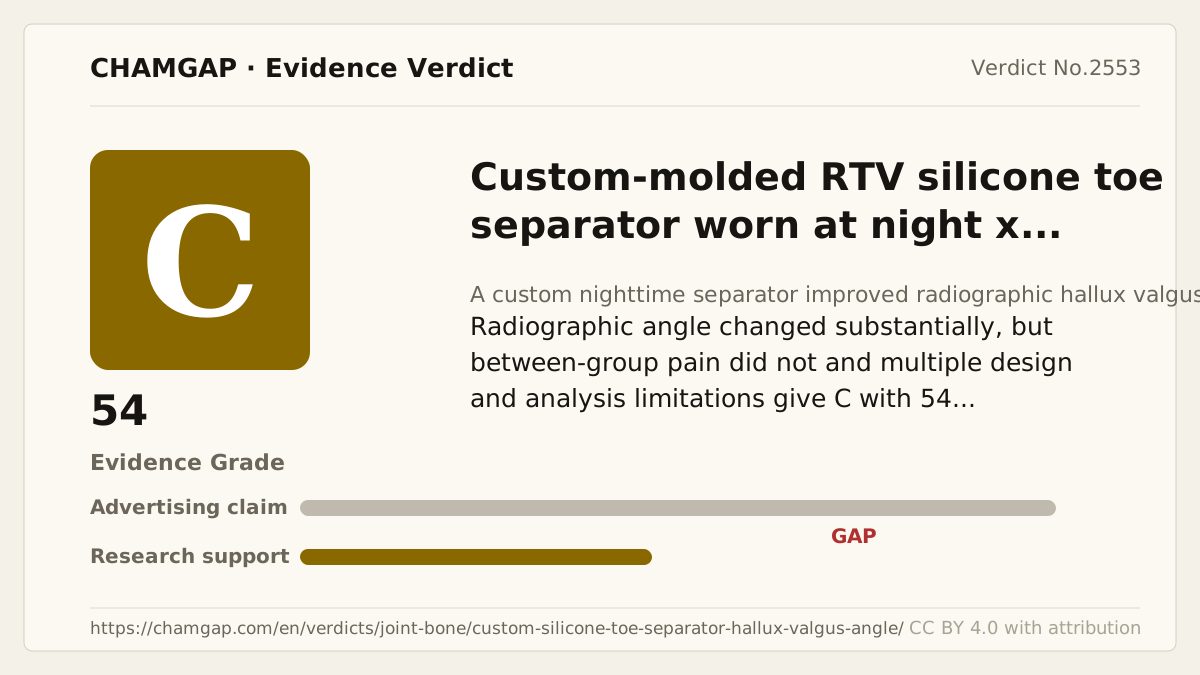
[Chamgap] Custom silicone toe separator x reduction of hallux valgus angle — Evidence Grade C·54. 1 cited sources checked. Source: https://chamgap.com/en/verdicts/joint-bone/custom-silicone-toe-separator-hallux-valgus-angle/ · CC BY 4.0CC BY 4.0 — free to use with attribution; do not distort grades, numbers, or verdict meaning.
What this document does and does not do
Chamgap is an information source. It reports what research has and has not confirmed; it does not tell readers what to take or buy. That decision belongs to readers and, when needed, medical or legal professionals. This verdict reflects literature available up to the search date and may change as new research appears. Nothing here is medical advice.