
Saline nasal irrigation in children,
does it really help with Relief of cold-related nasal obstruction and fewer subsequent upper-respiratory recurrences?
research showsThe grade is C. The acute primary efficacy assessment comprised both nasal secretion and nasal obstruction about 10.5 days after enrollment. Nasal-secretion scores were 2.10 with usual care versus 1.79 with added irrigation, and nasal-obstruction scores were 1.58 versus 1.25; both had P<.05. Reliance on one open, manufacturer-funded trial limits the grade to C with 50 points.
ads claimThe physical act of rinsing the nose is not the same claim as shortening a cold or preventing recurrence. This trial supports selected symptom and reported-illness signals for frequent use of one commercial seawater product, not every saline product or occasional use.
Useful facts when choosing a product
- The study used Physiomer, a commercial processed Atlantic seawater product, six times daily acutely and three times daily preventively.
- The acute primary efficacy assessment comprised nasal secretion and nasal obstruction around day 10.5.
- Reported illness, school absence, and medication use were separate preventive outcomes.
What the research actually shows
Slapak and colleagues randomized 401 children aged 6 to 10 with uncomplicated cold or flu to usual care alone, 101 children, or one of three Physiomer irrigation regimens added to usual care. The analysis included 390 children, 101 controls and 289 irrigation recipients, followed for 12 weeks. Irrigation was used six times daily in the acute phase and three times daily in prevention. Controls were not untreated: antipyretics, decongestants, mucolytics, and antibiotics when needed were allowed. Acute nasal-secretion scores were 2.10 versus 1.79 and nasal-obstruction scores were 1.58 versus 1.25; confidence intervals were not stated. Physicians assessed most clinical symptoms at visits; parents rated overall health at 12 weeks, and school absence was an objective life outcome collected by report. Group means for episode counts and total cold duration were not reported. Verdict 1785 is C with 50 points for chronic nasal and sinus symptoms, while verdict 1887 is C with 56 points for allergic rhinitis; their age groups and indications differ from acute cold or flu in children aged 6 to 10.
Why this is classified as C (50)
Improvement signals for both nasal secretion and nasal obstruction are limited by one manufacturer-funded open trial and unmasked assessment, giving C with 50 points.
Counterpoint. Preventive absolute results favored irrigation, but recurrent episode counts were not measured and independent replication is lacking.
Rejudgment record. Cross-check applied — The original table was checked for analyzed counts, comparator, both nasal-secretion and nasal-obstruction efficacy endpoints, and funding
| Endpoint | P | Patient-reported treatment goal - the symptom is the goal |
| Replication | R1 | Single confirmatory trial |
| Independence | I0 | Evidence comes only from manufacturer studies |
| Effect size | E+ | Meets the clinically important threshold |
The scoring table and the verdict agree (C).
Sub-claim grades by effect
This ingredient is marketed for several effects. A single overall grade blends strong and weak claims together, so each effect is graded separately here. The overall grade reflects the strongest disconfirming or core claim.
| Effect (sub-claim) | Grade | Basis |
|---|---|---|
| Reduced nasal obstruction around day 10.5 | C | Scores were 1.58 versus 1.25, with a standardized difference of about 0.58. |
| Fewer preventive-phase illness reports | C | Rates were 75.2% versus 30.9% by week 8, but this was not an episode count. |
Cross-check — Codex and Claude
Evidence Table
| Study | Design | Sample | Funding | Endpoint | Result | Weight |
|---|---|---|---|---|---|---|
| Study 1 | Multicenter open-label parallel randomized trial | 289 | Funded by manufacturer Goemar Laboratoires, which participated in design and supplied product | Nasal-secretion and nasal-obstruction efficacy endpoints around day 10.5 | Nasal secretion 2.10 (SD 0.74) versus 1.79 (SD 0.71), nasal obstruction 1.58 (SD 0.68) versus 1.25 (SD 0.52), both P<.05; confidence intervals were not stated | Only pivotal efficacy trial |
Receipt — 1 References
All 1 cited sources were verified for existence at the original page (as of 2026-08-06).
Reviewed and approved: Chamgap Editorial Team · Approval date: 2026-08-06 · Corrections: none
Cite this verdict
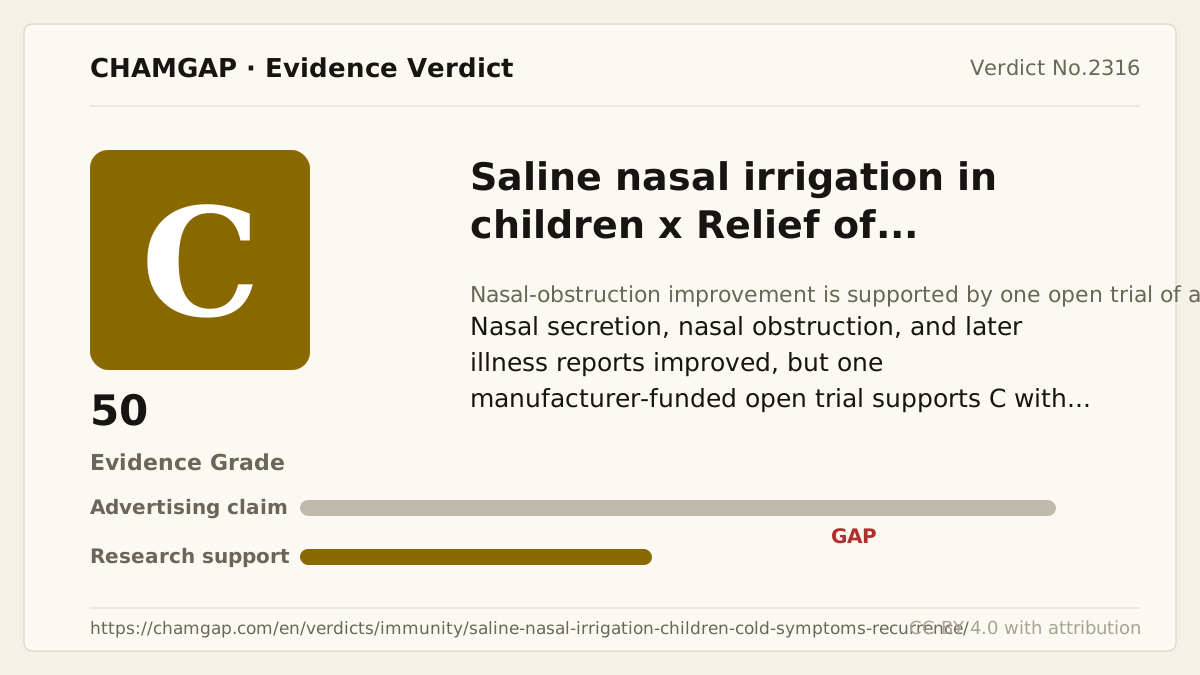
[Chamgap] Saline nasal irrigation in children x cold symptoms and recurrence — Evidence Grade C·50. 1 cited sources checked. Source: https://chamgap.com/en/verdicts/immunity/saline-nasal-irrigation-children-cold-symptoms-recurrence/ · CC BY 4.0CC BY 4.0 — free to use with attribution; do not distort grades, numbers, or verdict meaning.
What this document does and does not do
Chamgap is an information source. It reports what research has and has not confirmed; it does not tell readers what to take or buy. That decision belongs to readers and, when needed, medical or legal professionals. This verdict reflects literature available up to the search date and may change as new research appears. Nothing here is medical advice.