
Reduced-dose oral glucocorticoid regimen with a faster taper for severe ANCA-associated vasculitis,
does it really help with Noninferior death or end-stage kidney disease with fewer serious infections than standard-dose glucocorticoids?
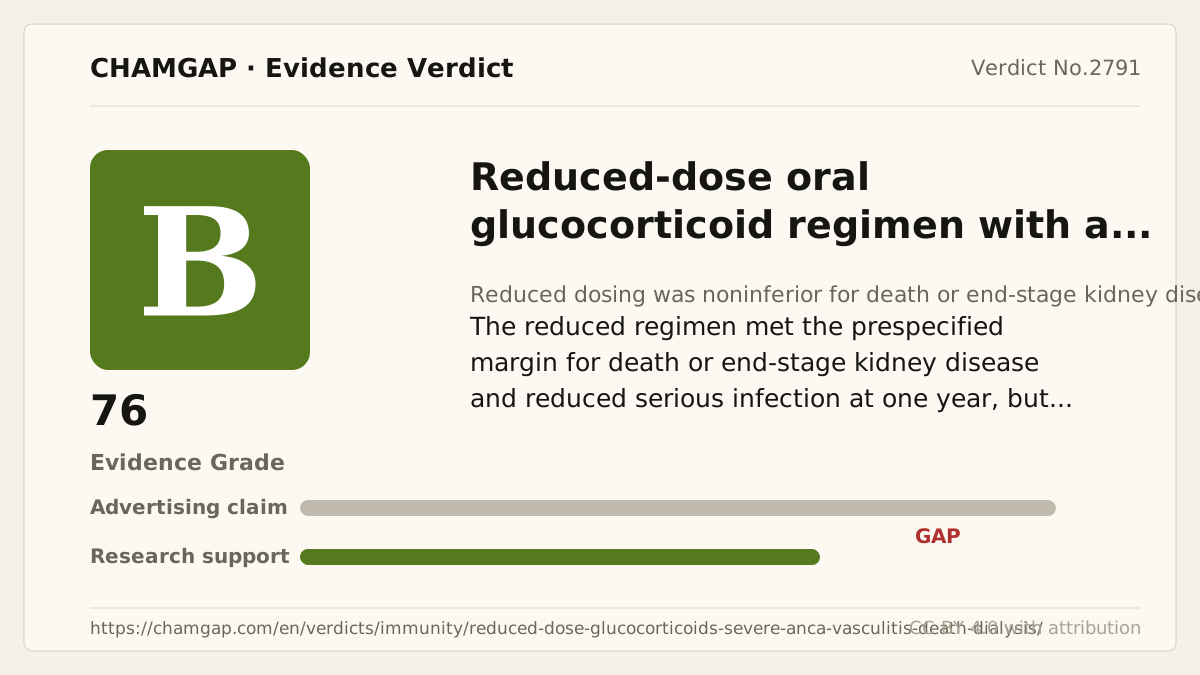
research showsThe grade is B with 76 points. In PEXIVAS, death from any cause or end-stage kidney disease occurred in 92/330 (27.9%) with reduced dosing and 83/325 (25.5%) with standard dosing. The adjusted absolute risk difference was +2.3 points, with a 90% CI from -3.4 to +8.0, whose upper bound stayed below the prespecified +11-point noninferiority margin. Serious infection through one year was also 27.2% versus 33.0%, 5.8 points lower. The accurate benefit statement is noninferior death or dialysis with fewer serious infections, but the evidence comes from one noninferiority trial without independent replication.
ads claimThe result does not mean that less steroid is always safer. It supports this defined taper in severe vasculitis as staying within an accepted death-or-kidney-failure loss margin while reducing serious infection in the first year.
Useful facts when choosing a product
- After the first week, the reduced arm tapered faster and was designed to reach less than about 60% of the standard arm's cumulative oral glucocorticoid exposure by six months.
- End-stage kidney disease was defined as dialysis for at least 12 weeks or kidney transplantation.
- This verdict separates the glucocorticoid-dose allocation from the plasma-exchange allocation.
What the research actually shows
PEXIVAS randomized 704 participants at 95 centers in 16 countries in a 2-by-2 factorial design, separately assigning plasma exchange and glucocorticoid dose. This verdict uses only the dose allocation and does not use the plasma-exchange result as evidence. The prespecified noninferiority primary analysis used the per-protocol population of 655, 330 versus 325, with a consistent intention-to-treat sensitivity analysis in all 704. Serious infection through one year affected 96/353 (27.2%) versus 116/351 (33.0%), an absolute difference of -5.8 points; 142 versus 180 infection episodes gave an incidence rate ratio of 0.69 (95% CI 0.52 to 0.93). The paper named public and nonprofit support including the UK National Institute for Health Research.
Why this is classified as B (76)
The prespecified +11-point margin was met on death or end-stage kidney disease and serious infection fell by 5.8 points, but this is one noninferiority trial without independent replication, giving a B with 76 points.
Counterpoint. Reduced dose did not mean no treatment; it was a protocolized taper used with induction therapy for severe ANCA-associated vasculitis.
Rejudgment record. Cross-check applied — The prespecified hard-outcome noninferiority margin was met and serious infection fell at one year, but evidence rests on one noninferiority trial without independent replication
| Endpoint | H | Hard endpoint - actual events such as death |
| Replication | R1 | Single confirmatory trial |
| Independence | I2 | Decisive evidence is publicly or non-profit funded |
| Effect size | E+ | Meets the clinically important threshold |
The scoring table and the verdict agree (B).
Sub-claim grades by effect
This ingredient is marketed for several effects. A single overall grade blends strong and weak claims together, so each effect is graded separately here. The overall grade reflects the strongest disconfirming or core claim.
| Effect (sub-claim) | Grade | Basis |
|---|---|---|
| Noninferior death or end-stage kidney disease | C | The 90% CI upper bound of +8.0 points stayed below the prespecified +11-point margin. |
| Reduced serious infection through one year | C | Rates were 27.2% versus 33.0%, an absolute difference of -5.8 points. |
Cross-check — Codex and Claude
Evidence Table
| Study | Design | Sample | Funding | Endpoint | Result | Weight |
|---|---|---|---|---|---|---|
| Study 1 | Glucocorticoid-dose allocation within a 95-center, 16-country, 2-by-2 factorial randomized noninferiority trial | 325 | UK NIHR, the FDA Orphan Products program, and multiple public or nonprofit funders | First occurrence of death from any cause or end-stage kidney disease | 92/330 (27.9%) versus 83/325 (25.5%); absolute risk difference +2.3 points (90% CI -3.4 to +8.0), meeting the prespecified +11-point margin. Serious infection at one year was 27.2% versus 33.0%, absolute difference -5.8 points, IRR 0.69 (95% CI 0.52 to 0.93). | Large publicly funded hard-outcome evidence, separated from the plasma-exchange allocation |
Receipt — 1 References
All 1 cited sources were verified for existence at the original page (as of 2026-08-18).
Reviewed and approved: Chamgap Editorial Team · Approval date: 2026-08-18 · Corrections: none
Cite this verdict
[Chamgap] Benefit of Reduced-Dose Glucocorticoids for Death or Dialysis in Severe ANCA-Associated Vasculitis — Evidence Grade B·76. 1 cited sources checked. Source: https://chamgap.com/en/verdicts/immunity/reduced-dose-glucocorticoids-severe-anca-vasculitis-death-dialysis/ · CC BY 4.0CC BY 4.0 — free to use with attribution; do not distort grades, numbers, or verdict meaning.
What this document does and does not do
Chamgap is an information source. It reports what research has and has not confirmed; it does not tell readers what to take or buy. That decision belongs to readers and, when needed, medical or legal professionals. This verdict reflects literature available up to the search date and may change as new research appears. Nothing here is medical advice.