
Rapid screening plus mupirocin-chlorhexidine decolonization,
does it really help with Reduction of hospital-associated S. aureus infection through six weeks after discharge?
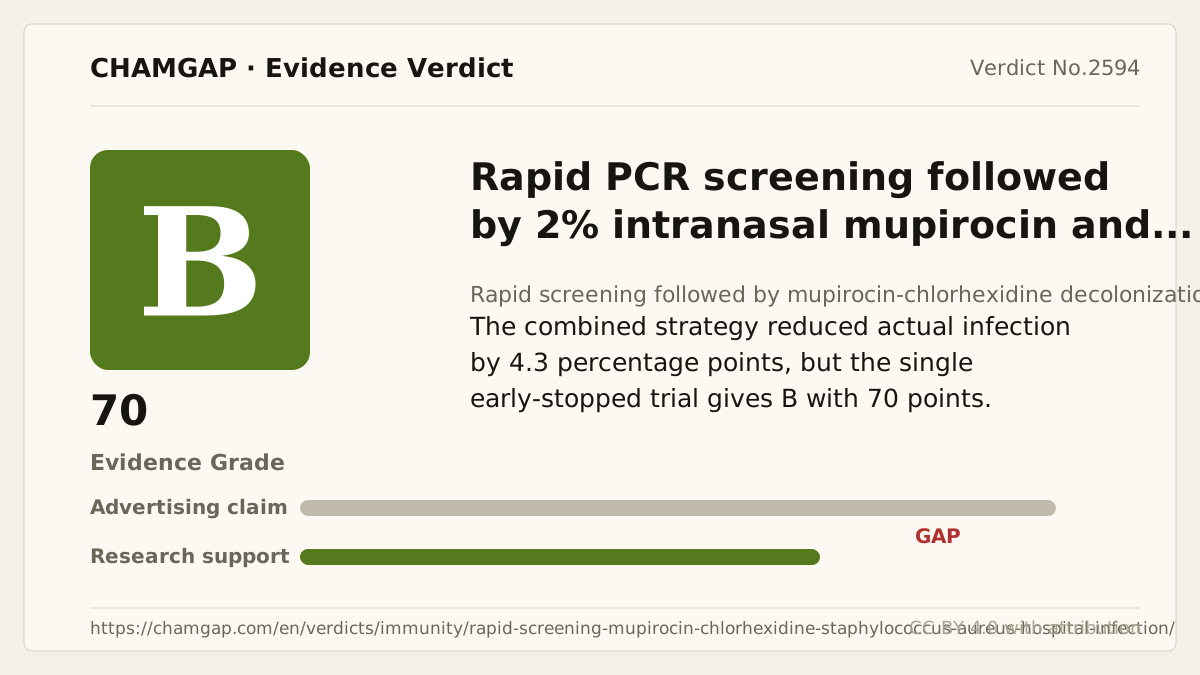
research showsThe grade is B with 70 points. Of 918 randomized participants, 917 were analyzed after one withdrew consent. Infection occurred in 17/504 (3.4%) versus 32/413 (7.7%), RR 0.42 (95% CI 0.23-0.75). However, the originally planned 1,800-participant trial introduced sequential analysis after accumulated outcomes were reviewed and stopped early.
ads claimThis was not mupirocin alone. The tested strategy combined rapid screening, nasal mupirocin, and whole-body chlorhexidine cleansing.
Useful facts when choosing a product
- Treatment used 2% mupirocin twice daily and 4% chlorhexidine soap daily for five days.
- One of 918 randomized participants withdrew consent, leaving 917 analyzed.
- Manufacturers supplied active and placebo products but were reported not to influence design, analysis, or writing.
What the research actually shows
Five Dutch hospitals conducted a double-blind placebo-controlled trial using an independent statistician's random list. Public ZonMw and several industry grants provided mixed funding. The three decolonization verdicts differ in population, timing, strategy, and endpoint. Verdict 2555 (B, 70 points) universally applied chlorhexidine bathing plus nasal povidone-iodine to all nursing-home residents and measured infection-related hospital transfers. Verdict 2582 (B, 76 points) repeatedly treated post-discharge MRSA carriers with chlorhexidine plus mupirocin for six months and measured one-year MRSA infection. This verdict, 2594, is short-course targeted decolonization of screened S. aureus carriers on acute-hospital admission with chlorhexidine plus mupirocin, measuring hospital-acquired S. aureus infection through six weeks.
Why this is classified as B (70)
A double-blind trial substantially reduced infection, but single-trial mixed funding and outcome-informed early stopping give B with 70 points.
Counterpoint. Restricting use to confirmed carriers helps limit unnecessary exposure and resistance pressure.
Rejudgment record. Cross-check applied — Cross-checked randomization, registered primary outcome, analyzed population, sequential stopping, and funding against the NEJM article and ISRCTN56186788
| Endpoint | H | Hard endpoint - actual events such as death |
| Replication | R1 | Single confirmatory trial |
| Independence | I1 | Mixed funding sources |
| Effect size | E+ | Meets the clinically important threshold |
The scoring table and the verdict agree (B).
Sub-claim grades by effect
This ingredient is marketed for several effects. A single overall grade blends strong and weak claims together, so each effect is graded separately here. The overall grade reflects the strongest disconfirming or core claim.
| Effect (sub-claim) | Grade | Basis |
|---|---|---|
| Rapid screening followed by decolonization reduces hospital-associated S. aureus infection | B | The RR was 0.42 (0.23-0.75). |
Cross-check — Codex and Claude
Evidence Table
| Study | Design | Sample | Funding | Endpoint | Result | Weight |
|---|---|---|---|---|---|---|
| Study 1 | Five-hospital double-blind placebo-controlled randomized trial | 413 | Mixed grants from ZonMw, Mölnlycke, GSK, Roche, bioMérieux, and 3M | Hospital-associated S. aureus infection through six weeks after discharge | 17/504 (3.4%) versus 32/413 (7.7%); RR 0.42 (95% CI 0.23-0.75) | Pivotal single early-stopped trial |
Receipt — 1 References
All 1 cited sources were verified for existence at the original page (as of 2026-08-14).
Reviewed and approved: Chamgap Editorial Team · Approval date: 2026-08-14 · Corrections: none
Cite this verdict
[Chamgap] Rapid screening plus mupirocin-chlorhexidine decolonization x hospital-associated S. aureus infection — Evidence Grade B·70. 1 cited sources checked. Source: https://chamgap.com/en/verdicts/immunity/rapid-screening-mupirocin-chlorhexidine-staphylococcus-aureus-hospital-infection/ · CC BY 4.0CC BY 4.0 — free to use with attribution; do not distort grades, numbers, or verdict meaning.
What this document does and does not do
Chamgap is an information source. It reports what research has and has not confirmed; it does not tell readers what to take or buy. That decision belongs to readers and, when needed, medical or legal professionals. This verdict reflects literature available up to the search date and may change as new research appears. Nothing here is medical advice.