
Five additional days of beta-lactam after clinical stability,
does it really help with Clinically important added treatment success at day 10 or day 15?
research showsThe grade is D. The Dutch DATES-p and French PTC trials compared 5 additional days of beta-lactam with placebo only after hospitalized adults with community-acquired pneumonia had stabilized on initial therapy. Neither found added cure benefit from longer therapy. However, the corrected DATES-p difference was -0.7 points (95% CI -10 to 9), touching its prespecified 10-point margin exactly, so the combined evidence does not formally exclude benefit and gives D with 28 points.
ads claimPutting both intervals beside the margin explains why this is not precise refutation. PTC leaves only a 0.38-point tail favoring longer treatment, far below the prespecified 10-point margin. DATES-p leaves a 10-point favorable tail that touches the margin exactly. Formal exclusion requires the entire interval to remain inside the smaller-benefit region; touching is not exclusion. These findings apply only after clinical stability in non-critical-care adults and must not be extended to ICU patients, septic shock, serious respiratory failure, or ongoing instability.
Useful facts when choosing a product
- DATES-p compared 5 days of oral amoxicillin with placebo after 3 initial days of intravenous amoxicillin.
- PTC compared 5 days of amoxicillin-clavulanate with matched placebo after 3 initial days of beta-lactam.
- GSK supplied drug and placebo in the Dutch trial; the French Ministry of Health funded PTC.
What the research actually shows
DATES-p randomized 121 patients at nine Dutch hospitals after substantial improvement with 3 days of intravenous amoxicillin and included 119 after two protocol violations. Its corrected day-10 per-protocol difference was -0.7 points (95% CI -10 to 9). Healthcare insurance board grant OG99-038 funded the trial, and GlaxoSmithKline provided amoxicillin and placebo capsules. PTC randomized 310 patients at 16 French centers after 3 days of beta-lactam and prespecified stability; 303 receiving study treatment formed the ITT set. Cure was 117/152 (77%) with placebo versus 102/151 (68%) with extended beta-lactam, difference +9.42 points (95% CI -0.38 to 20.04). The French Ministry of Health funded PTC. Author teams and funders did not overlap, supporting independent repeated null results, while both trials shared a noninferiority-design limitation.
Why this is classified as D (28)
Two independently staffed and funded blinded trials repeatedly found no added cure benefit, but the DATES-p interval touched the prespecified 10-point boundary and both were noninferiority trials, giving D with 28 points.
Counterpoint. Verdict 2751 is C with 56 points, but it asks whether beta-lactam monotherapy versus combination or broad empirical strategies changes 90-day mortality. That drug-selection question differs from duration after early response.
Rejudgment record. Cross-check applied — Credits two independent null trials while accounting for the DATES-p interval exactly touching the prespecified 10-point margin and their noninferiority designs
| Endpoint | P | Patient-reported treatment goal - the symptom is the goal |
| Replication | RX | Repeatedly refuted in the same indication |
| Independence | I1 | Mixed funding sources |
| Effect size | E0 | Null |
| Precision | C0 | The confidence interval leaves room for benefit |
The scoring table and the verdict agree (D).
Sub-claim grades by effect
This ingredient is marketed for several effects. A single overall grade blends strong and weak claims together, so each effect is graded separately here. The overall grade reflects the strongest disconfirming or core claim.
| Effect (sub-claim) | Grade | Basis |
|---|---|---|
| Added cure benefit from five extra days after stability | D | Two independent trials repeatedly failed to show added benefit. |
| Longer treatment is harmful | ? | The core evidence supports sufficiency of shorter treatment rather than proving harm from longer treatment. |
Cross-check — Codex and Claude
Evidence Table
| Study | Design | Sample | Funding | Endpoint | Result | Weight |
|---|---|---|---|---|---|---|
| Study 1 | Nine-hospital Dutch double-blind placebo-controlled noninferiority trial | 60 | Healthcare insurance board, Amstelveen, grant OG99-038; GlaxoSmithKline provided amoxicillin and placebo capsules | Day-10 clinical success: resolution or improvement of pneumonia symptoms and signs without additional or alternative antibiotics | Corrected per-protocol short-minus-long difference -0.7 points (95% CI -10 to 9); the benefit-side tail exactly touched the prespecified 10-point margin | First null trial in the same indication, with company provision of study drug |
| Study 2 | Sixteen-center French double-blind placebo-controlled noninferiority trial | 151 | French Ministry of Health | Cure 15 days after first antibiotic: apyrexia, respiratory signs or symptoms resolved or improved, and no additional antibiotics | Short 117/152 (77%) versus extended 102/151 (68%), short-minus-long +9.42 points (95% CI -0.38 to 20.04); only a 0.38-point longer-treatment benefit tail against the 10-point margin | Independent repeated null trial with separate investigators and public funding |
Receipt — 3 References
All 3 cited sources were verified for existence at the original page (as of 2026-08-18).
Reviewed and approved: Chamgap Editorial Team · Approval date: 2026-08-18 · Corrections: none
Cite this verdict
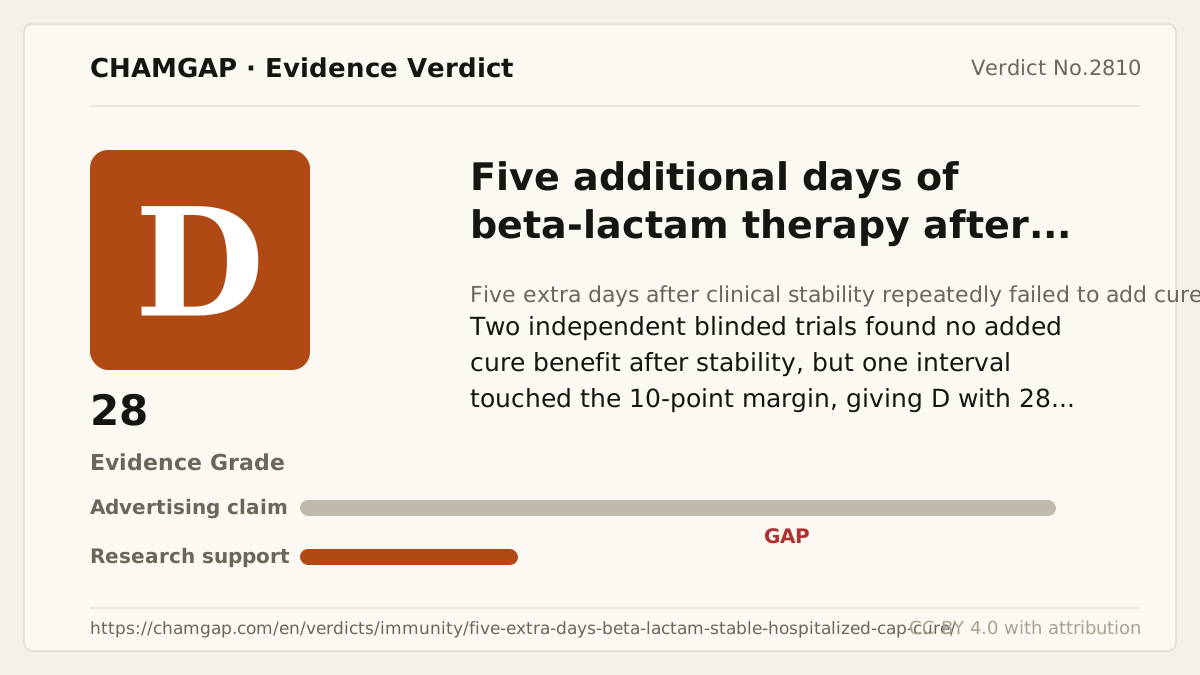
[Chamgap] Five additional days of beta-lactam after clinical stability x no clinically important added cure benefit in hospitalized adults with community-acquired pneumonia — Evidence Grade D·28. 3 cited sources checked. Source: https://chamgap.com/en/verdicts/immunity/five-extra-days-beta-lactam-stable-hospitalized-cap-cure/ · CC BY 4.0CC BY 4.0 — free to use with attribution; do not distort grades, numbers, or verdict meaning.
What this document does and does not do
Chamgap is an information source. It reports what research has and has not confirmed; it does not tell readers what to take or buy. That decision belongs to readers and, when needed, medical or legal professionals. This verdict reflects literature available up to the search date and may change as new research appears. Nothing here is medical advice.