
Etranacogene dezaparvovec,
does it really help with Reduced annualized bleeding rate versus prior prophylaxis in severe or moderately severe hemophilia B?
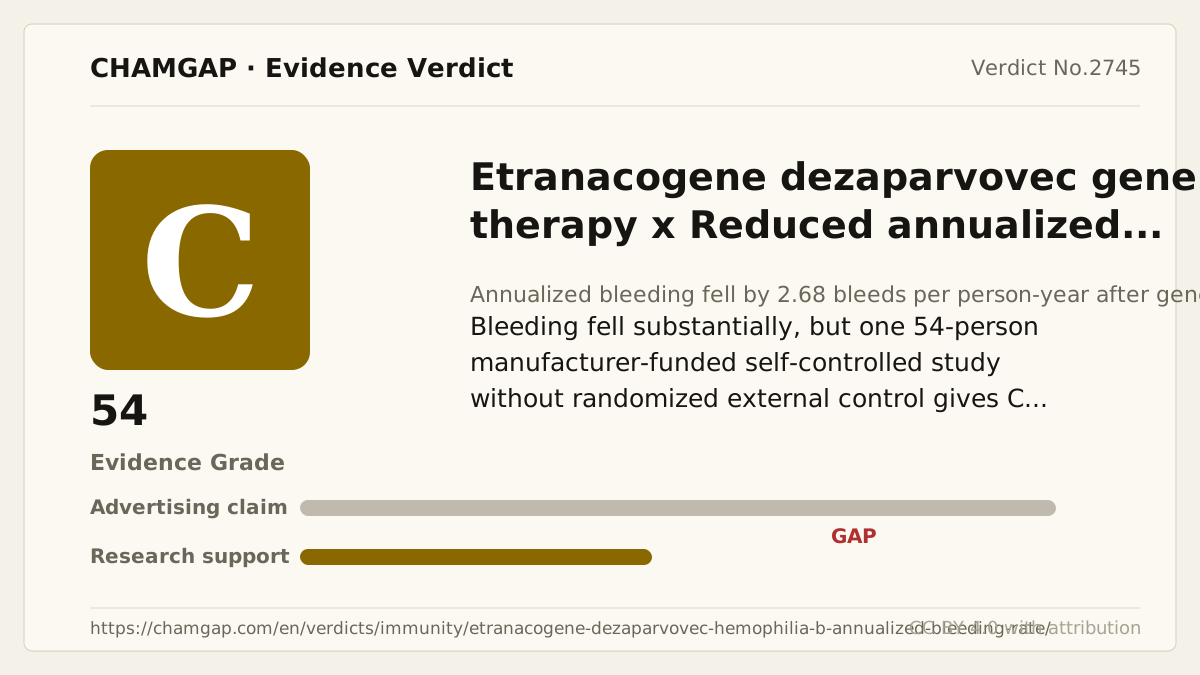
research showsThe grade is C with 54 points. HOPE-B was an open-label single-arm phase 3 study without an external randomized control, comparing the same 54 men during at least six months of prophylaxis and after gene therapy. Annualized bleeding rate fell from 4.19 (95% CI 3.22–5.45) during lead-in to 1.51 (0.81–2.82) during months 7–18, rate ratio 0.36 (95% Wald CI 0.20–0.64), P<0.001. The absolute difference was -2.68 bleeds per person-year.
ads claimBoth the rate ratio, 0.36, and absolute reduction, 2.68 bleeds per person-year, should be disclosed. Saying only '64% reduction' or calling this randomized is misleading.
Useful facts when choosing a product
- An AAV5 vector delivers the Padua factor IX variant in one intravenous infusion.
- The comparator was each participant's prophylaxis lead-in, not separate patients.
- uniQure and CSL Behring funded the trial.
What the research actually shows
HOPE-B enrolled 54 men with severe or moderately severe hemophilia B at 33 sites, observed them during at least six months of prophylaxis, then administered one infusion in an open-label phase 3 single-arm study. The primary analysis used the full analysis population with at least one post-dose efficacy assessment. uniQure and CSL Behring funded it. Avoidable limitations were noninferiority design, total enrollment below 200, and active self-control without external placebo. The nonrandomized self-controlled structure also supports classifying this as one pivotal study rather than replication.
Why this is classified as C (54)
A clinical bleeding endpoint and large absolute reduction are strengths, but one manufacturer-only 54-person open-label self-controlled noninferiority study with multiple design limitations gives C with 54 points.
Counterpoint. Annual factor IX use also fell by 248,825 IU per participant, but durability and rare harms require longer follow-up.
Rejudgment record. Cross-check applied — Despite a clinical bleeding endpoint and meeting the prespecified rate-ratio margin of 1.8, evidence is one manufacturer-funded 54-person self-controlled noninferiority study without an external randomized control
| Endpoint | H | Hard endpoint - actual events such as death |
| Replication | R1 | Single confirmatory trial |
| Independence | I0 | Evidence comes only from manufacturer studies |
| Effect size | E+ | Meets the clinically important threshold |
The scoring table and the verdict agree (C).
Sub-claim grades by effect
This ingredient is marketed for several effects. A single overall grade blends strong and weak claims together, so each effect is graded separately here. The overall grade reflects the strongest disconfirming or core claim.
| Effect (sub-claim) | Grade | Basis |
|---|---|---|
| Reduced annualized bleeding rate | C | Rate ratio was 0.36, with an absolute -2.68 bleeds per person-year. |
| Durable long-term bleeding prevention | ? | Durability and rare harms beyond the primary 18-month period cannot be established from this report. |
Cross-check — Codex and Claude
Evidence Table
| Study | Design | Sample | Funding | Endpoint | Result | Weight |
|---|---|---|---|---|---|---|
| Study 1 | Open-label multicenter phase 3 single-arm self-controlled noninferiority study | 54 | uniQure and CSL Behring | Annualized bleeding rate during months 7–18 versus prophylaxis lead-in | 4.19 (95% CI 3.22–5.45) to 1.51 (0.81–2.82); rate ratio 0.36 (95% Wald CI 0.20–0.64), P<0.001; absolute -2.68 bleeds per person-year | Pivotal single manufacturer-funded self-controlled study |
Receipt — 1 References
All 1 cited sources were verified for existence at the original page (as of 2026-08-18).
Reviewed and approved: Chamgap Editorial Team · Approval date: 2026-08-18 · Corrections: none
Cite this verdict
[Chamgap] Etranacogene dezaparvovec x annualized bleeding rate in hemophilia B — Evidence Grade C·54. 1 cited sources checked. Source: https://chamgap.com/en/verdicts/immunity/etranacogene-dezaparvovec-hemophilia-b-annualized-bleeding-rate/ · CC BY 4.0CC BY 4.0 — free to use with attribution; do not distort grades, numbers, or verdict meaning.
What this document does and does not do
Chamgap is an information source. It reports what research has and has not confirmed; it does not tell readers what to take or buy. That decision belongs to readers and, when needed, medical or legal professionals. This verdict reflects literature available up to the search date and may change as new research appears. Nothing here is medical advice.