
Simultaneous acetaminophen plus ibuprofen,
does it really help with Reduced fever-related discomfort at 48 hours versus either single drug?
research showsThe grade is D with 28 points. PITCH randomized 156 children equally to acetaminophen, ibuprofen, or simultaneous combination. No-discomfort rates at 48 hours were 69%, 65%, and 71%; adjusted odds ratios for combination were 1.33 (95% CI 0.49 to 3.56) versus acetaminophen and 0.89 (0.32 to 2.43) versus ibuprofen, both null.
ads claimThis verdict uses the actual simultaneous-combination and two single-drug groups in the registry and paper. A two-drug schedule increases drug, dose, and interval confusion and overdose risk.
Useful facts when choosing a product
- PITCH used acetaminophen 15 mg/kg every four to six hours and ibuprofen 10 mg/kg every six to eight hours.
- A pooled discomfort estimate and heterogeneity statistic from the Cochrane review could not be confirmed.
- Verdict 2275 is D with 30 points and concerns prevention of later febrile-seizure recurrence, not discomfort during the current fever episode.
What the research actually shows
PITCH randomized 156 children equally to acetaminophen alone, ibuprofen alone, or both drugs simultaneously. The registry described the first primary outcome as fever-free time during the initial four hours; the paper specified minutes below 37.2 degrees C measured by a data logger. They concern the same construct, but the wording and measurement description are not completely identical. The other co-primary outcome, discomfort at 48 hours, was null. Potential baseline imbalances existed in sex, recruitment route, and activity, and additional adjustment beyond minimization variables barely changed estimates. During 24 hours, 13 children (7%) erroneously received a fifth acetaminophen dose and 18 (13%) a fourth ibuprofen dose.
Why this is classified as D (28)
Simultaneous combination was null for discomfort versus both single drugs, giving D with 28 points.
Counterpoint. Early temperature improved in one comparison, but patient-centered discomfort did not.
Rejudgment record. Cross-check applied — Null 48-hour discomfort in the actual simultaneous-combination versus single-drug comparisons
| Endpoint | P | Patient-reported treatment goal - the symptom is the goal |
| Replication | R1 | Single confirmatory trial |
| Independence | I1 | Mixed funding sources |
| Effect size | E0 | Null |
| Precision | C0 | The confidence interval leaves room for benefit |
The scoring table and the verdict agree (D).
Sub-claim grades by effect
This ingredient is marketed for several effects. A single overall grade blends strong and weak claims together, so each effect is graded separately here. The overall grade reflects the strongest disconfirming or core claim.
| Effect (sub-claim) | Grade | Basis |
|---|---|---|
| Reduced discomfort at 48 hours with simultaneous combination | D | PITCH found no difference versus either single drug. |
| Additional temperature reduction with simultaneous combination | C | Temperature improved but is a surrogate rather than the patient-centered discomfort target. |
Cross-check — Codex and Claude
Evidence Table
| Study | Design | Sample | Funding | Endpoint | Result | Weight |
|---|---|---|---|---|---|---|
| Study 1 | Three-arm randomized trial | 156 | NIHR HTA 03/09/01 | Co-primary fever-free time and discomfort | Combination temperature positive, discomfort null | Pivotal simultaneous-combination evidence |
Receipt — 2 References
All 2 cited sources were verified for existence at the original page (as of 2026-08-08).
Reviewed and approved: Chamgap Editorial Team · Approval date: 2026-08-08 · Corrections: none
Cite this verdict
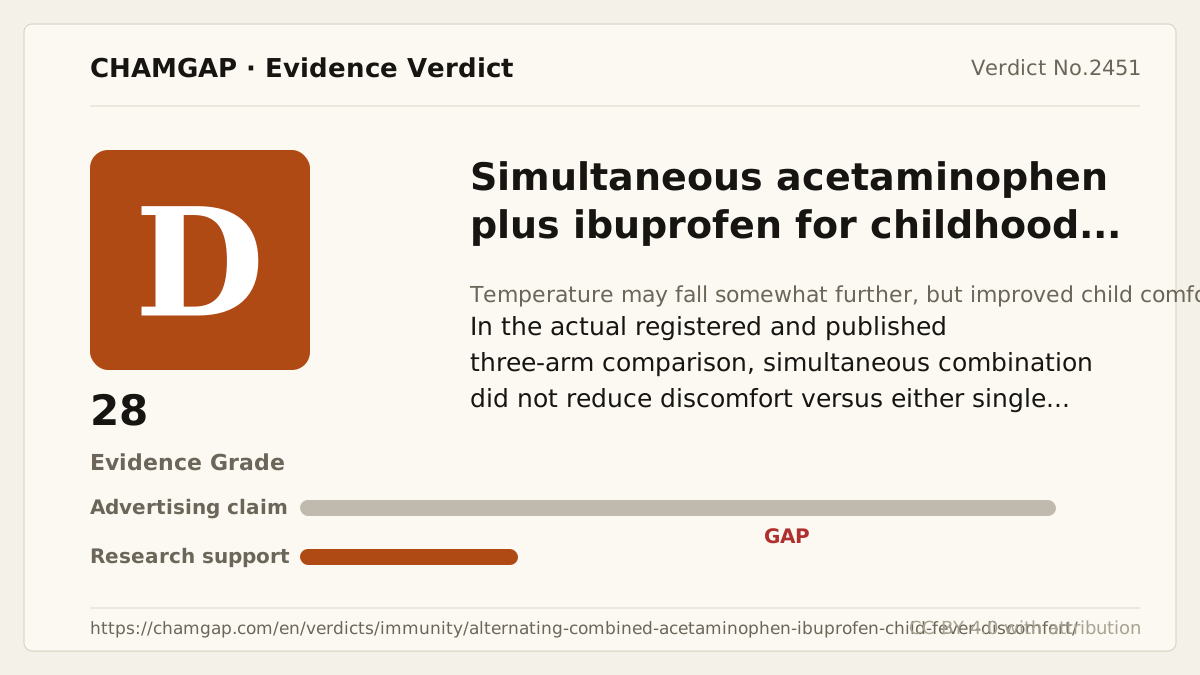
[Chamgap] Simultaneous acetaminophen plus ibuprofen x childhood fever discomfort at 48 hours — Evidence Grade D·28. 2 cited sources checked. Source: https://chamgap.com/en/verdicts/immunity/alternating-combined-acetaminophen-ibuprofen-child-fever-discomfort/ · CC BY 4.0CC BY 4.0 — free to use with attribution; do not distort grades, numbers, or verdict meaning.
What this document does and does not do
Chamgap is an information source. It reports what research has and has not confirmed; it does not tell readers what to take or buy. That decision belongs to readers and, when needed, medical or legal professionals. This verdict reflects literature available up to the search date and may change as new research appears. Nothing here is medical advice.