
Early multidomain rehabilitation,
does it really help with Improved three-month physical function in older adults hospitalized with acute decompensated heart failure?
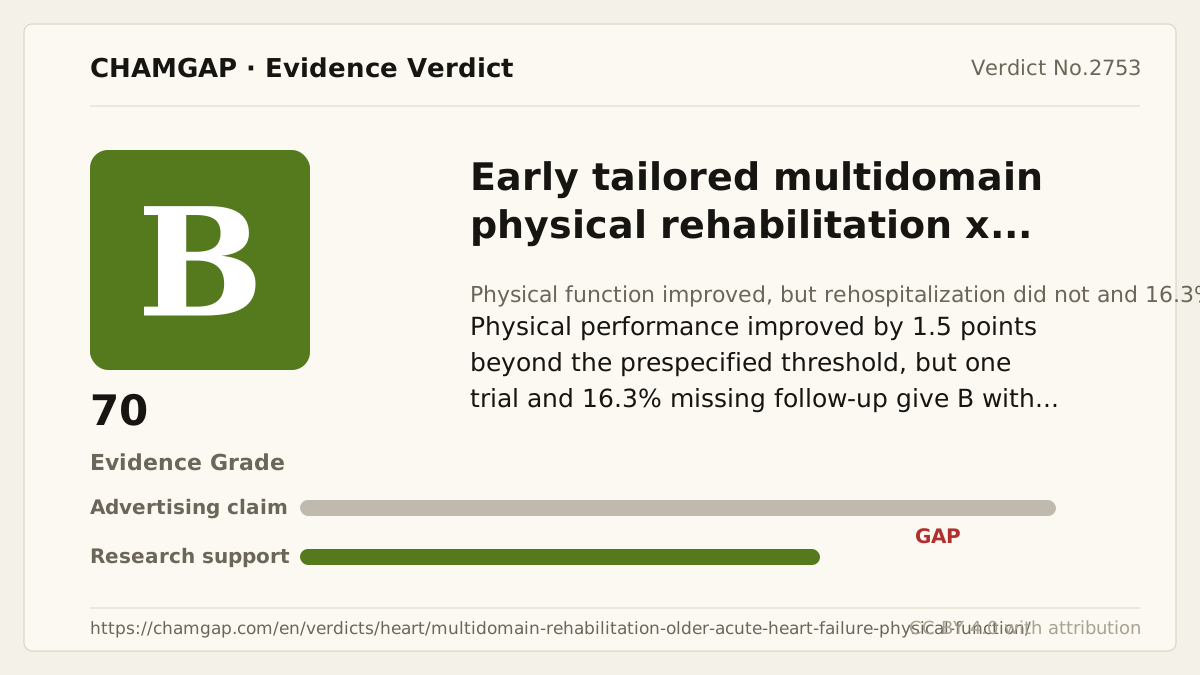
research showsThe grade is B. REHAB-HF randomized 349 participants, and three-month SPPB data were available for 292. Baseline-adjusted means were 8.3 with rehabilitation and 6.9 with attention control, a 1.5-point difference (95% CI 0.9–2.0) exceeding the investigators' 0.5-point minimum important difference. This was one publicly funded trial with 16.3% missing three-month data, giving B with 70 points.
ads claimImproved mobility and daily function matter, but they cannot be advertised as reduced rehospitalization or mortality. This supervised program was tailored to frail older inpatients with multiple comorbidities.
Useful facts when choosing a product
- The intervention trained strength, balance, mobility, and endurance.
- The three-month SPPB difference was 1.5 points.
- Reduced rehospitalization or mortality was not demonstrated.
What the research actually shows
Seven centers randomized 349 adults aged at least 60 years with acute decompensated heart failure, 175 to rehabilitation and 174 to attention control. The intervention addressed strength, balance, mobility, and endurance, beginning during or shortly after hospitalization and continuing for 36 outpatient sessions. Physical and cognitive outcome assessors were blinded to assignment. Three-month SPPB data were available for 292, leaving 57 participants (16.3%) missing; this substantial missingness is counted as one avoidable limitation. The article reports National Institute on Aging and other NIH support, including R01AG045551, R01AG18915, P30AG021332, P30AG028716, and U24AG059624.
Why this is classified as B (70)
A publicly funded trial exceeded the prespecified minimum important physical-function difference, but one confirmatory trial and 16.3% missing data give B with 70 points.
Counterpoint. Functional and clinical-event outcomes must remain separate, and frail participants require individualized fall and exertion precautions.
Rejudgment record. Cross-check applied — Accounts for the 1.5-point SPPB improvement in one publicly funded trial and three-month data in 292 of 349 randomized participants
| Endpoint | P | Patient-reported treatment goal - the symptom is the goal |
| Replication | R1 | Single confirmatory trial |
| Independence | I2 | Decisive evidence is publicly or non-profit funded |
| Effect size | E+ | Meets the clinically important threshold |
The scoring table and the verdict agree (B).
Sub-claim grades by effect
This ingredient is marketed for several effects. A single overall grade blends strong and weak claims together, so each effect is graded separately here. The overall grade reflects the strongest disconfirming or core claim.
| Effect (sub-claim) | Grade | Basis |
|---|---|---|
| Improved physical function at three months | B | The between-group SPPB difference was 1.5 points. |
| Reduced six-month rehospitalization | D | The rate ratio was null at 0.93 (95% CI 0.66–1.19). |
Cross-check — Codex and Claude
Evidence Table
| Study | Design | Sample | Funding | Endpoint | Result | Weight |
|---|---|---|---|---|---|---|
| Study 1 | Seven-center assessor-blinded randomized attention-control trial | 292 | National Institute on Aging and other NIH grants | Short Physical Performance Battery at three months | Baseline-adjusted means 8.3 versus 6.9; difference 1.5 points (95% CI 0.9–2.0), P<0.001 | Single publicly funded patient-centered function trial with 16.3% missing three-month data |
Receipt — 2 References
All 2 cited sources were verified for existence at the original page (as of 2026-08-18).
Reviewed and approved: Chamgap Editorial Team · Approval date: 2026-08-18 · Corrections: none
Cite this verdict
[Chamgap] Early multidomain rehabilitation x physical function after acute heart-failure hospitalization — Evidence Grade B·70. 2 cited sources checked. Source: https://chamgap.com/en/verdicts/heart/multidomain-rehabilitation-older-acute-heart-failure-physical-function/ · CC BY 4.0CC BY 4.0 — free to use with attribution; do not distort grades, numbers, or verdict meaning.
What this document does and does not do
Chamgap is an information source. It reports what research has and has not confirmed; it does not tell readers what to take or buy. That decision belongs to readers and, when needed, medical or legal professionals. This verdict reflects literature available up to the search date and may change as new research appears. Nothing here is medical advice.