
Aronia,
does it really help with Antioxidant, blood pressure, and vascular effects?
research showsAronia has small human studies examining cardiovascular surrogate markers such as oxidative-stress markers, blood pressure, and lipids. However, large RCTs proving cardiovascular events, progression of atherosclerosis, or long-term vascular benefits in generally healthy people are difficult to find.
ads claimProducts combine phrases such as 'anthocyanins,' 'No. 1 antioxidant,' 'vascular cleansing,' and 'blood-pressure management.' The actual human evidence is concentrated on blood markers and blood-pressure changes in patients or high-risk groups.
Useful facts when choosing a product
- Juice, powder, and flavonoid extracts differ greatly in polyphenol content.
- It is difficult to directly transfer studies in people taking blood-pressure or lipid medications to preventive effects in generally healthy people.
- Gastrointestinal discomfort may occur because of astringent components and acidity.
- People taking blood-pressure medications or anticoagulants are safer checking supplement co-use with a clinician.
What the research actually shows
Naruszewicz 2007 gave aronia flavonoid extract for 6 weeks to 44 statin users after myocardial infarction and reported improvements in blood pressure, oxidized LDL, hsCRP, and endothelin-1. Skoczynska 2007 reported effects of chokeberry juice on blood pressure, lipids, and oxidative markers in men with mild hypercholesterolemia. Broncel 2010 reported improvements in blood pressure, endothelin-1, and lipids in 25 patients with metabolic syndrome, but the sample was small and the control-group structure was limited. Overall, antioxidant and vascular claims are centered on intermediate surrogate markers.
Why this is classified as C (43)
Repeated human surrogate-marker studies place this above the lower end of C, but without large independent RCTs and clinical outcomes I do not raise it to B. It is C, 43 points.
Counterpoint. Changes in numbers such as blood pressure and oxidized LDL are biologically plausible. However, this judgment does not extend them to the broader claim that vascular health clinically improved.
Rejudgment record. Draft — Human surrogate-marker studies exist, but they are small, centered on patient populations, and lack clinical outcomes
Cross-check — Codex and Claude
Evidence Table
| Study | Design | Sample | Funding | Endpoint | Result | Weight |
|---|---|---|---|---|---|---|
| Naruszewicz M et al. 2007 | Randomized placebo-controlled trial | 44 | Unknown/extract study | Blood pressure, oxidized LDL, hsCRP, and endothelin-1 | Reported improvements in blood pressure and oxidative, inflammatory, and endothelial surrogate markers after 6 weeks of intake. | Core |
| Skoczynska A et al. 2007 | Human intervention study | Unknown | Blood pressure, lipids, and oxidative stress | Reported changes in some cardiovascular surrogate markers after intake of chokeberry juice. | Supporting | |
| Broncel M et al. 2010 | Small clinical trial | 25 | Unknown | Blood pressure, lipids, and endothelin-1 | Reported improvements in blood pressure and some vascular surrogate markers after 2 months of intake. | Supporting |
Receipt — 4 References
All 4 cited sources were verified for existence at the original page (as of 2026-07-09).
Reviewed and approved: Chamgap Editorial Team · Approval date: 2026-07-09 · Corrections: none
Cite this verdict
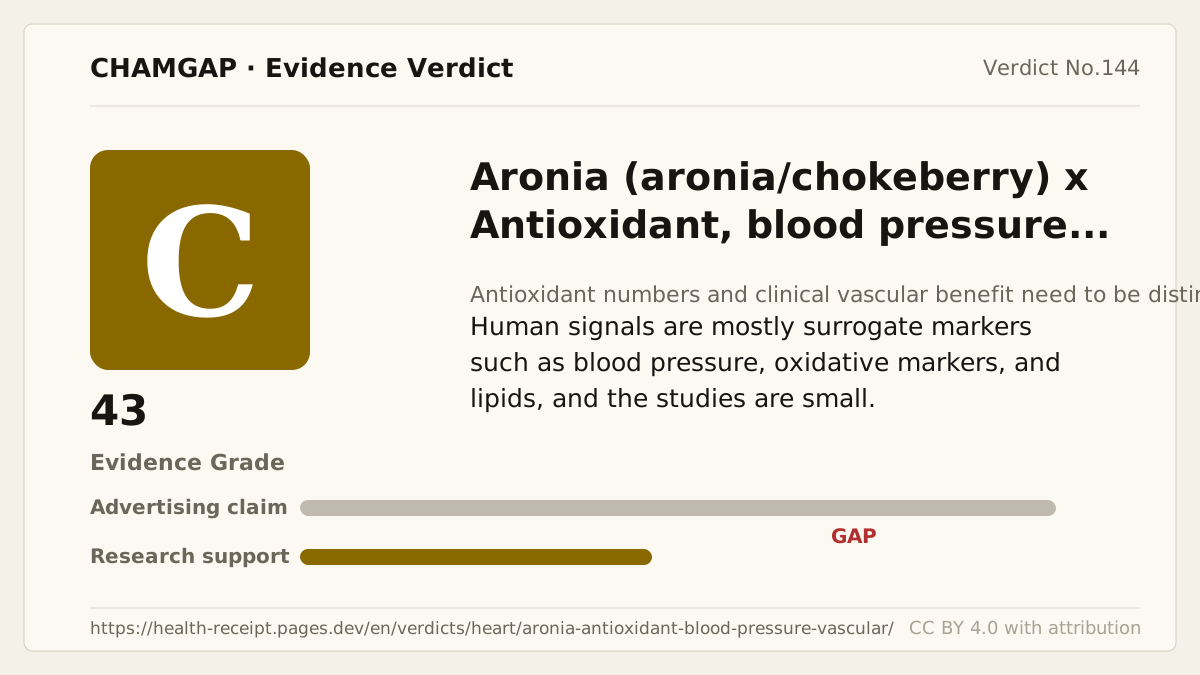
[Chamgap] Aronia (chokeberry) x antioxidant, blood pressure, and vascular effects — Evidence Grade C·43. 4 cited sources checked. Source: https://chamgap.com/en/verdicts/heart/aronia-antioxidant-blood-pressure-vascular/ · CC BY 4.0CC BY 4.0 — free to use with attribution; do not distort grades, numbers, or verdict meaning.
What this document does and does not do
Chamgap is an information source. It reports what research has and has not confirmed; it does not tell readers what to take or buy. That decision belongs to readers and, when needed, medical or legal professionals. This verdict reflects literature available up to the search date and may change as new research appears. Nothing here is medical advice.