
Nitrous oxide,
does it really help with No increase in major cardiovascular events, but increased severe nausea and vomiting?
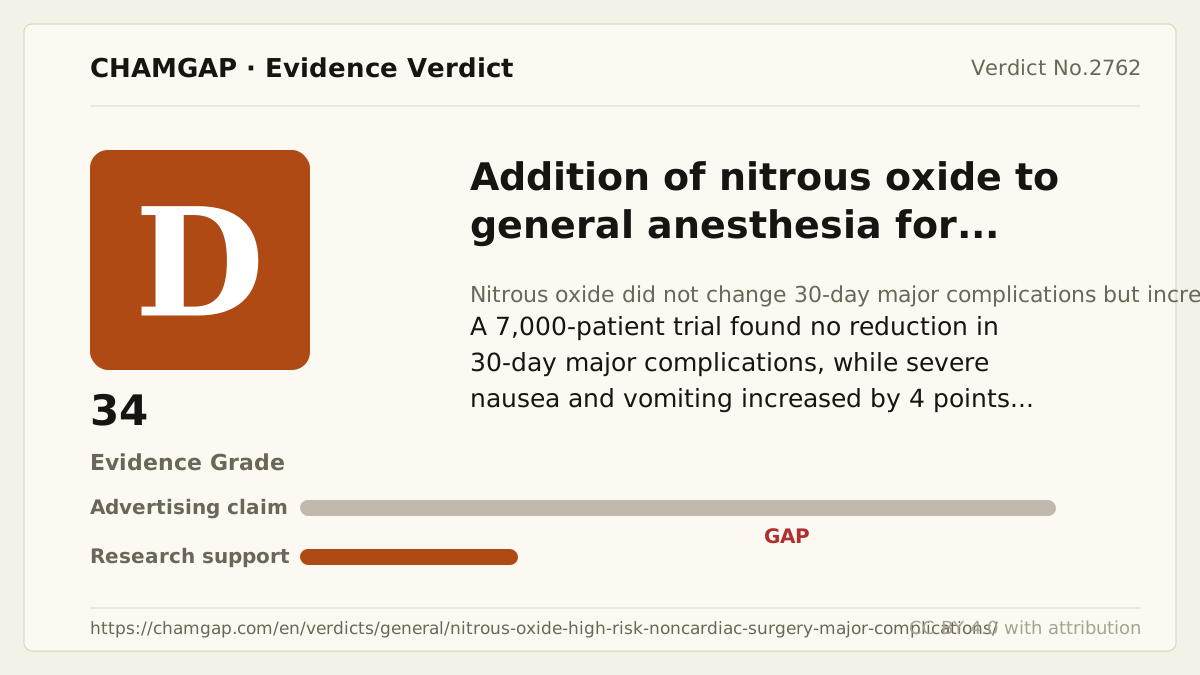
research showsThe grade is D with 34 points. ENIGMA-II randomized 7,112 patients and used a prespecified modified intention-to-treat population of 6,992 who underwent induction of general anesthesia. The primary endpoint of death or nonfatal myocardial infarction, stroke, pulmonary embolism, or cardiac arrest within 30 days occurred in 283/3,483 (8.1%) versus 296/3,509 (8.4%), RR 0.96 (95% CI 0.83 to 1.12; P=.64), a null result. In contrast, the prespecified safety endpoint of severe nausea and vomiting increased significantly, 15% versus 11% (P<.0001).
ads claimIt is reasonable to say that nitrous oxide did not increase major cardiovascular complications in this setting, but not that it had no adverse effects. Severe nausea and vomiting rose from 11% to 15%.
Useful facts when choosing a product
- The intervention included nitrous oxide in general anesthesia; the comparator omitted it.
- The registration is NCT00430989.
- The article did not identify company-supplied trial gas or equipment.
What the research actually shows
Patients, surgeons, research staff, and outcome adjudicators were masked; only the responsible anesthetist knew the gas mixture. Central allocation used an automated telephone voice-recognition service. The prespecified primary population nevertheless excluded 120 randomized patients who did not undergo induction of general anesthesia. This post-randomization exclusion was counted as one avoidable analysis limitation. The trial reached its planned 7,000 participants and was not stopped early. Funding came from NHMRC grant 436677, the Australian and New Zealand College of Anaesthetists, the Quebec and Ontario Heart and Stroke foundations, and Hong Kong's Research Grant Council. The article states, "We declare no competing interests," and does not state that a company supplied trial gases, devices, or assessment tools.
Why this is classified as D (34)
This was a large publicly and nonprofit-funded hard-outcome trial, but primary benefit was null and the modified intention-to-treat analysis excluded 120 patients after randomization, giving D with 34 points.
Counterpoint. Cardiovascular safety was confirmed, but the nausea-and-vomiting burden is real. D does not mean nitrous oxide should never be used; major-event rates were similar, while increased severe nausea and vomiting is separate safety information.
Rejudgment record. Cross-check applied — Cross-checked the Lancet report, design paper, and NCT00430989 for central telephone allocation, masking, the prespecified modified intention-to-treat population of 6,992, the 30-day composite, funding, and competing-interest declaration
| Endpoint | H | Hard endpoint - actual events such as death |
| Replication | R1 | Single confirmatory trial |
| Independence | I2 | Decisive evidence is publicly or non-profit funded |
| Effect size | E- | Harm increased in the trials |
| Precision | C0 | The confidence interval leaves room for benefit |
The scoring table and the verdict agree (D).
Sub-claim grades by effect
This ingredient is marketed for several effects. A single overall grade blends strong and weak claims together, so each effect is graded separately here. The overall grade reflects the strongest disconfirming or core claim.
| Effect (sub-claim) | Grade | Basis |
|---|---|---|
| Reduced 30-day death and major cardiovascular complications | D | The result was null, 8.1% versus 8.4%, RR 0.96. |
| No increase in severe nausea and vomiting | D | It increased from 11% to 15%, an absolute 4-point difference. |
Cross-check — Codex and Claude
Evidence Table
| Study | Design | Sample | Funding | Endpoint | Result | Weight |
|---|---|---|---|---|---|---|
| Study 1 | International multicenter randomized trial with patients, surgeons, and assessors masked | 3,509 | NHMRC 436677, ANZCA, Quebec and Ontario Heart and Stroke foundations, and Hong Kong Research Grant Council; no company supply identified | Death or nonfatal myocardial infarction, stroke, pulmonary embolism, or cardiac arrest within 30 days; prespecified safety endpoint of severe nausea and vomiting | Primary endpoint 283/3,483 (8.1%) versus 296/3,509 (8.4%), RR 0.96 (0.83 to 1.12), P=.64, a null result; severe nausea and vomiting 15% versus 11%, P<.0001, a significant increase | Large independently funded hard-outcome trial with a null primary cardiovascular composite and a significant increase in the prespecified severe nausea-and-vomiting safety endpoint; post-randomization analysis exclusions |
Receipt — 1 References
All 1 cited sources were verified for existence at the original page (as of 2026-08-18).
Reviewed and approved: Chamgap Editorial Team · Approval date: 2026-08-18 · Corrections: none
Cite this verdict
[Chamgap] Nitrous oxide x no increase in major cardiovascular events but more severe nausea and vomiting — Evidence Grade D·34. 1 cited sources checked. Source: https://chamgap.com/en/verdicts/general/nitrous-oxide-high-risk-noncardiac-surgery-major-complications/ · CC BY 4.0CC BY 4.0 — free to use with attribution; do not distort grades, numbers, or verdict meaning.
What this document does and does not do
Chamgap is an information source. It reports what research has and has not confirmed; it does not tell readers what to take or buy. That decision belongs to readers and, when needed, medical or legal professionals. This verdict reflects literature available up to the search date and may change as new research appears. Nothing here is medical advice.