
Concert earplugs,
does it really help with Prevention of temporary hearing-threshold shift immediately after amplified music exposure?
research showsThe grade is C. In a festival RCT with 4.5 hours of exposure averaging 100 dBA, temporary threshold shift at 3 and 4 kHz occurred in 4/50 ears (8%) with earplugs versus 22/52 ears (42%) without protection; the unprotected-to-earplug RR was 5.3 (95% CI 2.0-14.3). The effect was large, but it came from 51 people at one festival and measured a short-term surrogate, giving C with 50 points.
ads claimIt is accurate to say the plugs reduced immediate post-event hearing change. It is not accurate to convert this into certain prevention of permanent hearing loss or assume every plug produces the same attenuation.
Useful facts when choosing a product
- The trial plug was an MTV Soundkeepr product labeled for 18-dB noise reduction.
- Average music exposure was 100 dBA for 4.5 hours.
- Existing earplug verdicts mainly address sleep or delirium, not post-concert hearing threshold.
What the research actually shows
Ramakers recruited 51 normal-hearing adults who did not intend to use earplugs, assigning 25 to MTV Soundkeepr plugs labeled for 18-dB attenuation and 26 to no protection. Mean sound exposure was 100 dBA for 4.5 hours. Temporary threshold shift occurred in 4/50 versus 22/52 ears, NNT 2.9. New tinnitus occurred in 3 versus 10 of 25 respondents per group, absolute difference 28 points (95% CI 3.6-49.0). Support involved UMC Utrecht, MTV Benelux, Van Boxtel, and Oticon Medical; MTV Soundkeepr supplied the plugs, and no conflicts were reported.
Why this is classified as C (50)
A small single-festival trial showed a large reduction in the prespecified primary threshold shift, but the endpoint was surrogate and the sample was 51, giving C with 50 points.
Counterpoint. Real attenuation varies with fit and product, and exposure duration and distance from speakers still matter.
Rejudgment record. Cross-check applied — We cross-checked the prespecified primary outcome, analyzed denominators, event counts, noise exposure, funding, and product supply against the JAMA report and NTR5401 record.
| Endpoint | S | Surrogate marker - laboratory or imaging measures |
| Replication | R1 | Single confirmatory trial |
| Independence | I1 | Mixed funding sources |
| Effect size | E+ | Meets the clinically important threshold |
The scoring table and the verdict agree (C).
Sub-claim grades by effect
This ingredient is marketed for several effects. A single overall grade blends strong and weak claims together, so each effect is graded separately here. The overall grade reflects the strongest disconfirming or core claim.
| Effect (sub-claim) | Grade | Basis |
|---|---|---|
| Concert earplugs reduce immediate temporary hearing-threshold shift. | C | The 51-person RCT found 8% versus 42%. |
| Concert earplugs prevent permanent hearing loss. | ? | The identified randomized trial reported only immediate short-term measurements. |
Cross-check — Codex and Claude
Evidence Table
| Study | Design | Sample | Funding | Endpoint | Result | Weight |
|---|---|---|---|---|---|---|
| Study 1 | Single-blind randomized clinical trial | 52 | Support involving UMC Utrecht, MTV Benelux, Van Boxtel, and Oticon Medical; MTV Soundkeepr supplied plugs; no conflicts reported | Temporary post-exposure threshold shift at 3 and 4 kHz | 4/50 ears (8%) versus 22/52 ears (42%); unprotected/earplug RR 5.3 (95% CI 2.0-14.3); new tinnitus 3/25 versus 10/25 | Registered pivotal direct trial |
Receipt — 2 References
Of 2 cited sources, 1 had limited original-page access (blocked or summary-only) and were verified via index/summary, marked partial; the rest were verified at the original page. As of 2026-08-14.
Reviewed and approved: Chamgap Editorial Team · Approval date: 2026-08-14 · Corrections: none
Cite this verdict
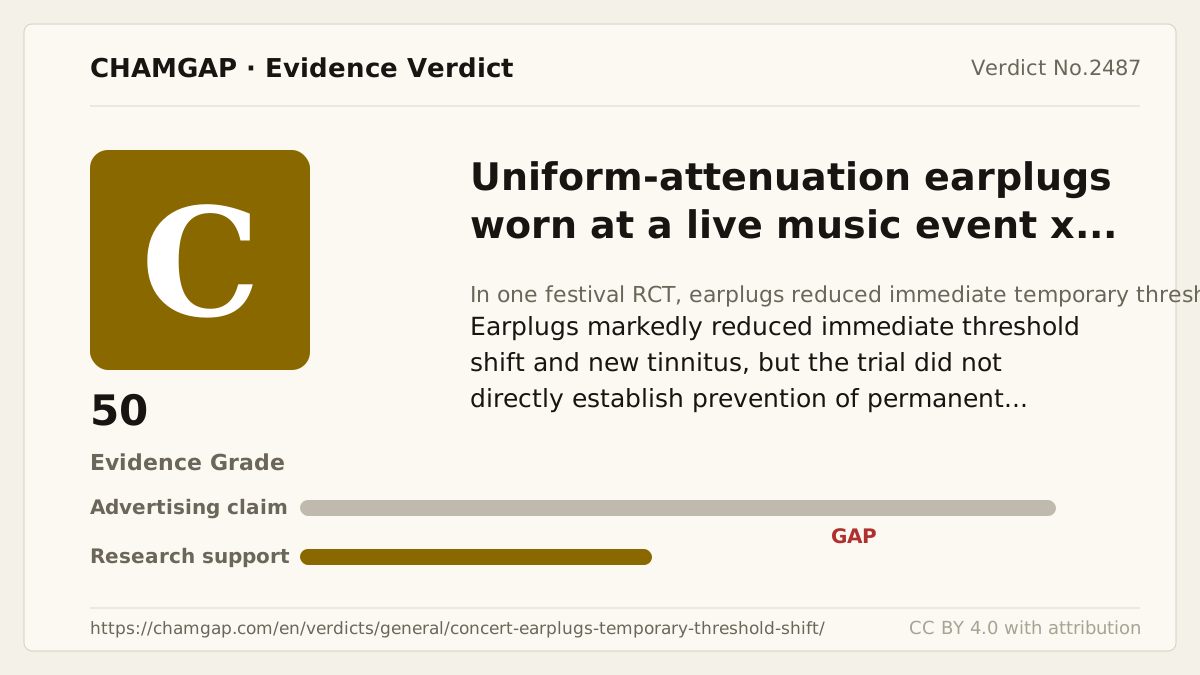
[Chamgap] Concert earplugs x prevention of temporary hearing loss — Evidence Grade C·50. 2 cited sources checked. Source: https://chamgap.com/en/verdicts/general/concert-earplugs-temporary-threshold-shift/ · CC BY 4.0CC BY 4.0 — free to use with attribution; do not distort grades, numbers, or verdict meaning.
What this document does and does not do
Chamgap is an information source. It reports what research has and has not confirmed; it does not tell readers what to take or buy. That decision belongs to readers and, when needed, medical or legal professionals. This verdict reflects literature available up to the search date and may change as new research appears. Nothing here is medical advice.