
Starting neonatal resuscitation with 21% air,
does it really help with Reduced death or moderate-to-severe hypoxic-ischaemic encephalopathy versus starting with 100% oxygen?
research showsThe grade is C. Across five trials with 1,302 infants, mortality favored room air, RR 0.71 (95% CI 0.54-0.94), absolute difference -5 points. Yet three of five trials assigned treatment by calendar date rather than true randomization and did not mask caregivers or assessors. Individual death and encephalopathy estimates were imprecise. A clinical-event signal exists, but major design limitations give C with 54 points.
ads claimStarting with 21% air did not mean oxygen was never used. Rescue oxygen was allowed for persistent cyanosis or bradycardia, so these findings apply in a skilled resuscitation setting with oxygen immediately available.
Useful facts when choosing a product
- Room air contains about 21% oxygen; the comparator began positive-pressure ventilation with 100% oxygen.
- Air-assigned infants could receive 100% rescue oxygen at 90 seconds for persistent cyanosis or bradycardia.
- The pooled mortality estimate used four trials and 1,275 infants; long-term neurodevelopment remained uncertain.
What the research actually shows
Saugstad OD, Rootwelt T, Aalen O et al. enrolled 609 in Resair 2, 288 air and 321 oxygen, assigned by birth date, with about 91% short-term follow-up. Ramji S, Rasaily R, Mishra PK, Narang A et al. analyzed all 431, 210 air and 221 oxygen, assigned by odd or even birth date; five-minute Apgar was primary and death or encephalopathy secondary. Bajaj N, Udani RH, Nanavati RN compared death or encephalopathy in 204. None had a registration number and funding could not be confirmed. Because both research-team and funding independence could not be verified, the studies were not credited as independently funded replication.
Why this is classified as C (54)
A significant clinical mortality signal was offset by predictable date allocation and unmasked outcome assessment. Two strengths, hard endpoint and positive effect, plus at least two avoidable defects give C with 54 points.
Counterpoint. Individual trial intervals were wide and long-term neurodevelopment was not established.
Rejudgment record. Cross-check applied — We cross-checked allocation, analyzed counts, primary outcomes, mortality, encephalopathy, rescue oxygen, masking, and pooled intervals in the three reports and Cochrane review.
| Endpoint | H | Hard endpoint - actual events such as death |
| Replication | R1 | Single confirmatory trial |
| Independence | I1 | Mixed funding sources |
| Effect size | E+ | Meets the clinically important threshold |
The scoring table and the verdict agree (C).
Sub-claim grades by effect
This ingredient is marketed for several effects. A single overall grade blends strong and weak claims together, so each effect is graded separately here. The overall grade reflects the strongest disconfirming or core claim.
| Effect (sub-claim) | Grade | Basis |
|---|---|---|
| Reduced mortality | C | Pooled RR was 0.71 (0.54-0.94), but quasi-randomized trials contributed heavily. |
| Reduced moderate-to-severe hypoxic-ischaemic encephalopathy | D | Individual trials did not establish a significant reduction. |
Cross-check — Codex and Claude
Evidence Table
| Study | Design | Sample | Funding | Endpoint | Result | Weight |
|---|---|---|---|---|---|---|
| Study 1 | Multicenter controlled trial quasi-randomized by date of birth | 321 | Not confirmed | Death within seven days or moderate-to-severe hypoxic-ischaemic encephalopathy | 21.2% vs 23.7%, OR 0.94 (95% CI 0.63-1.40); adjusted neonatal-mortality OR 0.72 (0.45-1.15) | Largest individual quasi-randomized trial |
| Study 2 | Multicenter trial quasi-randomized by odd or even birth date | 221 | Not confirmed | Primary five-minute Apgar; secondary seven-day HIE and death | HIE 35.7% vs 37.1%; all-cause mortality 12.4% vs 18.1% | Supporting quasi-randomized evidence |
| Bajaj N, Udani RH, Nanavati RN, 2005 | Controlled clinical trial | 97 | Not confirmed | Hypoxic-ischaemic encephalopathy or death before discharge | 44/107 (41.1%) vs 42/97 (43.3%), OR 0.92 (0.52-1.59); death OR 0.89 (0.43-1.86) | Imprecise supporting evidence |
Receipt — 5 References
All 5 cited sources were verified for existence at the original page (as of 2026-08-14).
Reviewed and approved: Chamgap Editorial Team · Approval date: 2026-08-14 · Corrections: none
Cite this verdict
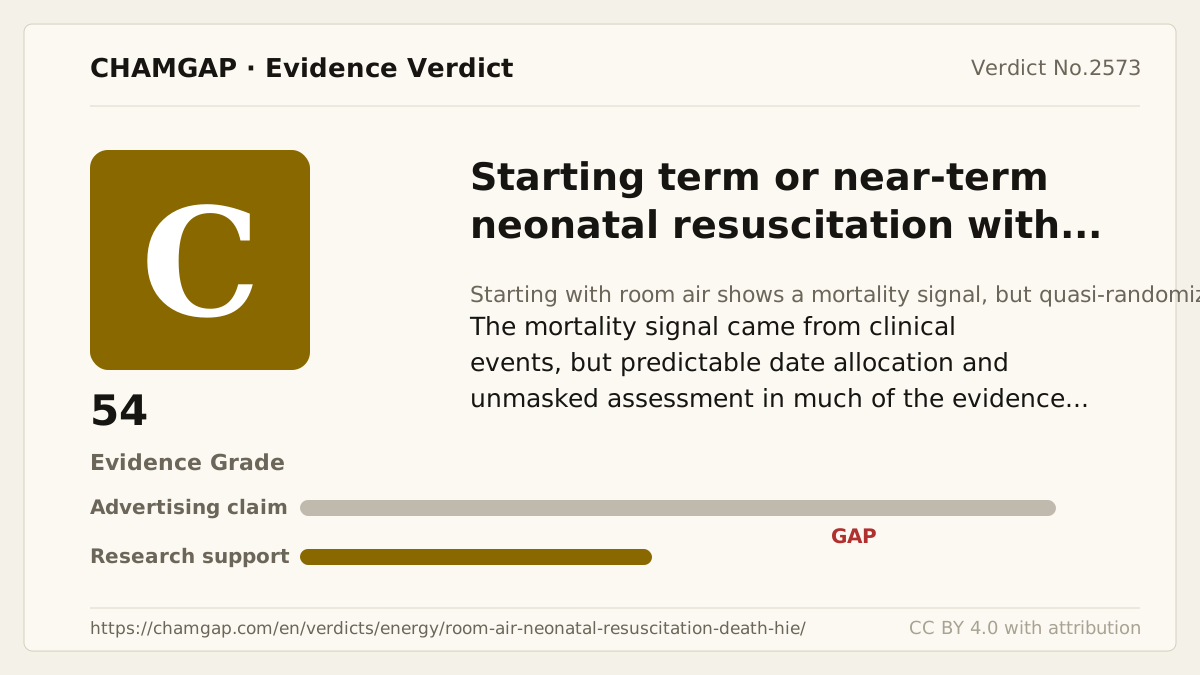
[Chamgap] Starting neonatal resuscitation with 21% air x reduced death or hypoxic-ischaemic encephalopathy — Evidence Grade C·54. 5 cited sources checked. Source: https://chamgap.com/en/verdicts/energy/room-air-neonatal-resuscitation-death-hie/ · CC BY 4.0CC BY 4.0 — free to use with attribution; do not distort grades, numbers, or verdict meaning.
What this document does and does not do
Chamgap is an information source. It reports what research has and has not confirmed; it does not tell readers what to take or buy. That decision belongs to readers and, when needed, medical or legal professionals. This verdict reflects literature available up to the search date and may change as new research appears. Nothing here is medical advice.