
Preoperative intensive inspiratory-muscle training,
does it really help with Reduction in postoperative pulmonary complications and pneumonia?
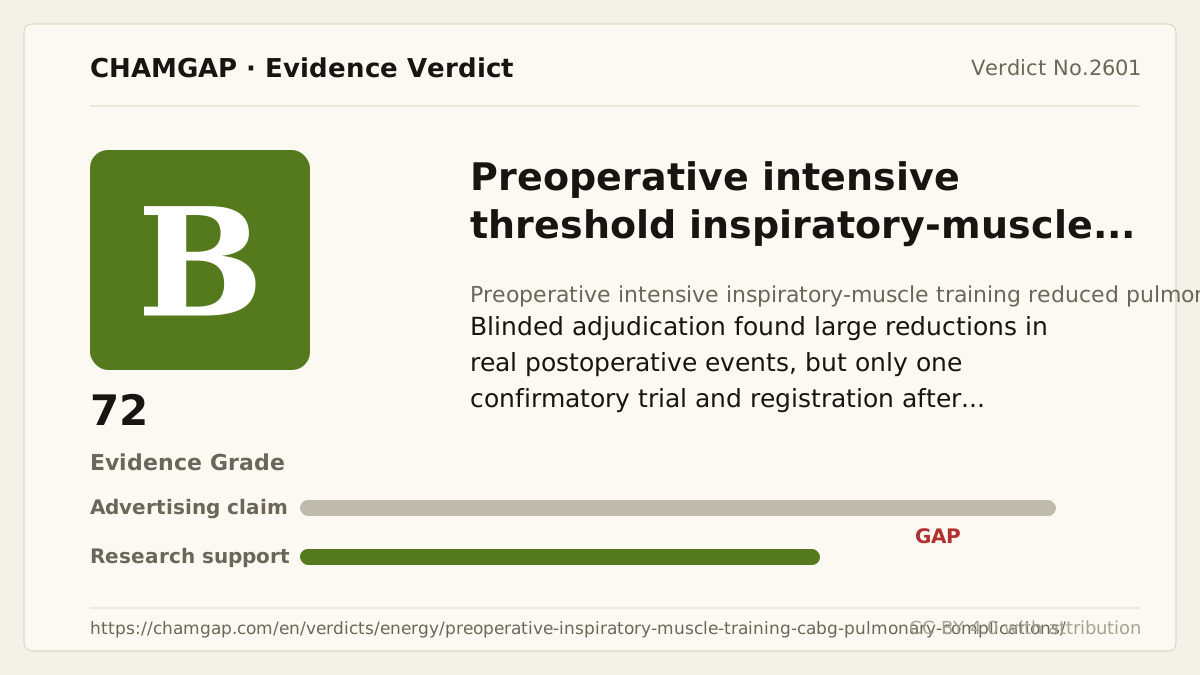
research showsThe grade is B with 72 points. The registered trial randomized 279 patients, 140 versus 139, and analyzed postoperative events in 139 versus 137 after three preoperative deaths. Pulmonary complications occurred in 25 (18.0%) versus 48 (35.0%), OR 0.52 (95% CI 0.30 to 0.92), and pneumonia in 9 (6.5%) versus 22 (16.1%), OR 0.40 (0.19 to 0.84). No independent confirmatory trial of the same high-risk CABG question was verified, limiting the grade to B.
ads claimDaily progressive threshold loading was real, but this does not establish the same effect for generic training masks or post hoc ventilator-weaning exercises. The verdict is limited to at least two weeks of the tested pre-CABG program.
Useful facts when choosing a product
- Training lasted at least two weeks, 20 minutes daily, seven days per week, beginning at 30% of maximal inspiratory pressure.
- Both groups received the same postoperative incentive spirometry, chest physiotherapy, and mobilization.
- PT-Medical supplied threshold devices but was reported not to fund or control the research.
What the research actually shows
Hulzebos and colleagues randomized 279 high-risk elective CABG patients using a computer sequence and consecutive sealed envelopes. Three died before surgery, leaving event analyses of 139 versus 137; the article specified intention-to-treat analysis and last-observation-carried-forward handling of missing values. An independent blinded investigator adjudicated pulmonary complications, and a blinded independent microbiologist assessed pneumonia and bronchitis. The registry and paper agreed on the primary outcome, but registration was submitted after recruitment began and its target sample and design labels did not fully match the article; this was retained as one limitation. Public, academic, insurer, and professional-association sources funded the work; PT-Medical supplied devices but was reported to have no role in design, analysis, or publication.
Why this is classified as B (72)
A hard primary endpoint, blinded adjudication, largely public or nonprofit support, and large absolute differences are strengths, but one confirmatory trial and registration after recruitment began give B with 72 points.
Counterpoint. Verdict 2565 is B with 70 points and concerns successful weaning in tracheostomized patients who had already failed prolonged ventilation. This verdict instead concerns prevention of postoperative pulmonary complications by training before CABG, so the population, timing, and endpoint differ.
Rejudgment record. Cross-check applied — Cross-checked randomized and analyzed counts, registration timing, target sample and design labels, primary outcome, blinded adjudication, event counts, funding, and supplier role against the JAMA article and ISRCTN17691887
| Endpoint | H | Hard endpoint - actual events such as death |
| Replication | R1 | Single confirmatory trial |
| Independence | I2 | Decisive evidence is publicly or non-profit funded |
| Effect size | E+ | Meets the clinically important threshold |
The scoring table and the verdict agree (B).
Sub-claim grades by effect
This ingredient is marketed for several effects. A single overall grade blends strong and weak claims together, so each effect is graded separately here. The overall grade reflects the strongest disconfirming or core claim.
| Effect (sub-claim) | Grade | Basis |
|---|---|---|
| Reduced clinically significant postoperative pulmonary complications | B | Rates were 18.0% versus 35.0%, OR 0.52 (95% CI 0.30 to 0.92). |
| Reduced postoperative pneumonia | B | Rates were 6.5% versus 16.1%, OR 0.40 (95% CI 0.19 to 0.84). |
Cross-check — Codex and Claude
Evidence Table
| Study | Design | Sample | Funding | Endpoint | Result | Weight |
|---|---|---|---|---|---|---|
| Hulzebos EHJ, Helders PJM, Favié NJ, De Bie RA, Brutel de la Riviere A, Van Meeteren NLU. 2006 | Single-center, single-blind randomized clinical trial | 137 | Netherlands Organisation for Health Research and Development, UMC Utrecht institute, Agis Health Insurance, and Royal Dutch Association of Physical Therapy; devices supplied by PT-Medical | Clinically significant postoperative pulmonary complications before discharge; pneumonia | Pulmonary complications 25/139 (18.0%) versus 48/137 (35.0%), OR 0.52 (95% CI 0.30 to 0.92); pneumonia 9/139 (6.5%) versus 22/137 (16.1%), OR 0.40 (0.19 to 0.84) | Pivotal single confirmatory trial of a registered hard primary endpoint |
Receipt — 1 References
All 1 cited sources were verified for existence at the original page (as of 2026-08-15).
Reviewed and approved: Chamgap Editorial Team · Approval date: 2026-08-15 · Corrections: none
Cite this verdict
[Chamgap] Preoperative intensive inspiratory-muscle training x pulmonary complications after CABG — Evidence Grade B·72. 1 cited sources checked. Source: https://chamgap.com/en/verdicts/energy/preoperative-inspiratory-muscle-training-cabg-pulmonary-complications/ · CC BY 4.0CC BY 4.0 — free to use with attribution; do not distort grades, numbers, or verdict meaning.
What this document does and does not do
Chamgap is an information source. It reports what research has and has not confirmed; it does not tell readers what to take or buy. That decision belongs to readers and, when needed, medical or legal professionals. This verdict reflects literature available up to the search date and may change as new research appears. Nothing here is medical advice.