
Insulin degludec,
does it really help with Reduction of symptomatic and severe hypoglycemia versus glargine U100 at similar glycemic control in high-risk type 1 diabetes?
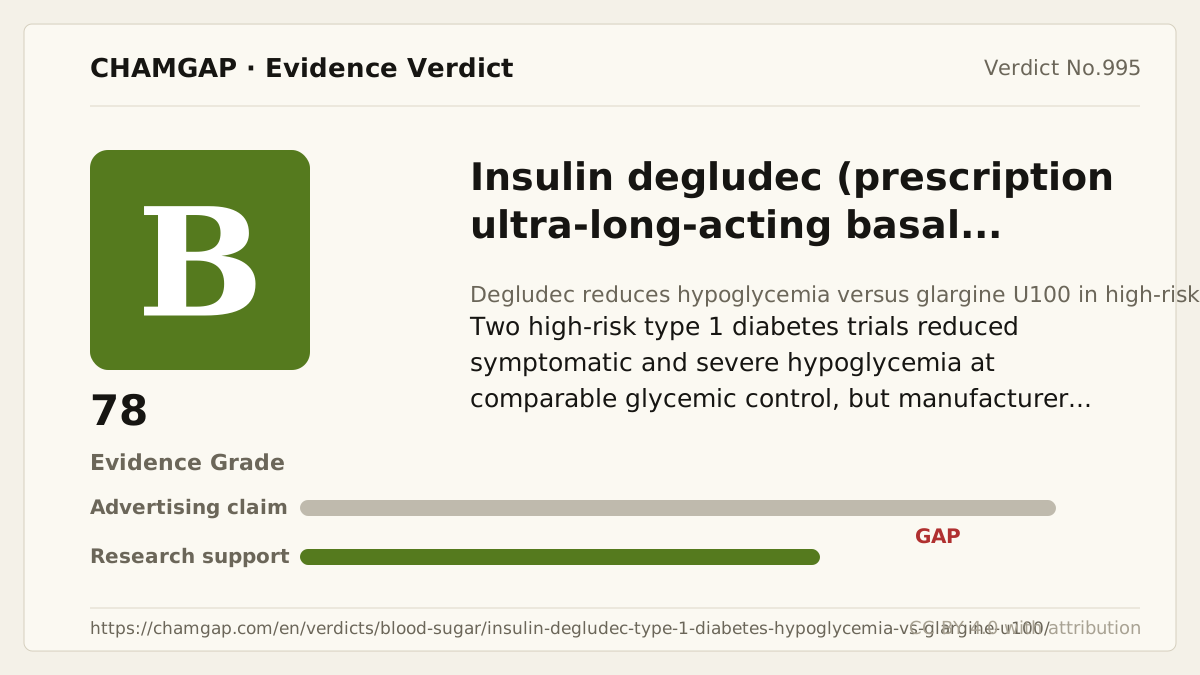
research showsInsulin degludec is rated B because it reduces symptomatic and severe hypoglycemia versus insulin glargine U100 while maintaining similar glycemic control in high-risk type 1 diabetes. In the 501-participant double-blind crossover SWITCH 1 trial, the rate ratio was 0.89 for overall symptomatic hypoglycemia and 0.64 for nocturnal symptomatic hypoglycemia, while 10.3% versus 17.1% experienced severe hypoglycemia. The two-year HypoDeg trial in 149 people with prior nocturnal severe hypoglycemia also reduced nocturnal symptomatic events by 28% to 37% and all-day severe events by 35% at comparable glycemic control. Replication in the exact high-risk population with direct clinical events is strong, but all pivotal trials were connected to Novo Nordisk funding or product support and the benefit is incremental, yielding B with 78 points. Hypoglycemia is reduced rather than eliminated, and injection and weight-gain risks remain separate safety issues.
ads claimMarketing can expand this into an insulin without hypoglycemia, unrestricted timing, or unconditional superiority to glargine. The evidence comes from treat-to-target regimens with mealtime insulin and careful titration; degludec can still cause severe hypoglycemia with excess dosing, missed meals, activity, alcohol, or illness.
Useful facts when choosing a product
- Insulin degludec is a prescription ultra-long-acting biologic that supplies basal insulin in type 1 diabetes and must be used with rapid-acting mealtime insulin in an individualized basal-bolus regimen.
- Tresiba U100 and U200 presentations and pen displays must be checked and the prescribed units used. Insulin should not be withdrawn from a pen into a syringe, mixed with another insulin, or used in an insulin pump or intravenously.
- Switching from another basal insulin or changing dose timing, meals, activity, or kidney or liver function requires more frequent glucose monitoring and clinician-directed adjustment; the long action means that a dose change can take time to reach a stable effect.
- Hypoglycemia remains the principal hazard. Weight gain, injection-site reactions, lipohypertrophy or lipoatrophy, hypokalemia, and rare severe allergy can occur, so injection sites should be rotated and rescue treatment for hypoglycemia should remain available.
What the research actually shows
Lane and colleagues randomized 501 adults with at least one hypoglycemia risk factor in SWITCH 1 to two 32-week crossover treatment periods. During 16-week maintenance, overall symptomatic hypoglycemia occurred at 2,200.9 versus 2,462.7 episodes per 100 person-years and nocturnal symptomatic hypoglycemia at 277.1 versus 428.6, while fewer participants experienced severe events with degludec. Pedersen-Bjergaard and colleagues conducted the investigator-initiated HypoDeg trial in 149 people who had nocturnal severe hypoglycemia within the previous two years, assigning each basal insulin for one year in an open-label crossover study with blinded endpoint adjudication. Degludec reduced nocturnal level 1 and level 2 symptomatic events by 28% and 37% and all-day severe events by 35%. Heller and colleagues found noninferior HbA1c reductions of -0.40% and -0.39% in the 629-participant BEGIN trial; nocturnal confirmed hypoglycemia declined by 25%, but overall confirmed hypoglycemia was null, illustrating population-dependent benefit.
Why this is classified as B (78)
The 501-participant double-blind SWITCH 1 crossover trial and the two-year 149-participant HypoDeg trial in the exact nocturnal severe-hypoglycemia risk population repeatedly reduced symptomatic and severe events at comparable glycemic control. Hypoglycemia is a direct clinical endpoint, and BEGIN supports noninferior glycemic control. SWITCH was Novo Nordisk-led, however, and the investigator-initiated HypoDeg trial still received an unrestricted company grant and study medication; overall hypoglycemia was not consistently superior in broader type 1 diabetes populations. The result is B with 78 points. The A-rated basal-control claim for glargine addresses a different axis.
Counterpoint. For recurrent severe hypoglycemia, changing basal insulin should be combined with continuous glucose monitoring, hypoglycemia-awareness education, review of meals, activity, alcohol, and kidney function, and access to glucagon. A prescriber should plan any conversion from the existing regimen.
Rejudgment record. New verdict — Accepted direct reductions in symptomatic, nocturnal, and severe hypoglycemia at comparable glycemic control in the 501-participant SWITCH 1 and 149-participant high-risk HypoDeg crossover trials, while reflecting Novo Nordisk funding and product concentration plus inconsistent overall hypoglycemia superiority in broader type 1 diabetes populations
Sub-claim grades by effect
This ingredient is marketed for several effects. A single overall grade blends strong and weak claims together, so each effect is graded separately here. The overall grade reflects the strongest disconfirming or core claim.
| Effect (sub-claim) | Grade | Basis |
|---|---|---|
| Reduction of symptomatic hypoglycemia in high-risk type 1 diabetes | B | SWITCH 1 found RR 0.89 for overall and 0.64 for nocturnal symptomatic hypoglycemia, and HypoDeg replicated benefit in the exact nocturnal severe-risk population. |
| Reduction of severe hypoglycemia in high-risk type 1 diabetes | B | Severe hypoglycemia affected 10.3% versus 17.1% in SWITCH 1, and the all-day severe event rate declined by 35% in HypoDeg. |
| Maintenance of glycemic control comparable to insulin glargine U100 | B | Treat-to-target trials and BEGIN found noninferior or comparable HbA1c, so reduced hypoglycemia was not produced by relaxing glycemic targets. |
Cross-check — Codex and Claude
Evidence Table
| Study | Design | Sample | Funding | Endpoint | Result | Weight |
|---|---|---|---|---|---|---|
| Lane W et al. SWITCH 1. 2017 | Double-blind randomized treat-to-target two-period crossover noninferiority and superiority trial | 395 | Funded, designed, and operated by Novo Nordisk with company-affiliated coauthors | Maintenance-period rates of overall and nocturnal symptomatic hypoglycemia and proportion experiencing severe hypoglycemia | Degludec was superior with RR 0.89 for overall symptomatic and 0.64 for nocturnal symptomatic hypoglycemia, while severe events affected 10.3% versus 17.1%. | Pivotal large direct hypoglycemia trial |
| Pedersen-Bjergaard U et al. HypoDeg. 2022 | Two-year multicenter investigator-initiated randomized open-label blinded-endpoint crossover trial | 149 | Unrestricted Novo Nordisk grant and study medication; the company reportedly had no role in design, analysis, or writing | Blindly adjudicated nocturnal symptomatic hypoglycemia and all-day severe hypoglycemia | Nocturnal level 1 and level 2 symptomatic hypoglycemia declined by 28% and 37%, and all-day severe hypoglycemia by 35%, at comparable glycemic control. | Direct replicating trial in the exact high-risk population |
| Heller S et al. BEGIN Basal-Bolus Type 1. 2012 | Fifty-two-week phase 3 randomized open-label treat-to-target noninferiority trial | 629 | Novo Nordisk | HbA1c noninferiority, overall and nocturnal confirmed hypoglycemia, and serious adverse events | HbA1c reductions were noninferior at -0.40% versus -0.39% and nocturnal hypoglycemia declined by 25%, but overall confirmed hypoglycemia was null at RR 1.07. | Confirms comparable glycemic control while limiting the overall effect in a broader population |
Receipt — 3 References
All 3 cited sources were verified for existence at the original page (as of 2026-07-21).
Reviewed and approved: Chamgap Editorial Team · Approval date: 2026-07-21 · Corrections: none
Cite this verdict
[Chamgap] Insulin degludec x reduced symptomatic and severe hypoglycemia in high-risk type 1 diabetes — Evidence Grade B·78. 3 cited sources checked. Source: https://chamgap.com/en/verdicts/blood-sugar/insulin-degludec-type-1-diabetes-hypoglycemia-vs-glargine-u100/ · CC BY 4.0CC BY 4.0 — free to use with attribution; do not distort grades, numbers, or verdict meaning.
What this document does and does not do
Chamgap is an information source. It reports what research has and has not confirmed; it does not tell readers what to take or buy. That decision belongs to readers and, when needed, medical or legal professionals. This verdict reflects literature available up to the search date and may change as new research appears. Nothing here is medical advice.