
Gliclazide modified release,
does it really help with Lower HbA1c in adults with inadequately controlled type 2 diabetes?
research showsGliclazide modified release is rated C with 58 points because it lowers HbA1c in adults with inadequately controlled type 2 diabetes. In the 845-participant double-blind randomized GUIDE trial, HbA1c fell from 8.4% to 7.2% over 27 weeks with gliclazide MR and was noninferior to glimepiride, but this was noninferiority on a surrogate endpoint. ADVANCE was a multidrug intensive-control package using gliclazide in 90.5% together with metformin, thiazolidinediones, acarbose, and insulin, achieving HbA1c of 6.5% versus 7.3%. Reductions in nephropathy and albuminuria were also reproduced in intensive-control trials without gliclazide, including UKPDS33, ACCORD, VADT, and DCCT, while KDIGO 2022 and expert reviews attribute the benefit to intensive glycemic control. No head-to-head evidence establishes a gliclazide-molecule-specific hard kidney benefit, so HbA1c lowering is the only confirmed efficacy. The confirmed and persistent ESKD signal supports the top of the C band at 58 points.
ads claimTerms such as pancreas friendly, a low-hypoglycemia sulfonylurea, or vascular protection can expand lower hypoglycemia in selected comparisons and a renal benefit from a multidrug strategy into product-specific cardiovascular protection. The direct evidence is HbA1c lowering; hard outcomes, hypoglycemia, and weight require separate assessment.
Useful facts when choosing a product
- Gliclazide MR is a prescription medicine for adults with type 2 diabetes. A representative regimen starts at 30 mg and is adjusted from 30 to 120 mg once daily with breakfast; the specific product label and prescription take priority.
- Modified-release tablets should be swallowed whole. Skipped or delayed meals, inadequate carbohydrate intake, heavy alcohol use, and strenuous exercise increase hypoglycemia risk, and a missed dose should not be doubled the next day.
- Hypoglycemia can present with sweating, tremor, intense hunger, palpitations, confusion, or loss of consciousness and can recur or persist. Driving, machinery use, and sick-day management require an individual plan.
- Weight gain can occur, and the medicine is unsuitable for type 1 diabetes or diabetic ketoacidosis and requires caution in severe hepatic or renal impairment. Clinicians should review interacting medicines such as miconazole and consider glucose-6-phosphate dehydrogenase deficiency.
What the research actually shows
Schernthaner and colleagues in 2004 randomized 845 adults with type 2 diabetes to gliclazide MR 30 to 120 mg or glimepiride 1 to 6 mg under double masking for 27 weeks. HbA1c fell from 8.4% to 7.2% and was noninferior to glimepiride, while confirmed glucose below 3 mmol/L occurred in 3.7% versus 8.9%. Drouin and Standl in 2004 randomized 800 participants to modified- or immediate-release gliclazide for ten months and then used an open MR extension, reporting a mean two-year HbA1c reduction of about 0.46% among completers; the comparison was not placebo controlled and the later phase was open label. The ADVANCE Collaborative Group (ADVANCE trial) randomized 11,140 participants to gliclazide-MR-based intensive or standard glucose control, reaching a target HbA1c of 6.5% and reducing nephropathy, but not major macrovascular events or mortality, while allowing additional glucose-lowering medicines. Authorization establishes use and trial existence but does not raise the evidence grade.
Why this is classified as C (58)
The 845-participant randomized double-blind GUIDE trial reduced HbA1c from 8.4% to 7.2% and established noninferiority to glimepiride, but this was noninferiority on a surrogate endpoint. ADVANCE was not a molecule trial: it was a multidrug intensive-control package using gliclazide in 90.5% together with metformin, thiazolidinediones, acarbose, and insulin, achieving HbA1c of 6.5% versus 7.3%. Reductions in nephropathy and albuminuria were reproduced in intensive-control trials without gliclazide, including UKPDS33, ACCORD, VADT, and DCCT; KDIGO 2022 and expert reviews attribute the benefit to intensive glycemic control and consider a sulfonylurea-specific kidney effect unlikely. GUIDE assessed only HbA1c and hypoglycemia, hard kidney outcomes in a cohort comparison with glimepiride were nonsignificant, and antioxidant explanations remain mechanistic hypotheses, leaving no head-to-head evidence for a gliclazide-molecule-specific hard kidney benefit. Because confirmed efficacy is limited to the HbA1c surrogate, rule 1 caps the grade at C; the confirmed and persistent ESKD signal places it at the top of the C band with 58 points. Corpus alignment is gliclazide C58, glimepiride C56, and acarbose C54. Hypoglycemia, weight gain, and interactions are separate safety issues.
Counterpoint. HbA1c targets should be individualized for age, diabetes duration, comorbidity, and hypoglycemia risk. In cardiovascular or kidney disease, priority should also be considered for drug classes with direct hard-outcome evidence.
Rejudgment record. Consistency recalibration (rule 1 surrogate clarification) — GUIDE and a longer comparative extension establish only the molecule-specific surrogate outcome of HbA1c lowering. The ADVANCE kidney benefit is attributable to a multidrug intensive-control package using gliclazide in 90.5% rather than to the molecule, was reproduced in intensive-control trials without gliclazide, and lacks molecule-specific head-to-head hard kidney evidence. Rule 1 therefore requires C, while the confirmed and persistent ESKD signal supports the top of the C band at 58 points
Sub-claim grades by effect
This ingredient is marketed for several effects. A single overall grade blends strong and weak claims together, so each effect is graded separately here. The overall grade reflects the strongest disconfirming or core claim.
| Effect (sub-claim) | Grade | Basis |
|---|---|---|
| HbA1c reduction in adults with inadequately controlled type 2 diabetes | C | GUIDE reduced HbA1c from 8.4% to 7.2%, and longer comparative data reinforced durability, but the confirmed efficacy is lowering a surrogate endpoint. |
| Noninferior HbA1c lowering compared with glimepiride | C | The final HbA1c difference met the noninferiority criterion in an 845-participant double-blind active-controlled trial, but only on a surrogate endpoint. |
| Reduction in cardiovascular mortality specifically attributable to gliclazide MR alone | ? | The ADVANCE kidney benefit is a general effect of multidrug intensive control; major macrovascular events and mortality were not significantly reduced, and a gliclazide-molecule-specific hard outcome remains unproven. |
Cross-check — Codex and Claude
Evidence Table
| Study | Design | Sample | Funding | Endpoint | Result | Weight |
|---|---|---|---|---|---|---|
| Schernthaner G et al. 2004 GUIDE | Twenty-seven-week multicenter randomized double-blind active-controlled noninferiority trial | 845 | Servier gliclazide MR development program | Change in HbA1c, target attainment, and confirmed hypoglycemia | HbA1c fell from 8.4% to 7.2% and was noninferior to glimepiride; confirmed hypoglycemia occurred in 3.7% versus 8.9%. | Core randomized direct HbA1c evidence |
| Drouin P, Standl E. 2004 | Ten-month randomized double-blind formulation comparison followed by a fourteen-month open-label extension | 507 | Diamicron MR manufacturer development research | Two-year change in HbA1c and hypoglycemia | Mean HbA1c among completers fell by 0.46 percentage points over two years, but the later phase was open label and the comparator was immediate-release gliclazide. | Durability support with design limitations |
| Study 3 | Large randomized target-based intensive glucose-control strategy trial | 11,140 | Servier plus multiple public and academic funders | Major macrovascular and microvascular composite events and mortality | The gliclazide-MR-based intensive strategy reduced the combined outcome by 10%, mainly through nephropathy, without significant reductions in major macrovascular events or mortality. | Hard-outcome context that cannot be attributed to the product alone |
Receipt — 3 References
All 3 cited sources were verified for existence at the original page (as of 2026-07-23).
Reviewed and approved: Chamgap Editorial Team · Approval date: 2026-07-23 · Corrections: none
Cite this verdict
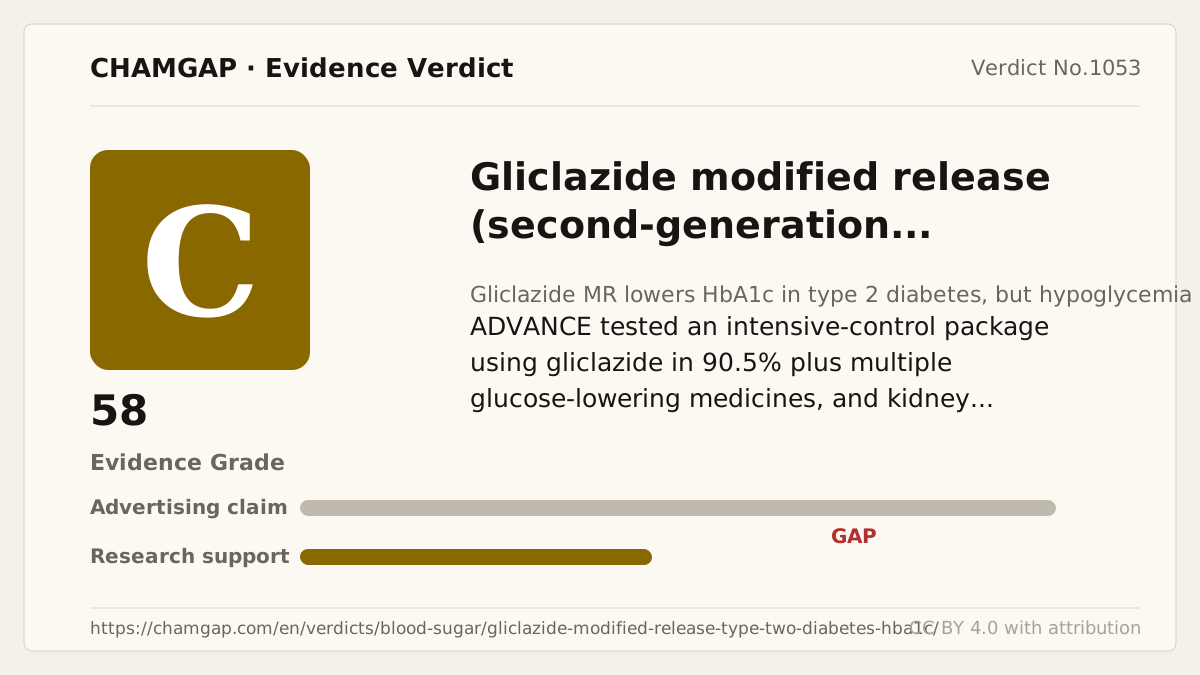
[Chamgap] Gliclazide modified release x lower HbA1c in inadequately controlled type 2 diabetes — Evidence Grade C·58. 3 cited sources checked. Source: https://chamgap.com/en/verdicts/blood-sugar/gliclazide-modified-release-type-two-diabetes-hba1c/ · CC BY 4.0CC BY 4.0 — free to use with attribution; do not distort grades, numbers, or verdict meaning.
What this document does and does not do
Chamgap is an information source. It reports what research has and has not confirmed; it does not tell readers what to take or buy. That decision belongs to readers and, when needed, medical or legal professionals. This verdict reflects literature available up to the search date and may change as new research appears. Nothing here is medical advice.