
Olaparib,
does it really help with Reduction of invasive recurrence and death after surgery for germline BRCA1/2-mutated, HER2-negative, high-risk early breast cancer?
research showsOlaparib is rated B with 72 points. The large double-blind, placebo-controlled OlympiA trial reduced both invasive recurrence and death in germline BRCA1/2-mutated, HER2-negative, high-risk early breast cancer, but only one trial is cited (repeat reports of the same trial) and no replication by different investigators with different funding has been confirmed, so Axis 2 R1 caps the grade at B. Among 1,836 participants, four-year invasive disease-free survival was 82.7% versus 75.4%, distant disease-free survival was 86.5% versus 79.1%, and the overall-survival hazard ratio was 0.68 (98.5% CI 0.47 to 0.97). A molecularly selected population, placebo control, prespecified overall-survival benefit, and consistent recurrence endpoints provide drug-specific direct hard outcomes. However, OlympiA remains the only adjuvant olaparib RCT in this setting; the neoadjuvant PARTNER gBRCA cohort had a null primary pathological complete response endpoint (64.1% versus 69.8%, p=0.59), and long-term GeparOLA follow-up showed a trend toward worse four-year invasive disease-free survival with olaparib (76.0% versus 88.5%; HR 2.86, p=0.081).
ads claimPromotion can imply that any mention of BRCA makes olaparib prevent recurrence or that it replaces surgery and chemotherapy. The proven scope is one year of adjuvant therapy after standard local treatment and chemotherapy for high-risk, HER2-negative early breast cancer with a pathogenic germline BRCA1/2 variant.
Useful facts when choosing a product
- In OlympiA, olaparib tablets were given at 300 mg twice daily for one year after standard surgery, radiotherapy when indicated, and neoadjuvant or adjuvant chemotherapy rather than replacing them.
- Eligibility requires confirmation of a pathogenic or likely pathogenic germline BRCA1 or BRCA2 variant, HER2-negative status, and high-risk pathological criteria consistent with the trial and current guidance.
- Anemia, neutropenia, leukopenia, nausea, vomiting, and fatigue are important, so complete blood counts and symptoms require monitoring with interruption or dose reduction when necessary.
- Myelodysplastic syndrome, acute myeloid leukemia, and pneumonitis are rare but serious possibilities, and fetal harm is possible; persistent cytopenia, respiratory symptoms, pregnancy, and contraception plans require oncology review.
What the research actually shows
The 2021 Tutt OlympiA primary analysis randomized 1,836 patients with high-risk HER2-negative early breast cancer and pathogenic germline BRCA1/2 variants, after surgery and standard neoadjuvant or adjuvant chemotherapy, to olaparib 300 mg twice daily for one year or placebo. At 2.5 years' median follow-up, three-year invasive disease-free survival was 85.9% versus 77.1%, with HR 0.58, and the distant disease-free survival HR was 0.57. The prespecified 2022 Geyer second analysis, at 3.5 years' median follow-up, found an overall-survival HR of 0.68; four-year overall survival was 89.8% versus 86.4%, invasive disease-free survival was 82.7% versus 75.4%, and distant disease-free survival was 86.5% versus 79.1%.
Why this is classified as B (72)
In the 1,836-participant double-blind placebo-controlled OlympiA trial, the four-year absolute benefit was 7.3 percentage points for invasive disease-free survival and 7.4 points for distant disease-free survival, with an overall-survival HR of 0.68, and the effect itself is not disputed. However, only one trial is cited (repeat reports of the same trial), and no replication by different investigators with different funding has been confirmed, so Axis 2 R1 caps the grade at B. Although AstraZeneca co-funded the trial, the Axis 3 cap is waived under the large hard-endpoint prescription-drug RCT exception. The grade is B with 72 points.
Counterpoint. The result cannot be extrapolated to patients without a qualifying pathogenic germline BRCA variant or high-risk features, and benefit must be weighed against marrow toxicity, quality of life, and pregnancy plans.
Rejudgment record. New verdict — The 1,836-participant double-blind placebo-controlled OlympiA trial significantly improved four-year invasive and distant disease-free survival and prespecified overall survival, but both cited reports are repeat reports of the same trial and no replication by different investigators with different funding has been confirmed, so Axis 2 R1 caps the grade at B with 72 points; AstraZeneca co-funding does not trigger the Axis 3 cap under the large hard-endpoint prescription-drug RCT exception
| Endpoint | H | Hard endpoint - actual events such as death |
| Replication | R1 | Single confirmatory trial |
| Independence | I1 | Mixed funding sources |
| Effect size | E+ | Meets the clinically important threshold |
The scoring table and the verdict agree (B).
Sub-claim grades by effect
This ingredient is marketed for several effects. A single overall grade blends strong and weak claims together, so each effect is graded separately here. The overall grade reflects the strongest disconfirming or core claim.
| Effect (sub-claim) | Grade | Basis |
|---|---|---|
| Improved invasive disease-free survival after surgery | A | Four-year IDFS was 82.7% versus 75.4%, an absolute 7.3-percentage-point benefit, with HR 0.63 for invasive disease or death. |
| Improved overall survival after surgery | A | The prespecified analysis found an all-cause mortality HR of 0.68 and four-year overall survival of 89.8% versus 86.4%. |
| Reduction in distant recurrence or death | A | Four-year distant disease-free survival was 86.5% versus 79.1%, an absolute 7.4-percentage-point benefit. |
Cross-check — Codex and Claude
Evidence Table
| Study | Design | Sample | Funding | Endpoint | Result | Weight |
|---|---|---|---|---|---|---|
| Tutt ANJ et al. 2021, OlympiA primary analysis | International multicenter phase 3 double-blind randomized placebo-controlled trial | 1,836 | Co-supported by the United States National Cancer Institute and AstraZeneca | Primary invasive disease-free survival, distant disease-free survival, and overall survival | Three-year IDFS was 85.9% versus 77.1%, HR 0.58; three-year DDFS was 87.5% versus 80.4%, HR 0.57. | Key molecularly selected placebo-controlled phase 3 trial |
| Geyer CE Jr et al. 2022, OlympiA prespecified second analysis | Prespecified second overall-survival analysis of the same double-blind randomized trial | 5 | Co-supported by the United States National Cancer Institute and AstraZeneca | Overall survival and four-year invasive and distant disease-free survival | Overall-survival HR was 0.68 (98.5% CI 0.47 to 0.97); four-year IDFS was 82.7% versus 75.4%, DDFS 86.5% versus 79.1%, and OS 89.8% versus 86.4%. | Prespecified confirmation on the hard endpoint of death |
Receipt — 2 References
All 2 cited sources were verified for existence at the original page (as of 2026-08-11).
Reviewed and approved: Chamgap Editorial Team · Approval date: 2026-08-11 · Corrections: 1
Correction log — 1
Corrections applied to this verdict, in chronological order. Changes are logged, not erased.
- 2026-08-11 · Grade correction for unmet independent-replication requirement — Both cited papers were repeat reports of the same OlympiA population (NCT02032823). Chamgap's A requires Axis 2 R2 (multiple RCTs by different investigators with different funding); OlympiA is the only adjuvant olaparib RCT in this setting, while the neoadjuvant PARTNER gBRCA cohort's primary pCR endpoint was null (64.1% vs 69.8%, p=0.59) and long-term GeparOLA follow-up trended toward worse four-year iDFS (76.0% vs 88.5%; HR 2.86, p=0.081), so independent replication is not established. Axis 2 is R1 and the ceiling is B. The axes were recorded as B·H·R1·I1·E+·B1 and 72 points were assigned. The effect itself (four-year IDFS 82.7% vs 75.4%, overall-survival HR 0.68) is not disputed. Confirmed in the 2026-08-11 internal audit (workflow verification plus concurring Codex cross-check). (grade A→B)
Cite this verdict
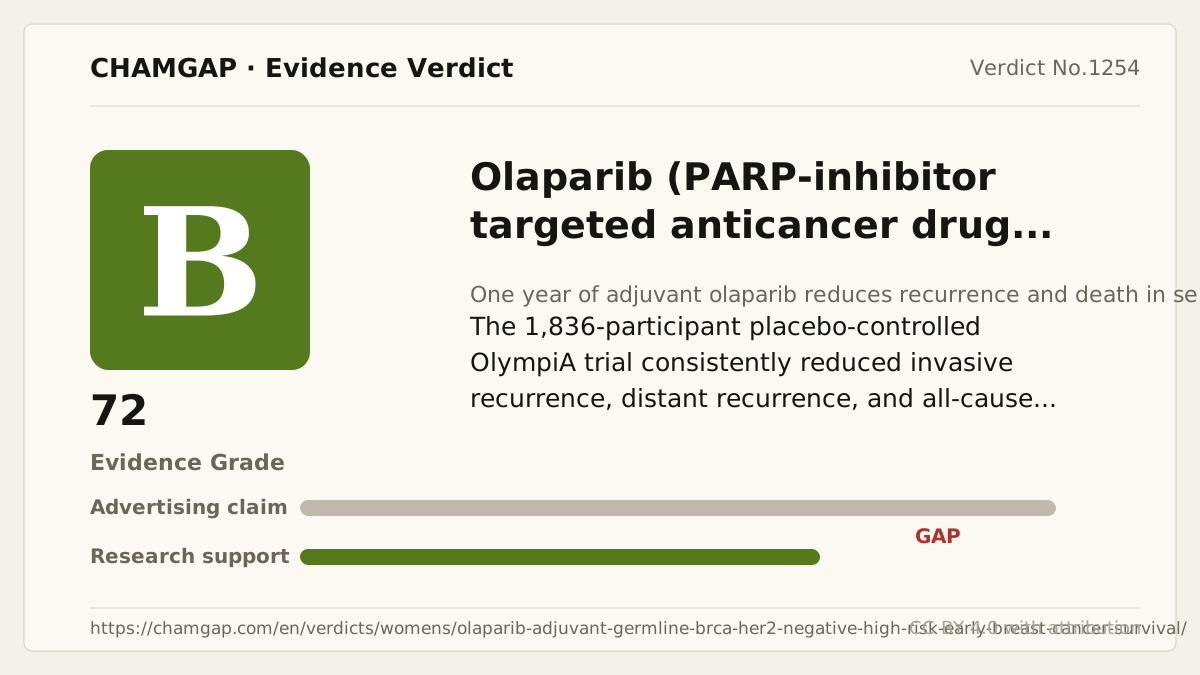
[Chamgap] Olaparib x reduction of invasive recurrence and death in germline BRCA1/2-mutated high-risk early breast cancer — Evidence Grade B·72. 2 cited sources checked. Source: https://chamgap.com/en/verdicts/womens/olaparib-adjuvant-germline-brca-her2-negative-high-risk-early-breast-cancer-survival/ · CC BY 4.0CC BY 4.0 — free to use with attribution; do not distort grades, numbers, or verdict meaning.
What this document does and does not do
Chamgap is an information source. It reports what research has and has not confirmed; it does not tell readers what to take or buy. That decision belongs to readers and, when needed, medical or legal professionals. This verdict reflects literature available up to the search date and may change as new research appears. Nothing here is medical advice.