
D-mannose,
does it really help with Prevention of recurrent urinary tract infection over six months in women?
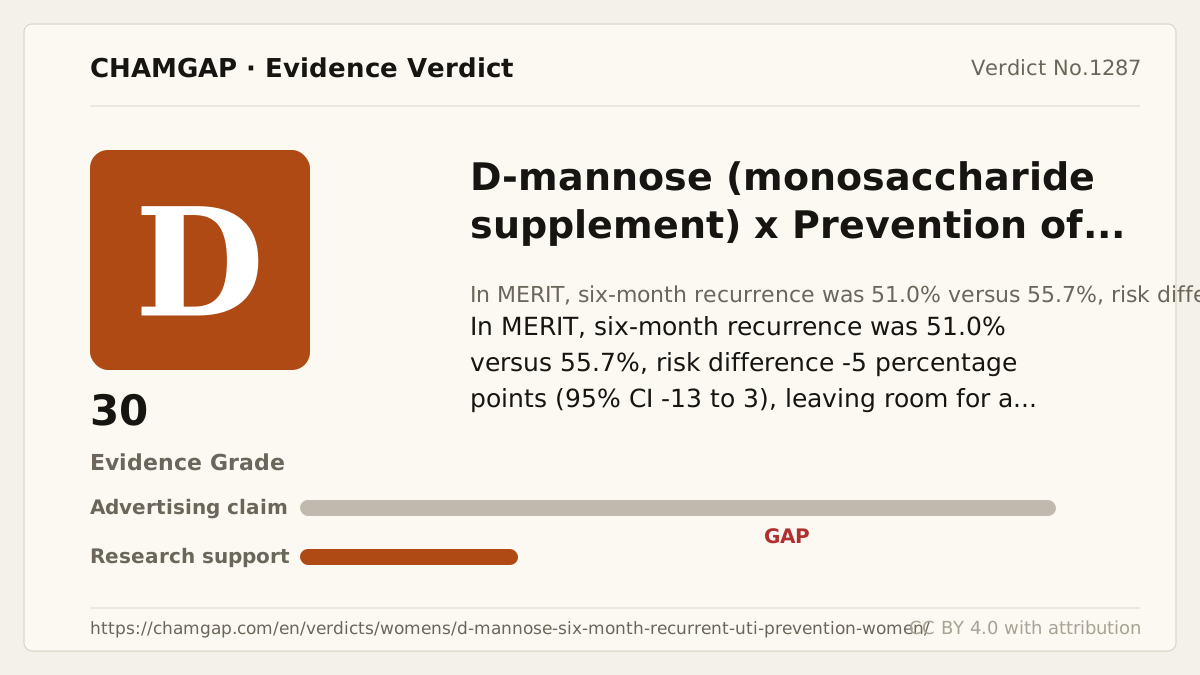
research showsIn MERIT, six-month recurrence was 51.0% versus 55.7%, risk difference -5 percentage points (95% CI -13 to 3), leaving room for a 13-point preventive benefit. The latest three-trial pooled RR was 0.37 (0.11 to 1.30), and the earlier trial was positive, so this is not repeated refutation. Because clinically meaningful benefit is not excluded, the grade is D with 30 points, not F.
ads claimMarketing describes D-mannose as a natural antibiotic that washes away E. coli, guarantees six-month protection, or works as well as antibiotics by presenting mechanism and an early unblinded result as settled efficacy. The large placebo trial reduced neither medically attended UTI nor antibiotic use or symptom duration, and D-mannose does not treat an active infection.
Useful facts when choosing a product
- D-mannose is a monosaccharide related to glucose and is sold as supplement powders, capsules, and tablets. It is not an antibiotic, and content and additional ingredients vary by product.
- MERIT tested 2 g daily for six months. Even at that studied dose, D-mannose did not significantly reduce recurrent UTI compared with placebo.
- A supplement does not treat an active UTI that requires clinical assessment and urine culture. Fever, flank pain, vomiting, symptoms during pregnancy, blood in urine, or systemic weakness require prompt assessment for pyelonephritis or another cause.
- Trials generally found it tolerable, but diarrhea and abdominal discomfort can occur. Because it is a sugar supplement, people with diabetes or substantial intake of other sugar ingredients should review the label and glucose management with a clinician.
What the research actually shows
Kranjčec 2014 randomized 308 women with recurrent UTI after antibiotic treatment of acute cystitis to D-mannose 2 g daily, nitrofurantoin 50 mg daily, or no prophylaxis for six months. Recurrence occurred in 15 of 103 women with D-mannose and 62 of 102 without prophylaxis, but there was no placebo or masking. The 2022 Cochrane review found seven randomized trials with 719 participants, but doses, populations, and comparators were too heterogeneous for pooling and certainty was very low. MERIT allocated 598 community-dwelling women with recurrent UTI to D-mannose 2 g daily or volume-matched placebo for six months. The primary outcome occurred in 150 of 294 versus 161 of 289 participants, with no difference in antibiotic use, symptom duration, time to next recurrence, admissions, or other secondary outcomes. The 2025 amended AUA/CUA/SUFU guideline advises against D-mannose monotherapy after this newer evidence.
Why this is classified as D (30)
In MERIT, six-month recurrence was 51.0% versus 55.7%, risk difference -5 percentage points (95% CI -13 to 3), leaving room for a 13-point preventive benefit. The latest three-trial pooled RR was 0.37 (0.11 to 1.30), and the earlier trial was positive, so this is not repeated refutation. Because clinically meaningful benefit is not excluded, the grade is D with 30 points, not F.
Counterpoint. Individualized recurrent-UTI prevention can include fluid intake, vaginal estrogen after menopause, methenamine, or selected antibiotic strategies. Repeated symptoms warrant culture-based confirmation and risk assessment rather than delaying proven prevention or treatment for D-mannose. Grade-independent note: AUA guidance recommends against D-mannose alone. This recommendation is not used to determine the efficacy grade.
Rejudgment record. New verdict — In MERIT, six-month recurrence was 51.0% versus 55.7%, risk difference -5 percentage points (95% CI -13 to 3), leaving room for a 13-point preventive benefit. The latest three-trial pooled RR was 0.37 (0.11 to 1.30), and the earlier trial was positive, so this is not repeated refutation. Because clinically meaningful benefit is not excluded, the grade is D with 30 points, not F.
Sub-claim grades by effect
This ingredient is marketed for several effects. A single overall grade blends strong and weak claims together, so each effect is graded separately here. The overall grade reflects the strongest disconfirming or core claim.
| Effect (sub-claim) | Grade | Basis |
|---|---|---|
| Prevention of medically attended recurrent UTI within six months | D | MERIT was null at 51.0% versus 55.7%, P=.26, reversing the prior positive belief. |
| Reduction in symptom duration and antibiotic use during recurrences | D | No significant difference appeared in any relevant MERIT secondary outcome. |
| Recurrence prevention across age and adherence subgroups | D | Prespecified subgroup, adherence, and missing-data analyses did not reveal a positive effect. |
Cross-check — Codex and Claude
Evidence Table
| Study | Design | Sample | Funding | Endpoint | Result | Weight |
|---|---|---|---|---|---|---|
| Kranjčec B et al. 2014 | Open-label randomized active- and no-prophylaxis-controlled trial | 308 | Inadequately reported in the abstract | UTI recurrence over six months | Recurrence occurred in 15/103 participants (14.6%) with D-mannose, 21/103 (20.4%) with nitrofurantoin, and 62/102 (60.8%) with no prophylaxis. | Source of prior positive belief, but unblinded and without placebo |
| Cooper TE et al. Cochrane review, 2022 | Systematic review of randomized trials | 719 | Academic Cochrane review; no relevant author interests reported | Prevention and treatment of acute and recurrent UTI | Small heterogeneous studies at high risk of bias provided no clear evidence to support or refute D-mannose for prevention or treatment. | Established very low certainty before the confirmatory trial |
| Hayward G et al. MERIT, 2024 | Multicenter double-blind randomized placebo-controlled trial | 598 | Public funding from the United Kingdom NIHR | Clinically suspected medically attended UTI within six months; symptom, antibiotic, recurrence, and admission secondary outcomes | The primary outcome was 51.0% versus 55.7% (risk difference -5%, 95% CI -13 to 3%, P=.26), and all secondary outcomes were nonsignificant. | Large independent confirmatory disconfirmation |
Receipt — 4 References
All 4 cited sources were verified for existence at the original page (as of 2026-07-24).
Reviewed and approved: Chamgap Editorial Team · Approval date: 2026-07-24 · Corrections: none
Cite this verdict
[Chamgap] D-mannose x six-month prevention of recurrent urinary tract infection in women — Evidence Grade D·30. 4 cited sources checked. Source: https://chamgap.com/en/verdicts/womens/d-mannose-six-month-recurrent-uti-prevention-women/ · CC BY 4.0CC BY 4.0 — free to use with attribution; do not distort grades, numbers, or verdict meaning.
What this document does and does not do
Chamgap is an information source. It reports what research has and has not confirmed; it does not tell readers what to take or buy. That decision belongs to readers and, when needed, medical or legal professionals. This verdict reflects literature available up to the search date and may change as new research appears. Nothing here is medical advice.