
Cold cabbage leaves,
does it really help with Short-term relief of pain and hardness from postpartum breast engorgement?
research showsThe grade is C with 50 points. A trial randomized 228 mothers across three groups and analyzed 227; cabbage leaves reduced pain versus usual care by 1.03 points on a 10-point scale (95% CI -1.53 to -0.53, n=152) and breast hardness by 0.58 points (-0.82 to -0.34). These are not values reported in the original abstract; they were extracted and reanalyzed from Wong 2017 by the 2020 Cochrane review. The short-term signal is real, but a single center, unblinded subjective outcomes, and no verified registered single-primary hierarchy leave the evidence at C.
ads claimThis does not establish treatment of mastitis or increased milk supply. The evidence concerns several hours of pain and hardness relief after two cold applications alongside usual care; fever, marked focal redness, or systemic illness requires evaluation for infection.
Useful facts when choosing a product
- The trial applied cold cabbage leaves twice and assessed symptoms at 30 minutes, one hour, and two hours.
- Pain differences were -1.03/10 versus usual care and -0.63/10 versus cold gel packs.
- This verdict is limited to short-term postpartum engorgement symptoms, not mastitis treatment or increased milk production.
What the research actually shows
The 2017 single-hospital three-arm randomized trial in Singapore by Wong BB, Chan YH, Leow MQH, Lu Y, Chong YS, Koh SSL, and He HG randomized 228 mothers to cabbage leaves, cold gel packs, or usual care. One gel-pack participant withdrew before treatment, leaving 227 in the primary analysis. Pain, palpated hardness, and skin temperature were assessed 30 minutes, one hour, and two hours after two applications. Cabbage-versus-usual-care MDs of -1.03 for pain and -0.58 for hardness, and cabbage-versus-gel differences of -0.63 and -0.24, were not reported in the original abstract; Cochrane 2020 extracted and reanalyzed them from Wong 2017. The original funding statement could not be obtained, so independence was not counted as a strength. No registration number was verified in the abstract or accessible full-text information.
Why this is classified as C (50)
Cochrane-extracted and reanalyzed pain values show around-medium standardized differences, but the funding statement could not be obtained and independence was not counted as a strength. A single center, unblinded repeated subjective measurements, and no verified primary hierarchy or multiplicity plan give C with 50 points.
Counterpoint. For someone already helped by a cold pack, the additional difference from cabbage was smaller. Convenience, hygiene, skin response, and preference matter.
Rejudgment record. Cross-check applied — Cross-checked 228 randomized and 227 analyzed and the mean differences and intervals extracted and reanalyzed by Cochrane 2020 against the original abstract and bibliographic record; the original funding statement could not be obtained
| Endpoint | P | Patient-reported treatment goal - the symptom is the goal |
| Replication | R1 | Single confirmatory trial |
| Independence | I1 | Mixed funding sources |
| Effect size | E+ | Meets the clinically important threshold |
The scoring table and the verdict agree (C).
Sub-claim grades by effect
This ingredient is marketed for several effects. A single overall grade blends strong and weak claims together, so each effect is graded separately here. The overall grade reflects the strongest disconfirming or core claim.
| Effect (sub-claim) | Grade | Basis |
|---|---|---|
| Short-term relief of postpartum breast-engorgement pain | C | Cochrane-extracted and reanalyzed values from Wong 2017 were -1.03/10 versus usual care and -0.63/10 versus gel packs. |
| Treatment of mastitis | ? | The trial did not study treatment of infectious mastitis. |
Cross-check — Codex and Claude
Evidence Table
| Study | Design | Sample | Funding | Endpoint | Result | Weight |
|---|---|---|---|---|---|---|
| Wong BB, Chan YH, Leow MQH, Lu Y, Chong YS, Koh SSL, He HG. 2017 | Single-hospital three-arm randomized trial in Singapore with unblinded repeated measurements | 227 | Original funding statement not obtained; independence not counted as a strength | Pain, palpated hardness, skin temperature, and breastfeeding satisfaction after two applications | Extracted and reanalyzed from Wong 2017 by Cochrane 2020: cabbage versus usual care pain -1.03 (95% CI -1.53 to -0.53), hardness -0.58 (-0.82 to -0.34); cabbage versus gel pain -0.63 (-1.09 to -0.17), hardness -0.24 (-0.48 to -0.00) | Medium-or-larger short-term effects versus usual care, limited by single-center unblinded design, unverified prespecified hierarchy, and unavailable funding information |
Receipt — 3 References
Of 3 cited sources, 1 had limited original-page access (blocked or summary-only) and were verified via index/summary, marked partial; the rest were verified at the original page. As of 2026-08-15.
Reviewed and approved: Chamgap Editorial Team · Approval date: 2026-08-15 · Corrections: none
Cite this verdict
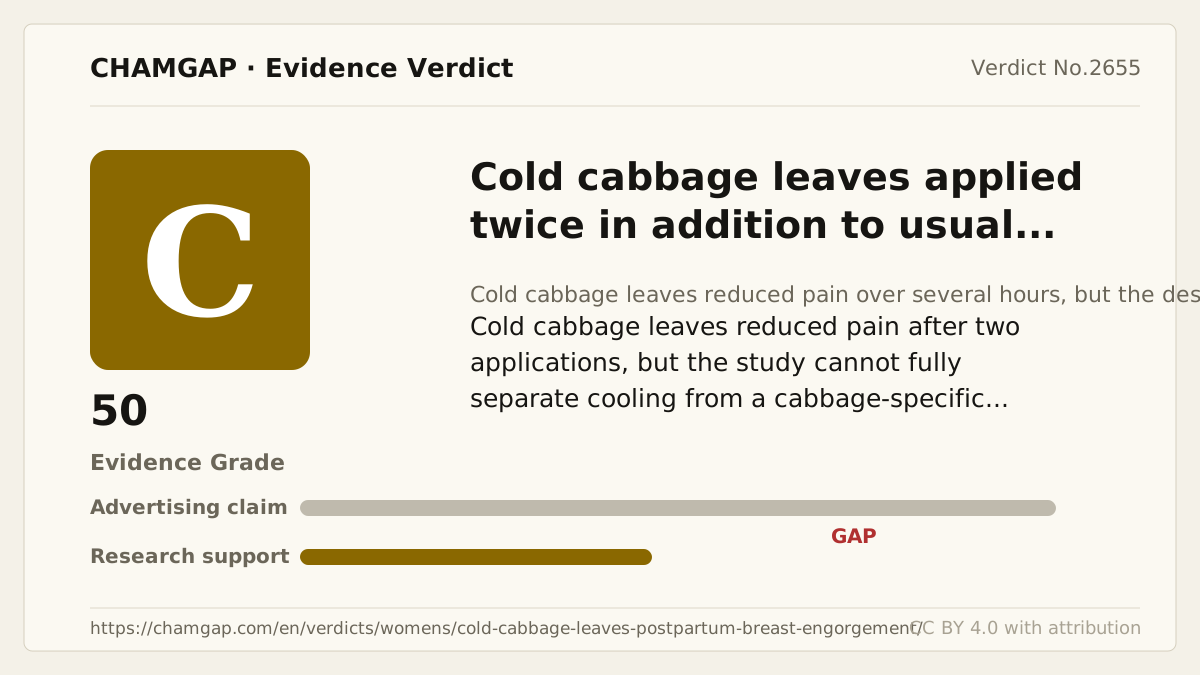
[Chamgap] Cold cabbage leaves x short-term postpartum breast-engorgement relief — Evidence Grade C·50. 3 cited sources checked. Source: https://chamgap.com/en/verdicts/womens/cold-cabbage-leaves-postpartum-breast-engorgement/ · CC BY 4.0CC BY 4.0 — free to use with attribution; do not distort grades, numbers, or verdict meaning.
What this document does and does not do
Chamgap is an information source. It reports what research has and has not confirmed; it does not tell readers what to take or buy. That decision belongs to readers and, when needed, medical or legal professionals. This verdict reflects literature available up to the search date and may change as new research appears. Nothing here is medical advice.