
Antenatal self- or partner-performed digital perineal massage from 34 to 35 weeks,
does it really help with Reduced episiotomy and suturing-requiring perineal trauma at vaginal birth?
research showsThe grade is B. Across four randomized trials comparing massage with usual obstetric care, trauma requiring suturing occurred in 775/1,236 (62.7%) versus 861/1,244 (69.2%), RR 0.91 (95% CI 0.86 to 0.96), and episiotomy in 303/1,236 (24.5%) versus 365/1,244 (29.3%), RR 0.84 (0.74 to 0.95). Benefit was clear only in women without a previous vaginal birth. Third- or fourth-degree tears were 45/1,236 (3.6%) versus 55/1,244 (4.4%), RR 0.81 (0.56 to 1.18), so a reduction in severe tears was not established.
ads claimThe broad phrase 'prevents tearing' loses the important distinction. The most secure findings are fewer episiotomies and fewer suturing-requiring injuries in women approaching a first vaginal birth, not proven prevention of third- or fourth-degree anal-sphincter injury.
Useful facts when choosing a product
- The evidence concerns antenatal digital massage by the woman or partner from about 34 to 35 weeks, not massage delivered by a midwife during labor.
- Trial schedules ranged from daily five to ten minutes to four or five minutes three to four times weekly; controls received usual care without massage instruction.
- Verdict 1750 is F with 5 points and addresses the opposite intervention: routine episiotomy to prevent severe perineal trauma. This verdict evaluates an antenatal method that may reduce episiotomy use.
What the research actually shows
The Cochrane review included four trials and 2,497 women, with 2,480 contributing birth-trauma outcomes. Labrecque taught daily 10-minute massage from 34 weeks using one or two fingers inserted 3 to 4 cm with sweet almond oil, performed by the woman or partner; controls received the same general information and usual care without massage instruction. Its primary endpoint was vaginal delivery with an intact perineum, occurring in 100/411 versus 63/417 among women without a previous vaginal birth. The five-person difference between 1,527 randomized and 1,522 with major birth outcomes, and the handling of those missing data, were unclear. Shipman used four minutes three to four times weekly from 34 weeks and encouraged pelvic-floor exercises in both groups. Although three trials asked women not to disclose allocation to birth attendants, allocation was exposed in 5.6%. Episiotomy is a clinician-discretion endpoint, yet there was no independent blinded adjudication or protocol defining when it should be performed. These two issues were combined as one avoidable flaw.
Why this is classified as B (70)
Multiple randomized teams found directionally consistent reductions in episiotomy and suturing-requiring trauma. Allocation exposure in 5.6% and the lack of independent blinded adjudication or an implementation protocol for clinician-discretionary episiotomy were combined as one avoidable flaw. Direct event reductions therefore support B with 70 points.
Counterpoint. This finding does not support routine episiotomy. Verdict 1750 is F with 5 points for the claim that routine episiotomy prevents severe trauma.
Rejudgment record. Cross-check applied — Direct randomized event reductions with one avoidable flaw combining allocation exposure and discretionary episiotomy assessment without independent blinded adjudication or an implementation protocol
| Endpoint | H | Hard endpoint - actual events such as death |
| Replication | R1 | Single confirmatory trial |
| Independence | I1 | Mixed funding sources |
| Effect size | E+ | Meets the clinically important threshold |
The scoring table and the verdict agree (B).
Sub-claim grades by effect
This ingredient is marketed for several effects. A single overall grade blends strong and weak claims together, so each effect is graded separately here. The overall grade reflects the strongest disconfirming or core claim.
| Effect (sub-claim) | Grade | Basis |
|---|---|---|
| Reduced episiotomy | B | Events were 303/1,236 versus 365/1,244, RR 0.84 (0.74 to 0.95), with clear benefit only without prior vaginal birth. |
| Reduced perineal trauma requiring suturing | B | Events were 775/1,236 versus 861/1,244, RR 0.91 (0.86 to 0.96). |
| Reduced third- or fourth-degree tears | D | Events were 45/1,236 versus 55/1,244, RR 0.81 (0.56 to 1.18), allowing both no effect and meaningful reduction. |
Cross-check — Codex and Claude
Evidence Table
| Study | Design | Sample | Funding | Endpoint | Result | Weight |
|---|---|---|---|---|---|---|
| Study 1 | Systematic review of four randomized or quasi-randomized trials | 1,244 | Review external support: Australian Department of Health and Ageing; funding for a second pivotal trial could not be verified | Trauma requiring suturing, episiotomy, and first-, second-, and third- or fourth-degree tears | Suturing-required trauma was 775/1,236 versus 861/1,244, RR 0.91 (0.86 to 0.96), I-squared 0%; episiotomy 303/1,236 versus 365/1,244, RR 0.84 (0.74 to 0.95), I-squared 0%; third- or fourth-degree trauma 45/1,236 versus 55/1,244, RR 0.81 (0.56 to 1.18), I-squared 0%. | Pivotal pooled event evidence |
| Study 2 | Five-hospital single-blind randomized trial stratified by prior vaginal birth | 1,522 | Original statement: research grants from Canada MRC and Fonds de Recherche en Santé du Québec; oil provided by Rougier; workshop support from Wyeth-Ayerst | Primary endpoint: vaginal delivery with an intact perineum; additional outcomes included episiotomy and tear grade | Among women without prior vaginal birth, the primary endpoint of vaginal delivery with an intact perineum was 100/411 versus 63/417; episiotomy 111/518 versus 129/512; third- or fourth-degree trauma 43/518 versus 52/512. The difference between 1,527 randomized and 1,522 with major birth outcomes, and the handling of missing data, were unclear. | Largest individual antenatal trial with parity-stratified results |
Receipt — 3 References
All 3 cited sources were verified for existence at the original page (as of 2026-08-08).
Reviewed and approved: Chamgap Editorial Team · Approval date: 2026-08-08 · Corrections: none
Cite this verdict
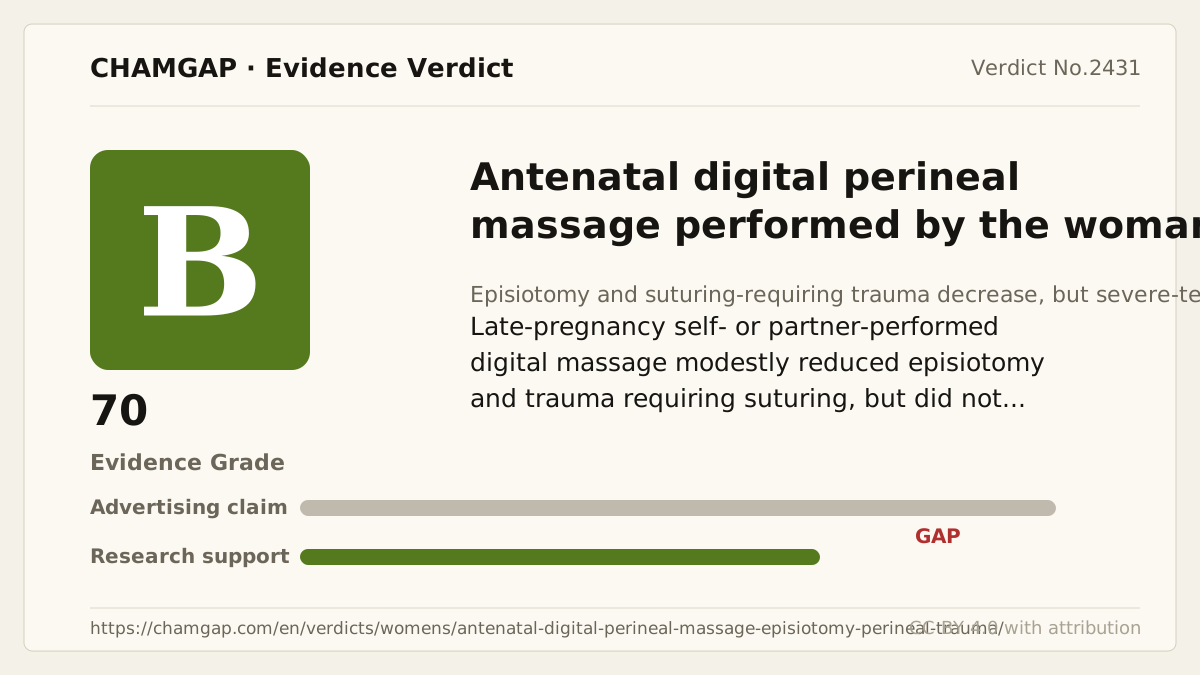
[Chamgap] Antenatal self- or partner-performed digital perineal massage from 34 to 35 weeks x reduced episiotomy and suturing-requiring trauma — Evidence Grade B·70. 3 cited sources checked. Source: https://chamgap.com/en/verdicts/womens/antenatal-digital-perineal-massage-episiotomy-perineal-trauma/ · CC BY 4.0CC BY 4.0 — free to use with attribution; do not distort grades, numbers, or verdict meaning.
What this document does and does not do
Chamgap is an information source. It reports what research has and has not confirmed; it does not tell readers what to take or buy. That decision belongs to readers and, when needed, medical or legal professionals. This verdict reflects literature available up to the search date and may change as new research appears. Nothing here is medical advice.