
Estazolam is a benzodiazepine hypnotic and sedative available by prescription and controlled as a psychotropic medicine.,
does it really help with The claim is short-term improvement in sleep onset, sleep maintenance, and sleep duration in adults with insomnia.?
research showsEstazolam is rated B for short-term improvement in sleep onset, sleep maintenance, and total sleep time, but this is the lowest rather than a strong B. Four randomized trials involving about 532 participants repeatedly improved direct sleep symptoms. In a head-to-head comparison, improvement rates were 81% with estazolam, 78% with flurazepam, and 36% with placebo, supporting equivalence to the active comparator. Sleep onset, nocturnal awakenings, and sleep duration are treatment targets themselves, so patient reporting does not make them surrogates. The trials are old and short and objective samples are small, limiting modern evidence quality and the score to B with 60 points.
ads claimClaims that it treats insomnia or restores sound sleep may imply proven sustained benefit and functional recovery. This verdict addresses only short-term symptom effects.
Useful facts when choosing a product
- Estazolam is a prescription benzodiazepine hypnotic and sedative regulated as a controlled psychotropic medicine.
- The pivotal trials reviewed mainly lasted seven nights, so their findings cannot establish long-term insomnia benefit.
- Dose, comorbidity, older age, and concomitant medicines can alter next-day sedation and fall risk.
- Marketing authorization and availability do not determine evidence strength, and use should follow prescribing information and clinical supervision.
What the research actually shows
Research supports a short-term efficacy signal but lacks modern large trials with low risk of bias, long follow-up, and robust objective sleep measures.
Why this is classified as B (60)
Four randomized trials involving about 532 participants repeatedly improved sleep onset, maintenance, and total sleep time, while a direct flurazepam comparison found improvement rates of 81% versus 78%, compared with 36% for placebo. These sleep symptoms are treatment targets themselves, so patient reporting does not make them surrogates. Multiple trials and active-comparator consistency support B, but old short studies and an objective sample of only 15 participants leave modern evidence quality low, limiting the result to the lowest B with 60 points.
Counterpoint. Even a small average effect may matter to someone with severe short-term insomnia. That potential clinical value must still be weighed separately against dependence, withdrawal, and next-day impairment.
Rejudgment record. Consistency recalibration (rule 1 clarification) — Treated sleep onset, maintenance, and total sleep time as direct treatment-target outcomes rather than surrogates; four trials involving about 532 participants and equivalence to flurazepam support B, while old short evidence and a small objective sample limit the rating to the bottom of the B band
Sub-claim grades by effect
This ingredient is marketed for several effects. A single overall grade blends strong and weak claims together, so each effect is graded separately here. The overall grade reflects the strongest disconfirming or core claim.
| Effect (sub-claim) | Grade | Basis |
|---|---|---|
| Short-term improvement in sleep onset | B | Sleep onset is a direct treatment target, and multiple short trials plus an active comparison support improvement despite dose-related consistency limits. |
| Short-term improvement in sleep maintenance and duration | B | Nocturnal awakenings and sleep duration are direct treatment targets and improved across multiple placebo-controlled trials and a flurazepam comparison. |
| Short-term increase in total sleep time | B | Total sleep time is a direct treatment target and increased in subjective and objective assessments, but sparse objective evidence limits it to the lowest B. |
Cross-check — Codex and Claude
Evidence Table
| Study | Design | Sample | Funding | Endpoint | Result | Weight |
|---|---|---|---|---|---|---|
| Study 1 | Seven-night double-blind randomized trial assigning outpatients with insomnia to estazolam 2 mg, flurazepam 30 mg, or placebo | 229 | Funding not stated in the abstract | Subjective sleep latency, nocturnal awakenings, total sleep time, and global improvement | Moderate or marked global improvement was reported by 81% with estazolam and 36% with placebo, with advantages on several subjective sleep measures. | Direct randomized comparison, but only seven nights and dominated by subjective measures |
| Study 2 | Seven-night multicenter double-blind randomized trial of estazolam 1 mg, estazolam 2 mg, flurazepam, or placebo | 223 | Funding not stated in the abstract | Subjective sleep latency, total sleep time, nocturnal awakenings, and sleep quality | The 2 mg dose outperformed placebo on the principal sleep measures, whereas 1 mg did not significantly improve sleep latency. | Short randomized trial demonstrating dose-dependent limits to consistency |
| Study 3 | Objective polysomnographic trial comparing placebo with multiple estazolam doses in patients with insomnia | 15 | Funding not stated in the abstract | Total sleep time, wake time during sleep, and sleep latency | Total sleep time and wake time during sleep improved in a dose-related fashion, but the sleep-latency difference was not significant. | Objective measurement is a strength, but the sample of 15 is highly limiting |
| Study 4 | Systematic evidence assessment and recommendations for pharmacologic treatment of chronic insomnia in adults | 3 | American Academy of Sleep Medicine | Quantitative synthesis and clinical significance for sleep quality, onset, and maintenance | The evidence was unsuitable for meta-analysis and clinical-significance assessment, so no recommendation for estazolam was made. | Independent guideline assessment confirming structural evidence limitations |
Receipt — 4 References
All 4 cited sources were verified for existence at the original page (as of 2026-07-23).
Reviewed and approved: Chamgap Editorial Team · Approval date: 2026-07-23 · Corrections: none
Cite this verdict
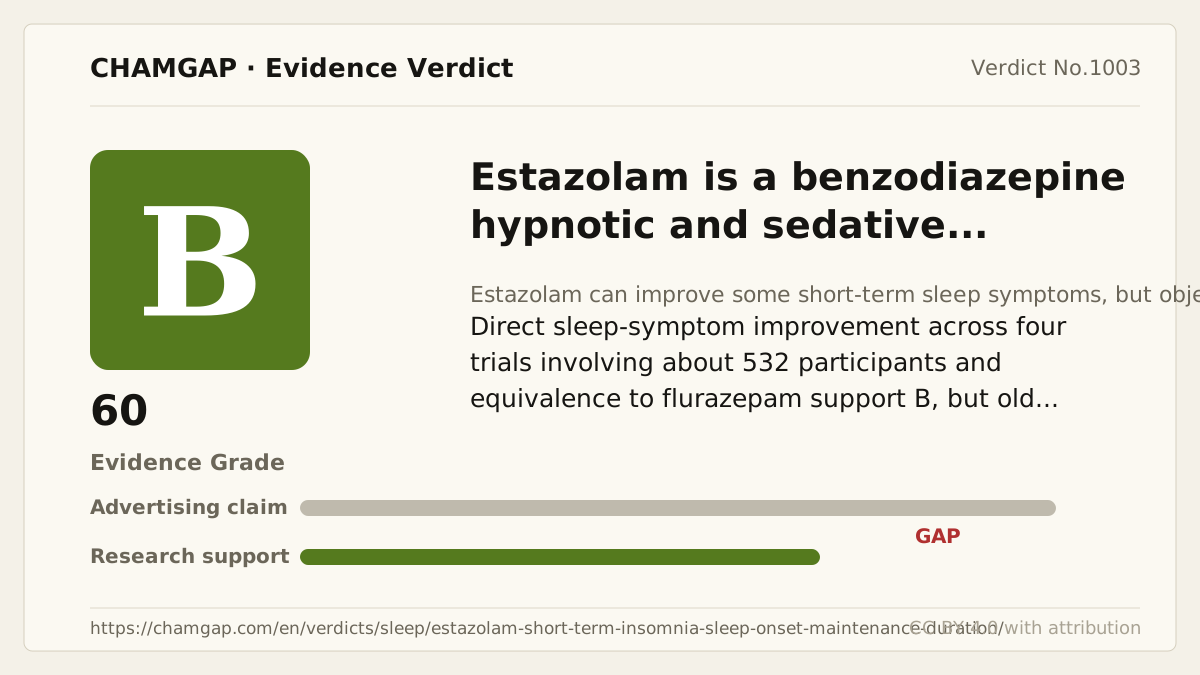
[Chamgap] Does estazolam improve short-term sleep in adults with insomnia? — Evidence Grade B·60. 4 cited sources checked. Source: https://chamgap.com/en/verdicts/sleep/estazolam-short-term-insomnia-sleep-onset-maintenance-duration/ · CC BY 4.0CC BY 4.0 — free to use with attribution; do not distort grades, numbers, or verdict meaning.
What this document does and does not do
Chamgap is an information source. It reports what research has and has not confirmed; it does not tell readers what to take or buy. That decision belongs to readers and, when needed, medical or legal professionals. This verdict reflects literature available up to the search date and may change as new research appears. Nothing here is medical advice.