
Chlorpheniramine,
does it really help with Improved sleep onset and restorative sleep through sedation and drowsiness?
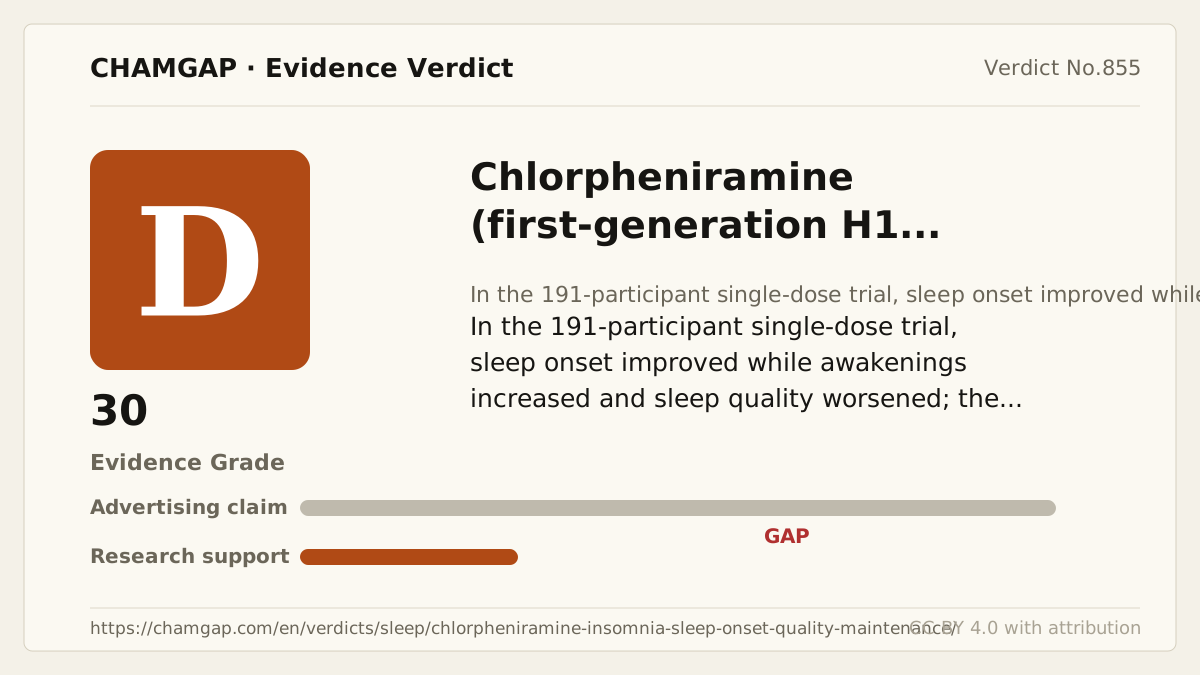
research showsIn the 191-participant single-dose trial, sleep onset improved while awakenings increased and sleep quality worsened; the 18-participant healthy-volunteer polysomnography findings were also mixed by endpoint. A pooled confidence interval for sleep efficacy could not be verified. Because clinically meaningful benefit is not excluded, the grade is D with 30 points, not F.
ads claimMarketing or self-medication can turn drowsiness into a promise of fast sleep onset, deep restorative sleep, and a refreshed morning. The evidence shows that sedation differs from restorative sleep and can disrupt nighttime architecture while reducing next-day function.
Useful facts when choosing a product
- The nonprescription indication for chlorpheniramine is relief of allergic symptoms, while use to treat insomnia is off label.
- As a first-generation antihistamine, it crosses the blood-brain barrier and can cause drowsiness and cognitive or psychomotor impairment, so driving and machinery operation should be avoided after use.
- Dry mouth, constipation, blurred vision, urinary retention, and confusion can occur from anticholinergic activity, and alcohol, sleep medicines, or sedatives can intensify impairment.
- Older adults should generally avoid it because of cognitive, delirium, and fall risks, while persistent insomnia is better addressed with cognitive behavioral therapy and evaluation of causes.
What the research actually shows
Gammoh 2017 randomized war refugees with insomnia to valerian and hops in 65, chlorpheniramine in 50, or placebo in 76, then assessed subjective outcomes after one dose. Chlorpheniramine reduced latency and anxiety but worsened sleep quality and did not increase total sleep time. Boyle 2006 gave 18 healthy Japanese adults 6 mg, fexofenadine, and placebo in crossover periods and used polysomnography, finding longer sleep-onset and rapid-eye-movement latency, less rapid-eye-movement sleep, and impaired next-day performance with chlorpheniramine. The Riemann 2017 European guideline did not recommend antihistamines for insomnia because efficacy evidence was low or very low.
Why this is classified as D (30)
In the 191-participant single-dose trial, sleep onset improved while awakenings increased and sleep quality worsened; the 18-participant healthy-volunteer polysomnography findings were also mixed by endpoint. A pooled confidence interval for sleep efficacy could not be verified. Because clinically meaningful benefit is not excluded, the grade is D with 30 points, not F.
Counterpoint. Allergy relief and sedation may feel sleep-promoting, but drowsiness does not establish restorative sleep or insomnia treatment. Direct architecture worsening and guideline opposition preclude using that sensation as efficacy evidence. Grade-independent note: European insomnia guidance recommends against this use, and anticholinergic and sedative adverse effects are concerns. Guidance and safety are not used to determine the efficacy grade.
Rejudgment record. Cross-check revision — In the 191-participant single-dose trial, sleep onset improved while awakenings increased and sleep quality worsened; the 18-participant healthy-volunteer polysomnography findings were also mixed by endpoint. A pooled confidence interval for sleep efficacy could not be verified. Because clinically meaningful benefit is not excluded, the grade is D with 30 points, not F.
Sub-claim grades by effect
This ingredient is marketed for several effects. A single overall grade blends strong and weak claims together, so each effect is graded separately here. The overall grade reflects the strongest disconfirming or core claim.
| Effect (sub-claim) | Grade | Basis |
|---|---|---|
| Shorter subjective sleep latency after a single dose | D | One special-population refugee trial was positive, but it used a single dose and subjective outcomes, and sleep quality was worse in the same trial. |
| Improved restorative sleep, sleep quality, and sleep maintenance | D | Single-dose findings were mixed across sleep onset, awakenings, and sleep quality, and no pooled efficacy interval could be verified. |
| Repeated or long-term treatment of chronic insomnia | D | Direct repeated or long-term efficacy evidence and a pooled confidence interval could not be verified. |
| Induction of subjective drowsiness | ? | Grade-independent safety note: a randomized crossover trial confirmed drowsiness and psychomotor impairment; this is a sedative adverse effect, not restorative-sleep efficacy. |
Cross-check — Codex and Claude
Evidence Table
| Study | Design | Sample | Funding | Endpoint | Result | Weight |
|---|---|---|---|---|---|---|
| Gammoh OS et al. 2017 | Randomized single-dose placebo- and active-comparator trial | 50 | No clear industry support identified in the report | Subjective sleep latency, total sleep time, Leeds sleep evaluation, anxiety, and sedation | Four milligrams shortened subjective sleep latency but did not increase total sleep time and produced worse sleep quality. | Special-population single-dose subjective evidence |
| Boyle J et al. 2006 | Randomized double-blind three-way crossover polysomnography trial | 18 | Antihistamine product-comparison development context | Overnight polysomnographic architecture and next-day cognitive and psychomotor performance | Six milligrams increased sleep-onset and rapid-eye-movement latency, reduced rapid-eye-movement sleep, and impaired next-day attention, memory, and motor performance. | Small but direct objective counterevidence |
| Riemann D et al. 2017 European guideline | Evidence-based guideline for insomnia diagnosis and treatment | Academic European Sleep Research Society guideline | Sleep onset, maintenance, quality, and harms | Antihistamines were not recommended for insomnia because efficacy evidence was low or very low. | Treatment-scope and recommendation evidence |
Receipt — 5 References
All 5 cited sources were verified for existence at the original page (as of 2026-07-20).
Reviewed and approved: Chamgap Editorial Team · Approval date: 2026-07-20 · Corrections: none
Cite this verdict
[Chamgap] Chlorpheniramine x improved sleep onset and restorative sleep — Evidence Grade D·30. 5 cited sources checked. Source: https://chamgap.com/en/verdicts/sleep/chlorpheniramine-insomnia-sleep-onset-quality-maintenance/ · CC BY 4.0CC BY 4.0 — free to use with attribution; do not distort grades, numbers, or verdict meaning.
What this document does and does not do
Chamgap is an information source. It reports what research has and has not confirmed; it does not tell readers what to take or buy. That decision belongs to readers and, when needed, medical or legal professionals. This verdict reflects literature available up to the search date and may change as new research appears. Nothing here is medical advice.