
Vapocoolant spray,
does it really help with Reduced patient-reported procedural pain immediately after needle insertion?
research showsThe grade is B. In a 201-participant Australian emergency-department trial, median pain was 12 mm with vapocoolant versus 36 mm with water, and pain of at least 30 mm occurred in 33/103 (32%) versus 59/98 (60%). A separate 100-participant U.S. venipuncture trial found median pain of 1 versus 3 on a 0-to-10 scale. Double-blind placebo-controlled trials by different teams replicated a large immediate pain reduction, but one trial was small, giving B with 70 points.
ads claimThese results concern a brief spray immediately before needle insertion in clinical care. They are not evidence for arbitrary duration or distance with general cold sprays or for spraying until skin freezes.
Useful facts when choosing a product
- Hijazi used a propane-butane-pentane blend for two seconds from about 12 cm, with cannulation within 15 seconds.
- Mace compared Pain Ease with placebo before blood draw.
- The verdict concerns pain reduction, not established improvement in first-attempt cannulation success.
What the research actually shows
Hijazi randomized and analyzed 201 adults, 103 versus 98. An independent pharmacist used a computer-generated blocked sequence and sealed sequential study packs; patients and outcome collectors were masked. The reported primary pain VAS matched ACTRN12607000470493; funding came from a University of Melbourne advanced medical science grant, with no separate trial sponsor. Mace was a registered NCT01712776 double-blind trial in 100 adults led by Cleveland Clinic. Gebauer Company, officially listed as a collaborator on ClinicalTrials.gov, provided research funding and supplied the Pain Ease spray.
Why this is classified as B (70)
Two registered double-blind placebo-controlled trials by different teams replicated a large reduction in patient pain, but one enrolled only 100 participants and university funding was mixed with manufacturer research funding and spray supply, giving B with 70 points.
Counterpoint. B does not guarantee equal effects for every vapocoolant, needle procedure, or application method. It is narrow to the studied adult clinical use.
Rejudgment record. Cross-check applied — We cross-checked allocation, masking, analyzed denominators, prespecified pain outcomes, university funding, manufacturer research funding and spray supply, and pain distributions against both articles and registries.
| Endpoint | P | Patient-reported treatment goal - the symptom is the goal |
| Replication | R2 | Independently replicated across trials |
| Independence | I1 | Mixed funding sources |
| Effect size | E+ | Meets the clinically important threshold |
The scoring table and the verdict agree (B).
Sub-claim grades by effect
This ingredient is marketed for several effects. A single overall grade blends strong and weak claims together, so each effect is graded separately here. The overall grade reflects the strongest disconfirming or core claim.
| Effect (sub-claim) | Grade | Basis |
|---|---|---|
| Vapocoolant reduces adult peripheral IV cannulation pain. | B | A 201-participant double-blind trial reduced both VAS pain and moderate-or-worse pain. |
| Vapocoolant reduces adult venipuncture pain. | B | A registered 100-participant trial lowered median pain from 3 to 1. |
Cross-check — Codex and Claude
Evidence Table
| Study | Design | Sample | Funding | Endpoint | Result | Weight |
|---|---|---|---|---|---|---|
| Study 1 | Randomized double-blind water-spray-controlled trial | 98 | University of Melbourne advanced medical science grant; no separate trial sponsor | 100-mm pain VAS immediately after IV cannulation | Median 12 mm (IQR 5 to 40) versus 36 mm (19 to 51), P<0.001; at least 30 mm in 33/103 versus 59/98 | Direct publicly funded adult IV-pain evidence |
| Study 2 | Prospective randomized double-blind placebo-controlled trial | 100 | Led by Cleveland Clinic; Gebauer Company provided research funding and spray supply (listed as a collaborator on ClinicalTrials.gov NCT01712776) | 0-to-10 pain NRS immediately after venipuncture | Median 1 (IQR 0 to 3) versus 3 (1.2 to 5), P<0.001 | Registered replication of venipuncture pain benefit by a separate team |
Receipt — 2 References
All 2 cited sources were verified for existence at the original page (as of 2026-08-14).
Reviewed and approved: Chamgap Editorial Team · Approval date: 2026-08-14 · Corrections: none
Cite this verdict
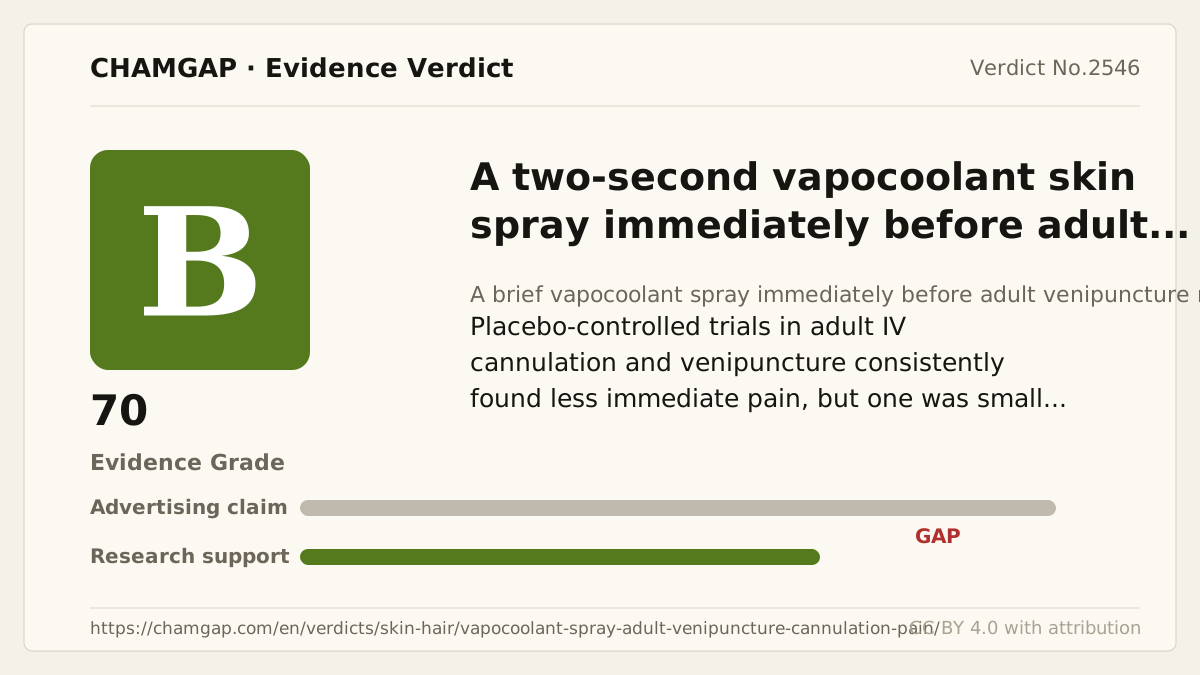
[Chamgap] Vapocoolant spray x adult venipuncture pain — Evidence Grade B·70. 2 cited sources checked. Source: https://chamgap.com/en/verdicts/skin-hair/vapocoolant-spray-adult-venipuncture-cannulation-pain/ · CC BY 4.0CC BY 4.0 — free to use with attribution; do not distort grades, numbers, or verdict meaning.
What this document does and does not do
Chamgap is an information source. It reports what research has and has not confirmed; it does not tell readers what to take or buy. That decision belongs to readers and, when needed, medical or legal professionals. This verdict reflects literature available up to the search date and may change as new research appears. Nothing here is medical advice.