
Sucrose octasulfate dressing,
does it really help with Increased complete closure by 20 weeks in neuroischaemic diabetic foot ulcers?
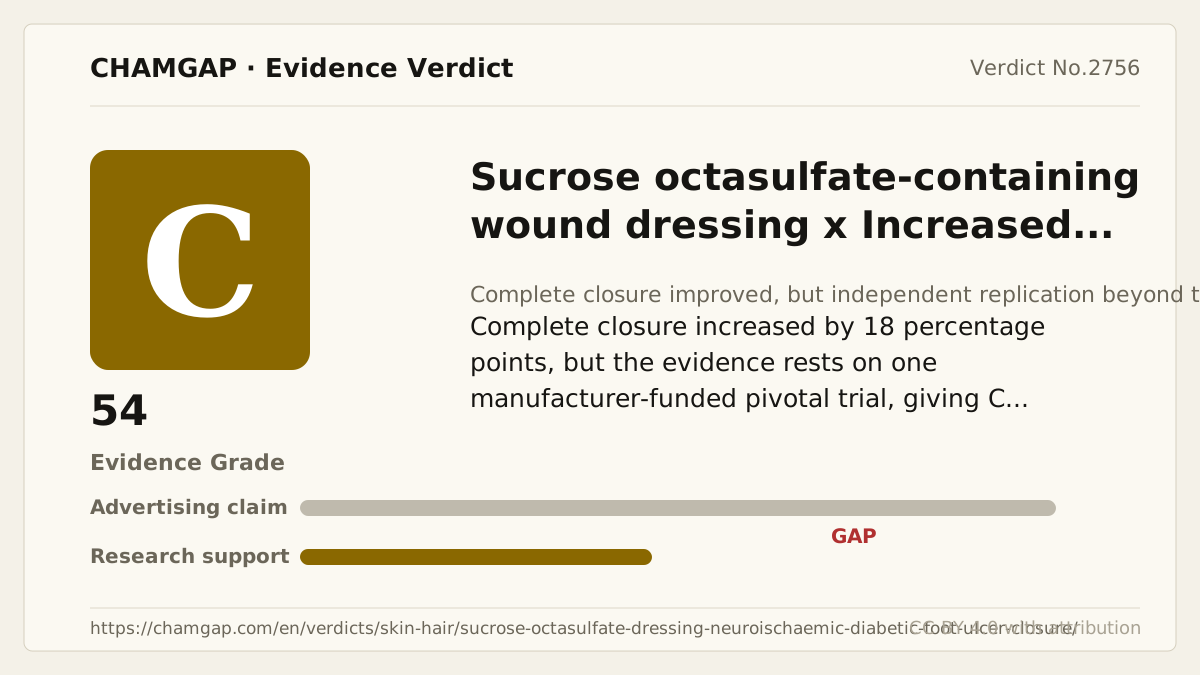
research showsThe grade is C. Explorer analyzed all 240 randomized participants and found complete closure by week 20 in 60/126 (48%) with sucrose octasulfate dressing versus 34/114 (30%) with control dressing. The absolute difference was 18 percentage points (95% CI 5 to 30), with adjusted OR 2.60 (1.43 to 4.73). The primary endpoint succeeded, but the only pivotal evidence identified is a single trial funded by manufacturer Urgo Medical, which also supplied the study dressings, giving C with 54 points.
ads claimA broad claim that the product is simply good for diabetic feet should be replaced by the measured result: among selected noninfected neuroischaemic ulcers receiving standard care and offloading, 20-week closure increased from 30% to 48%. The single manufacturer-funded evidence base should be disclosed.
Useful facts when choosing a product
- The active dressing was UrgoStart Contact; the control was UrgoTul with the same construction but without sucrose octasulfate.
- Urgo Medical supplied the study dressings and separate vascular, sensory, imaging, and planimetric assessment tools.
- Both groups also received standard wound care and offloading.
What the research actually shows
At 43 specialist centers, 240 participants were assigned to sucrose octasulfate dressing (126) or an identically appearing dressing without sucrose octasulfate (114). An independent company generated the computer block-randomization list, allocation used central participant numbering, and participants, caregivers, outcome assessors, data collectors, and analysts were masked. The primary analysis included all 240 randomized participants, with closure in 60/126 versus 34/114. Eighteen versus 19 participants ended treatment early, totaling 37/240 (15.4%). Funding and supplied items must be distinguished: Urgo Medical funded the trial and supplied both study dressings as trial interventions, while toe-pressure devices, microdopplers, monofilaments, cameras, storage devices, rulers, and transparent sheets were assessment or recording tools.
Why this is classified as C (54)
A directly important primary endpoint improved by 18 percentage points, but one manufacturer-funded trial with 15.4% early treatment-period termination gives C with 54 points.
Counterpoint. This is not a null verdict. It means the positive finding remains limited in evidence hierarchy until independently replicated.
Rejudgment record. Cross-check applied — Centers the 18-point absolute improvement in 20-week complete closure while accounting for single-trial manufacturer funding and intervention supply and 15.4% early treatment-period termination
| Endpoint | H | Hard endpoint - actual events such as death |
| Replication | R1 | Single confirmatory trial |
| Independence | I0 | Evidence comes only from manufacturer studies |
| Effect size | E+ | Meets the clinically important threshold |
The scoring table and the verdict agree (C).
Sub-claim grades by effect
This ingredient is marketed for several effects. A single overall grade blends strong and weak claims together, so each effect is graded separately here. The overall grade reflects the strongest disconfirming or core claim.
| Effect (sub-claim) | Grade | Basis |
|---|---|---|
| Increased complete closure by week 20 | C | The result was positive at 48% versus 30%, an 18-point absolute difference. |
| Reduced target-wound infection | D | Rates were 20% versus 28%, but infection was not the primary efficacy endpoint. |
Cross-check — Codex and Claude
Evidence Table
| Study | Design | Sample | Funding | Endpoint | Result | Weight |
|---|---|---|---|---|---|---|
| Study 1 | Double-blind randomized controlled trial at 43 centers | 37 | Fully funded by Laboratoires Urgo Medical, which supplied the trial dressings and separate assessment and recording tools | Complete target-ulcer closure by week 20 | 60/126 (48%) versus 34/114 (30%); absolute difference 18 points (95% CI 5 to 30); adjusted OR 2.60 (1.43 to 4.73), p=0.002 | Positive directly important primary endpoint, limited by one manufacturer-funded trial and 15.4% early termination |
Receipt — 1 References
All 1 cited sources were verified for existence at the original page (as of 2026-08-18).
Reviewed and approved: Chamgap Editorial Team · Approval date: 2026-08-18 · Corrections: none
Cite this verdict
[Chamgap] Sucrose octasulfate dressing x complete closure of neuroischaemic diabetic foot ulcers — Evidence Grade C·54. 1 cited sources checked. Source: https://chamgap.com/en/verdicts/skin-hair/sucrose-octasulfate-dressing-neuroischaemic-diabetic-foot-ulcer-closure/ · CC BY 4.0CC BY 4.0 — free to use with attribution; do not distort grades, numbers, or verdict meaning.
What this document does and does not do
Chamgap is an information source. It reports what research has and has not confirmed; it does not tell readers what to take or buy. That decision belongs to readers and, when needed, medical or legal professionals. This verdict reflects literature available up to the search date and may change as new research appears. Nothing here is medical advice.