
Skin-care education and counselling,
does it really help with Improved clinical severity of hand eczema in healthcare workers?
research showsThe grade is C with 50 points. In a 255-worker trial at three Danish hospitals, follow-up HECSI was 4.97 versus 8.53, with an adjusted mean difference of -3.47 (95% CI -4.80 to -2.14), P<0.001. Outcome assessors were blinded, while participants were not. The sample-size calculation prespecified means of 10 versus 14, a 4-point difference, but the observed adjusted difference was 3.47 points.
ads claimThe evidence supports improved severity over about five months, not cure of hand eczema.
Useful facts when choosing a product
- The intervention combined skin-care education with individualized counselling based on testing and exposure assessment.
- The primary HECSI assessment was observer-blinded.
- Two public sources funded the trial; Basilea's photographic guide was used only for secondary self-evaluation.
What the research actually shows
Central randomization allocated 255 participants, 123 versus 132. Planned minimum enrollment was 262, but recruitment ended at 255 without a reported reason. Two public sources, Region Zealand's Research Fund and the Danish Working Environment Research Fund, funded the trial. Basilea Pharmaceuticals supplied the photographic guide used for self-evaluation as a secondary endpoint; the primary HECSI endpoint was measured by a blinded assessor.
Why this is classified as C (50)
Patient-relevant severity improved, but the effect fell short of the prespecified 4-point difference and enrollment stopped below plan without a reported reason in one publicly funded trial, giving C with 50 points.
Counterpoint. Direction of effect and 97% follow-up are reassuring, but the prespecified effect threshold was not reached.
Rejudgment record. Cross-check applied — Observer-rated hand-eczema severity improved significantly but fell short of the prespecified 4-point difference, and one publicly funded trial enrolled fewer than planned without reporting why
| Endpoint | P | Patient-reported treatment goal - the symptom is the goal |
| Replication | R1 | Single confirmatory trial |
| Independence | I2 | Decisive evidence is publicly or non-profit funded |
| Effect size | E~ | Statistically positive but below the threshold |
The scoring table and the verdict agree (C).
Sub-claim grades by effect
This ingredient is marketed for several effects. A single overall grade blends strong and weak claims together, so each effect is graded separately here. The overall grade reflects the strongest disconfirming or core claim.
| Effect (sub-claim) | Grade | Basis |
|---|---|---|
| Improved clinical severity of hand eczema | C | Adjusted HECSI difference was -3.47 points. |
| Improved dermatology-related quality of life | C | Adjusted DLQI difference was -0.92 points. |
Cross-check — Codex and Claude
Evidence Table
| Study | Design | Sample | Funding | Endpoint | Result | Weight |
|---|---|---|---|---|---|---|
| Study 1 | Three-hospital observer-blinded parallel-group superiority randomized trial | 247 | Public funding from Region Zealand's Research Fund and the Danish Working Environment Research Fund; Basilea supplied a photographic guide for secondary self-evaluation | Blinded-assessor HECSI at about 5 months | 4.97 versus 8.53; adjusted mean difference -3.47 (95% CI -4.80 to -2.14), P<0.001; DLQI -0.92 (-1.48 to -0.37) | Single publicly funded trial |
Receipt — 1 References
All 1 cited sources were verified for existence at the original page (as of 2026-08-18).
Reviewed and approved: Chamgap Editorial Team · Approval date: 2026-08-18 · Corrections: none
Cite this verdict
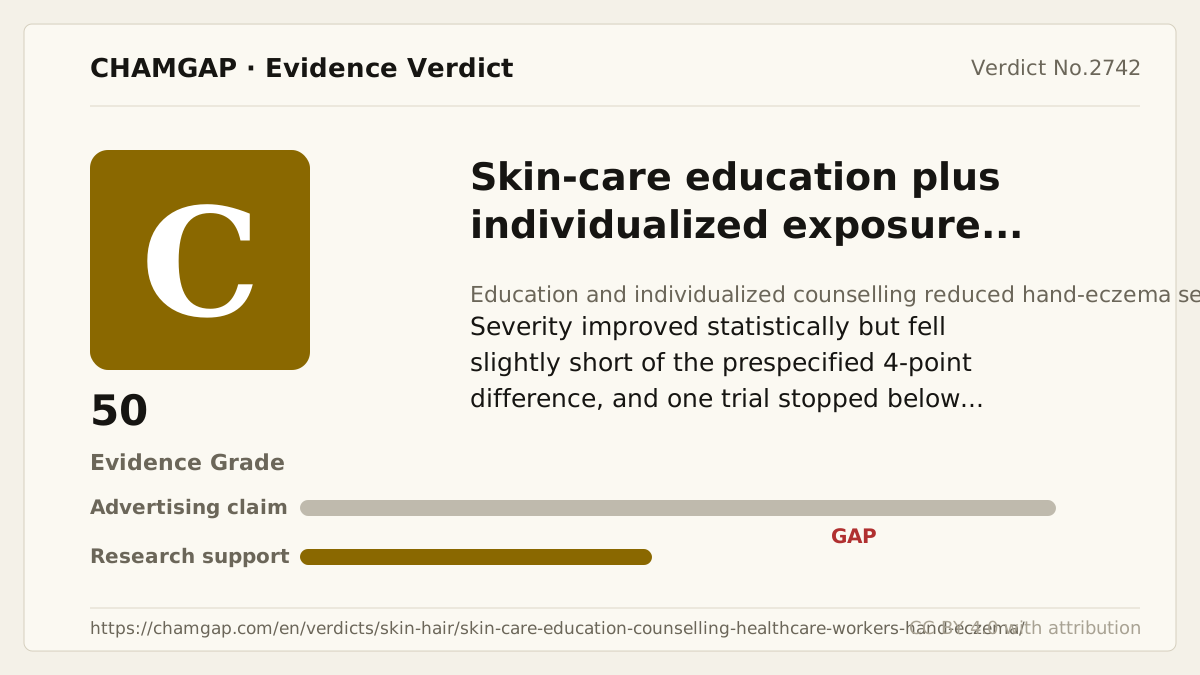
[Chamgap] Skin-care education and counselling x hand-eczema severity in healthcare workers — Evidence Grade C·50. 1 cited sources checked. Source: https://chamgap.com/en/verdicts/skin-hair/skin-care-education-counselling-healthcare-workers-hand-eczema/ · CC BY 4.0CC BY 4.0 — free to use with attribution; do not distort grades, numbers, or verdict meaning.
What this document does and does not do
Chamgap is an information source. It reports what research has and has not confirmed; it does not tell readers what to take or buy. That decision belongs to readers and, when needed, medical or legal professionals. This verdict reflects literature available up to the search date and may change as new research appears. Nothing here is medical advice.