
Prophylactic multilayer silicone-foam dressings,
does it really help with Reduced new pressure injuries in high-risk hospital or nursing-home patients?
research showsThe grade is B. A publicly funded Belgian trial of 1,633 participants found category 2 or worse pressure injury in 4.0% versus 6.3%, and a 40-facility Australian trial found 2.2% versus 10.7%. Replication by different teams and funders supports benefit, while open-label delivery and mixed manufacturer funding in one trial give B with 76 points.
ads claimDressings do not eliminate the need for repositioning, skin care, or pressure-redistributing surfaces. Both groups continued standard prevention; the question was added benefit.
Useful facts when choosing a product
- Multilayer silicone foam is a medical dressing intended to buffer friction, shear, and local pressure over vulnerable skin.
- Beeckman pooled two commercial dressing groups against standard care.
- Existing pressure-injury verdicts 2303 and 2442 cover repositioning and alternating-pressure mattresses, not this intervention.
What the research actually shows
Beeckman randomized 1,633 at-risk patients in eight hospitals and analyzed 1,605. Category 2 or worse injury occurred in 43/1,066 (4.0%) versus 34/539 (6.3%), RR 0.64 (0.41-0.99). Santamaria randomized 40 long-term-care facilities and followed 288 residents for four weeks: 3/138 (2.2%) versus 16/150 (10.7%), recalculated RR 0.20 (0.06-0.68). Dressings could not be concealed, and blinded pressure-injury staging was not confirmed for the Australian trial; this was counted as one design limitation.
Why this is classified as B (76)
Two trials with different investigators and funding sources replicated fewer new clinical pressure injuries. A large public trial supports the effect, but open-label treatment, short follow-up, and mixed funding in one trial give B with 76 points.
Counterpoint. Absolute benefit depends on baseline risk and standard prevention. Cost and skin-harm tradeoffs in low-risk patients require separate evaluation.
Rejudgment record. Cross-check applied — We cross-checked primary pressure-injury events, analyzed populations, site-specific findings, funding, and design limitations in two randomized trials.
| Endpoint | H | Hard endpoint - actual events such as death |
| Replication | R2 | Independently replicated across trials |
| Independence | I1 | Mixed funding sources |
| Effect size | E+ | Meets the clinically important threshold |
The scoring table and the verdict agree (B).
Sub-claim grades by effect
This ingredient is marketed for several effects. A single overall grade blends strong and weak claims together, so each effect is graded separately here. The overall grade reflects the strongest disconfirming or core claim.
| Effect (sub-claim) | Grade | Basis |
|---|---|---|
| Adding multilayer silicone foam to standard prevention reduces category 2 or worse pressure injuries in high-risk patients. | B | Two independent randomized trials reduced the same clinical event. |
| Heel pressure injuries are definitively reduced. | D | The large trial's heel-specific RR 0.76 (0.34-1.68) was uncertain. |
Cross-check — Codex and Claude
Evidence Table
| Study | Design | Sample | Funding | Endpoint | Result | Weight |
|---|---|---|---|---|---|---|
| Study 1 | Centrally randomized, open-label, multicenter medical-device trial in eight hospitals | 1,605 | Funded and sponsored by the Belgian Health Care Knowledge Centre (KCE); noncommercial trial | New category 2 or worse pressure injury at study sites | 43/1,066 (4.0%) versus 34/539 (6.3%); RR 0.64 (95% CI 0.41-0.99) | Pivotal large publicly funded trial |
| Study 2 | Cluster randomized trial in 40 long-term-care facilities | 150 | Research grants from Mölnlycke Health Care and the Australian government Wound Management CRC | New pressure injury within four weeks | 3/138 (2.2%) versus 16/150 (10.7%); recalculated RR 0.20 (95% CI 0.06-0.68) | Replication by investigators in another country |
Receipt — 2 References
Of 2 cited sources, 1 had limited original-page access (blocked or summary-only) and were verified via index/summary, marked partial; the rest were verified at the original page. As of 2026-08-14.
Reviewed and approved: Chamgap Editorial Team · Approval date: 2026-08-14 · Corrections: none
Cite this verdict
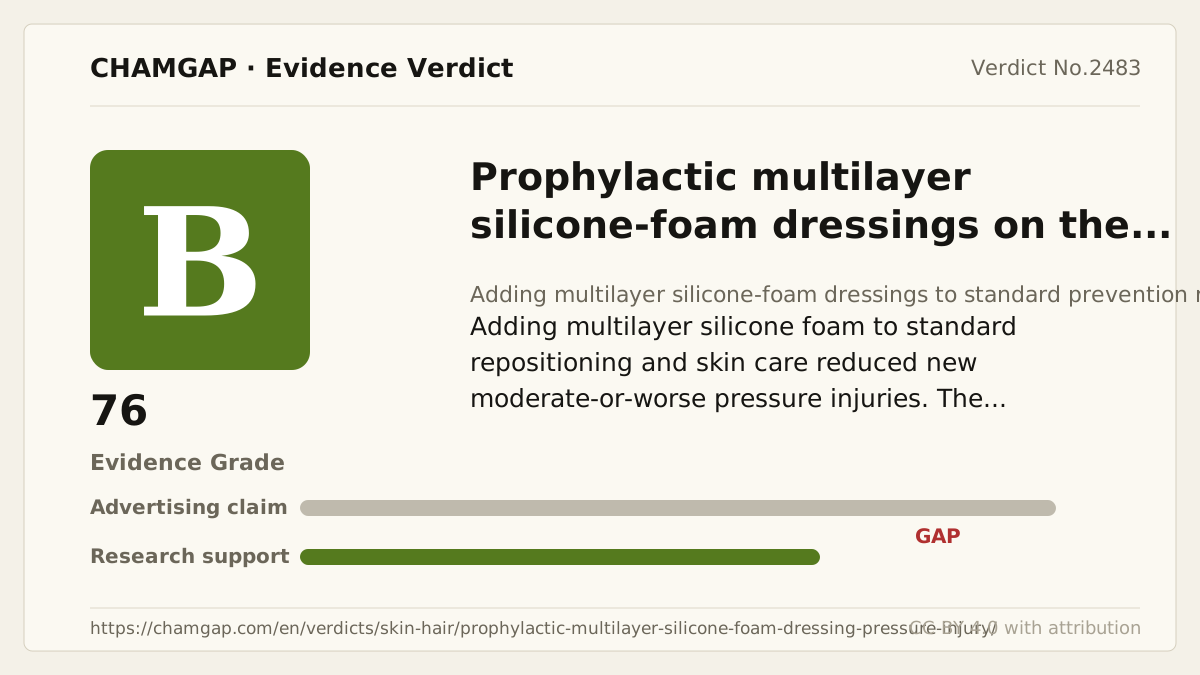
[Chamgap] Prophylactic multilayer silicone-foam dressings x pressure-injury prevention — Evidence Grade B·76. 2 cited sources checked. Source: https://chamgap.com/en/verdicts/skin-hair/prophylactic-multilayer-silicone-foam-dressing-pressure-injury/ · CC BY 4.0CC BY 4.0 — free to use with attribution; do not distort grades, numbers, or verdict meaning.
What this document does and does not do
Chamgap is an information source. It reports what research has and has not confirmed; it does not tell readers what to take or buy. That decision belongs to readers and, when needed, medical or legal professionals. This verdict reflects literature available up to the search date and may change as new research appears. Nothing here is medical advice.