
Silver-alloy urinary catheter,
does it really help with Reduced symptomatic urinary tract infection versus standard PTFE-coated catheter?
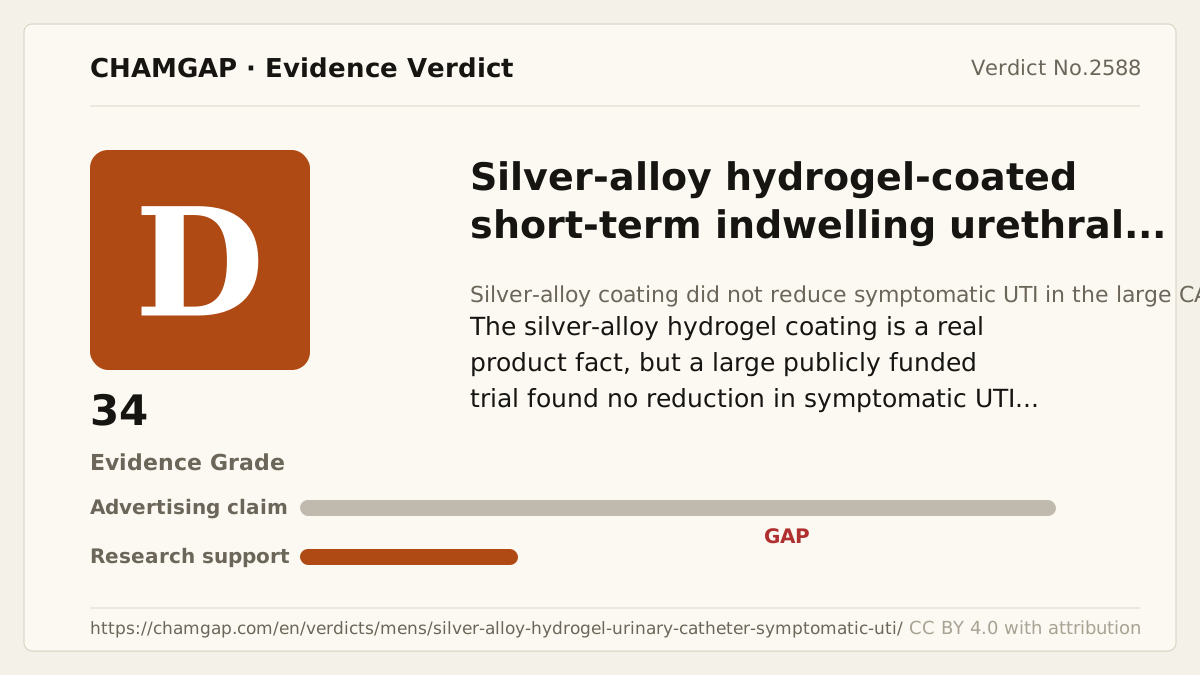
research showsThe grade is D with 34 points. In the 24-hospital UK CATHETER trial, symptomatic UTI occurred in 263/2,097 (12.5%) with silver alloy and 271/2,144 (12.6%) with standard PTFE. The absolute difference was -0.1 percentage points (95% CI -2.4 to 2.2), showing no benefit.
ads claimA silver-alloy hydrogel coating is a composition fact, not automatic clinical antimicrobial efficacy. Bacteriuria and laboratory activity are also different from symptomatic infection.
Useful facts when choosing a product
- The test device was a silver-alloy hydrogel-coated latex urethral catheter.
- The standard comparator was PTFE-coated latex; the nitrofural arm is excluded from this verdict.
- Trial-reported unit prices were £0.86 standard and £6.46 silver alloy, but prices vary by time and procurement.
What the research actually shows
Pickard and colleagues randomized 7,102 adults at 24 UK hospitals to silver alloy, nitrofural, or standard PTFE catheters. This verdict compares the 2,097 silver-alloy and 2,144 standard participants in the primary analysis. Allocation used central remote minimization, but participants and staff knew the product, and the endpoint combined symptoms with antibiotic prescribing. Funding came from the NIHR Health Technology Assessment Programme.
Why this is classified as D (34)
A large publicly funded randomized trial had a null prespecified primary endpoint; direct repeated refutation and a validated exclusion threshold were not established, giving D with 34 points.
Counterpoint. This was short-term urethral catheterization in hospitalized women and men. Long-term, suprapubic, other metal coatings, and asymptomatic bacteriuria are separate questions.
Rejudgment record. Cross-check applied — Cross-checked analysis counts, primary endpoint, event counts, absolute difference, masking, and funding against the Lancet article, HTA report, and ISRCTN record
| Endpoint | H | Hard endpoint - actual events such as death |
| Replication | R1 | Single confirmatory trial |
| Independence | I2 | Decisive evidence is publicly or non-profit funded |
| Effect size | E0 | Null |
| Precision | C0 | The confidence interval leaves room for benefit |
The scoring table and the verdict agree (D).
Sub-claim grades by effect
This ingredient is marketed for several effects. A single overall grade blends strong and weak claims together, so each effect is graded separately here. The overall grade reflects the strongest disconfirming or core claim.
| Effect (sub-claim) | Grade | Basis |
|---|---|---|
| Silver-alloy hydrogel-coated catheters reduce symptomatic UTI | D | Rates were 12.5% versus 12.6%, with no difference. |
Cross-check — Codex and Claude
Evidence Table
| Study | Design | Sample | Funding | Endpoint | Result | Weight |
|---|---|---|---|---|---|---|
| Study 1 | Large 24-hospital three-arm randomized trial | 2,144 | UK NIHR Health Technology Assessment Programme 05/46/01 | Symptomatic UTI through six weeks, defined using symptoms and antibiotic prescription | 263/2,097 (12.5%) versus 271/2,144 (12.6%), absolute difference -0.1 points (95% CI -2.4 to 2.2) | Pivotal large publicly funded trial |
Receipt — 2 References
All 2 cited sources were verified for existence at the original page (as of 2026-08-14).
Reviewed and approved: Chamgap Editorial Team · Approval date: 2026-08-14 · Corrections: none
Cite this verdict
[Chamgap] Silver-alloy urinary catheter x symptomatic urinary tract infection — Evidence Grade D·34. 2 cited sources checked. Source: https://chamgap.com/en/verdicts/mens/silver-alloy-hydrogel-urinary-catheter-symptomatic-uti/ · CC BY 4.0CC BY 4.0 — free to use with attribution; do not distort grades, numbers, or verdict meaning.
What this document does and does not do
Chamgap is an information source. It reports what research has and has not confirmed; it does not tell readers what to take or buy. That decision belongs to readers and, when needed, medical or legal professionals. This verdict reflects literature available up to the search date and may change as new research appears. Nothing here is medical advice.