
Four-month androgen deprivation plus radiotherapy,
does it really help with Improved overall survival and prostate-cancer mortality?
research showsThe grade is B with 76 points. RTOG 9408 randomized 2,028 men and analyzed 1,979 eligible participants. Ten-year overall survival was 57% with radiotherapy alone versus 62% with four-month androgen deprivation; the hazard ratio for death with radiotherapy alone was 1.17 (95% CI 1.01 to 1.35). At long follow-up, 18-year overall survival converged at 23%, but restricted mean survival was about six months longer and lower prostate-cancer mortality persisted with combined treatment.
ads claimThis verdict applies to the RTOG 9408 regimen of four months of flutamide plus goserelin or leuprolide around radiotherapy. Longer hormonal therapy, postoperative treatment, and metastatic prostate cancer are different questions.
Useful facts when choosing a product
- Hormonal therapy began two months before radiotherapy and lasted four months.
- The main and long-term papers report the same RTOG 9408 trial.
What the research actually shows
RTOG 9408 randomized 2,028 men at 212 centers but excluded 49 who were ineligible, withdrew consent, or lacked baseline data, leaving 1,979 in the primary analysis, 987 combined and 992 radiotherapy alone. The article designated overall survival as primary, consistent with NCT00002597. The National Cancer Institute sponsored the trial and drugs were purchased without commercial support. Excluding 49 participants after randomization prevents a complete allocation-based analysis.
Why this is classified as B (76)
A large publicly funded trial improved overall survival and prostate-cancer mortality, but it remains one confirmatory trial and excluded 49 participants after randomization, giving B with 76 points.
Counterpoint. Benefit was unclear in low-risk disease, so baseline risk and adverse effects should guide treatment decisions.
Rejudgment record. Cross-check applied — Cross-checked the RTOG 9408 main report, long-term update, and NCT00002597 for the primary endpoint, randomized and analyzed counts, long-term survival, and NCI funding
| Endpoint | H | Hard endpoint - actual events such as death |
| Replication | R1 | Single confirmatory trial |
| Independence | I2 | Decisive evidence is publicly or non-profit funded |
| Effect size | E+ | Meets the clinically important threshold |
The scoring table and the verdict agree (B).
Sub-claim grades by effect
This ingredient is marketed for several effects. A single overall grade blends strong and weak claims together, so each effect is graded separately here. The overall grade reflects the strongest disconfirming or core claim.
| Effect (sub-claim) | Grade | Basis |
|---|---|---|
| Improved ten-year overall survival | B | Rates were 62% versus 57%. |
| Reduced prostate-cancer mortality | B | Ten-year rates were 4% versus 8%, with long-term HR 0.56. |
Cross-check — Codex and Claude
Evidence Table
| Study | Design | Sample | Funding | Endpoint | Result | Weight |
|---|---|---|---|---|---|---|
| Study 1 | Multicenter phase 3 randomized trial and long-term report from the same trial | 992 | Public National Cancer Institute funding; no commercial support | Overall survival | Ten-year overall survival 62% versus 57%; HR for death with radiotherapy alone 1.17 (95% CI 1.01 to 1.35). At 18 years, 23% versus 23%, restricted mean survival 11.8 versus 11.3 years | Single large publicly funded hard-outcome trial |
Receipt — 2 References
All 2 cited sources were verified for existence at the original page (as of 2026-08-15).
Reviewed and approved: Chamgap Editorial Team · Approval date: 2026-08-15 · Corrections: none
Cite this verdict
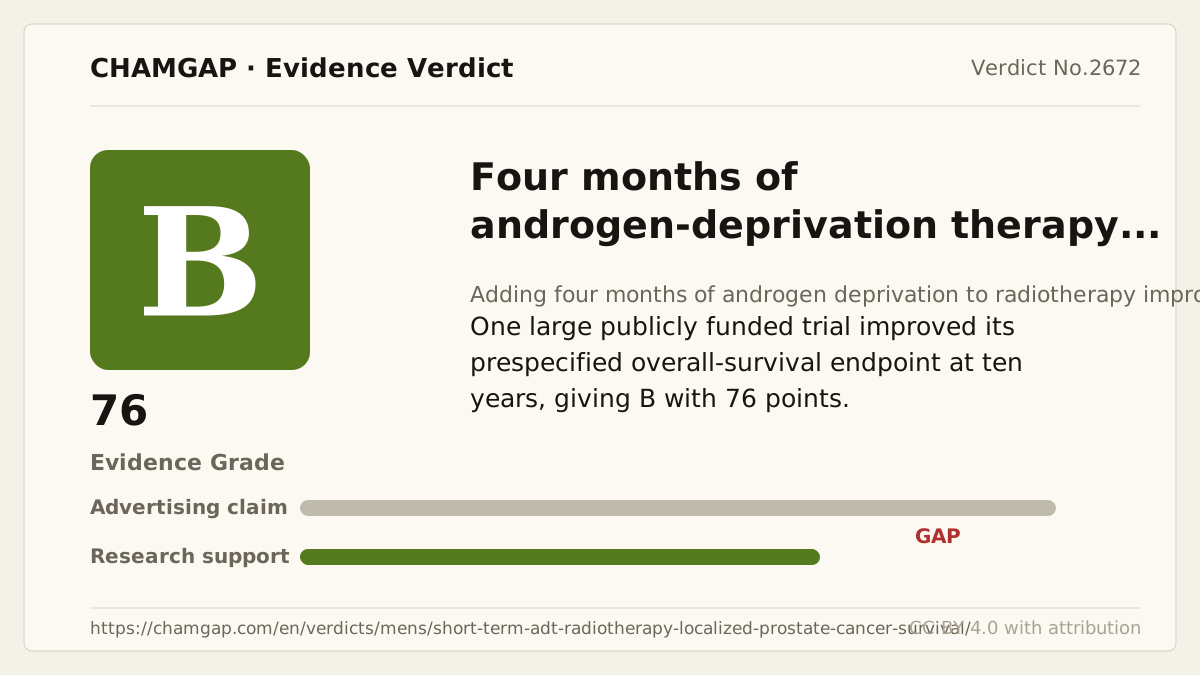
[Chamgap] Four-month androgen deprivation plus radiotherapy x localized prostate cancer survival — Evidence Grade B·76. 2 cited sources checked. Source: https://chamgap.com/en/verdicts/mens/short-term-adt-radiotherapy-localized-prostate-cancer-survival/ · CC BY 4.0CC BY 4.0 — free to use with attribution; do not distort grades, numbers, or verdict meaning.
What this document does and does not do
Chamgap is an information source. It reports what research has and has not confirmed; it does not tell readers what to take or buy. That decision belongs to readers and, when needed, medical or legal professionals. This verdict reflects literature available up to the search date and may change as new research appears. Nothing here is medical advice.