
Hydrophilic intermittent catheter,
does it really help with Reduced antibiotic-treated symptomatic urinary tract infection after acute spinal cord injury?
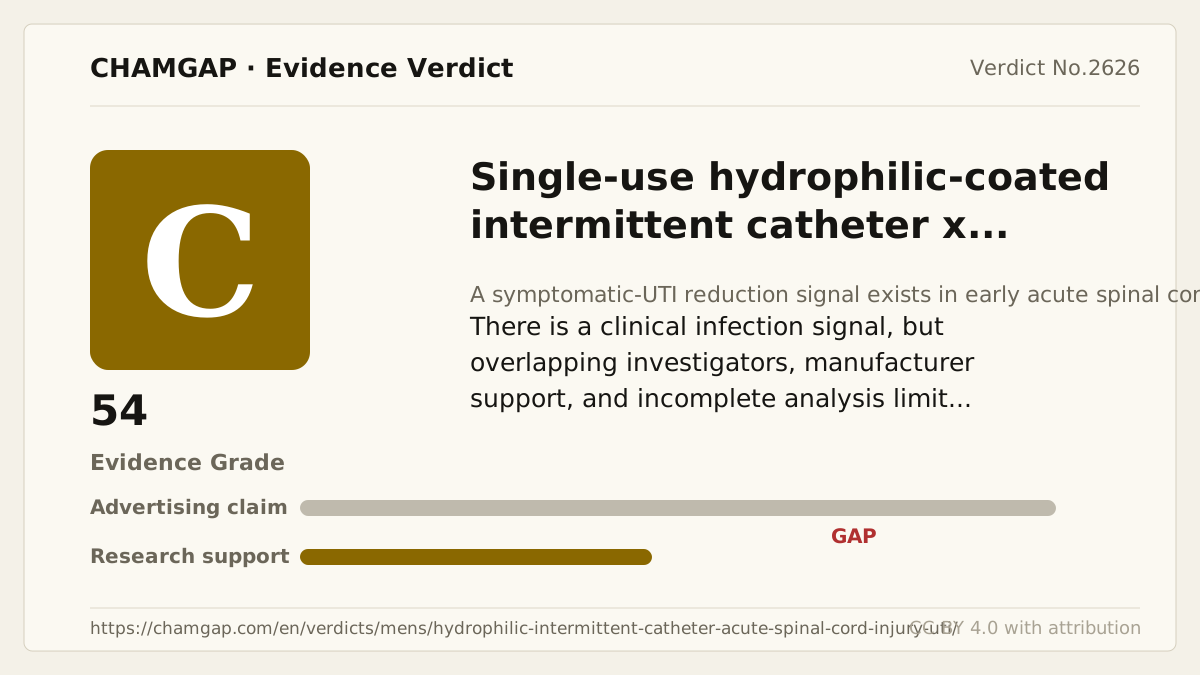
research showsThe grade is C. In a 224-person multicenter trial, SpeediCath reduced the daily hazard of a first antibiotic-treated symptomatic UTI by 33% and inpatient-rehabilitation incidence by 21% versus an uncoated PVC catheter. The trial was open label, fewer participants contributed to the analyzable survival data than were randomized, an investigator overlapped with the earlier 56-person trial, and Coloplast supported the 2011 trial, giving C with 54 points.
ads claimA ready-lubricated hydrophilic surface is a real product property, but it does not establish infection prevention for every user and duration. The clinical signal is limited to early rehabilitation after acute traumatic spinal cord injury and the tested products.
Useful facts when choosing a product
- The 2011 trial compared a new SpeediCath at each use with externally lubricated uncoated Conveen PVC.
- Diana D. Cardenas participated in both the 2009 and 2011 reports.
- Unlike verdict 2531 on dialysis central-line infection, this verdict concerns intermittent catheterization and UTI after spinal cord injury.
What the research actually shows
Cardenas and Hoffman enrolled 56 people in 2009, with 45 completing; at least one antibiotic-treatment episode occurred in 50% versus 70%. That trial was supported by NIDRR and US Department of Education grant H133N000003 and stated that no commercial party provided benefits to the authors. The 2011 trial randomized 224 people with traumatic spinal cord injury of less than three months at 15 North American centers to SpeediCath or uncoated Conveen PVC and followed them for up to six months. Time to first antibiotic-treated symptomatic UTI improved, with a 33% lower daily hazard and 21% lower inpatient incidence. Cardenas appeared in both reports, and the 2011 study was supported by Coloplast A/S. No registration number was confirmed.
Why this is classified as C (54)
A significant benefit in clinical infection was offset by investigator overlap, manufacturer support, open treatment, and incomplete analysis, giving C with 54 points.
Counterpoint. C does not mean no effect. It means a positive acute-spinal-cord-injury signal lacks sufficiently independent, methodologically complete confirmation.
Rejudgment record. Cross-check applied — The two original reports were checked for author overlap, analyzed populations, infection definitions, outcomes, and Coloplast support
| Endpoint | H | Hard endpoint - actual events such as death |
| Replication | R1 | Single confirmatory trial |
| Independence | I1 | Mixed funding sources |
| Effect size | E+ | Meets the clinically important threshold |
The scoring table and the verdict agree (C).
Sub-claim grades by effect
This ingredient is marketed for several effects. A single overall grade blends strong and weak claims together, so each effect is graded separately here. The overall grade reflects the strongest disconfirming or core claim.
| Effect (sub-claim) | Grade | Basis |
|---|---|---|
| Delayed first antibiotic-treated symptomatic UTI | C | The 224-person trial reported a 33% lower daily hazard. |
| Reduced symptomatic UTI during inpatient rehabilitation | C | Inpatient incidence was 21% lower. |
Cross-check — Codex and Claude
Evidence Table
| Study | Design | Sample | Funding | Endpoint | Result | Weight |
|---|---|---|---|---|---|---|
| Cardenas DD, Hoffman JM. 2009 | Randomized controlled trial | 23 | Supported by NIDRR and US Department of Education grant H133N000003; the paper states that no commercial party provided benefits to the authors | Antibiotic-treated symptomatic UTI | At least one antibiotic-treatment episode occurred in 50% versus 70%, P=.18; total treated episodes were lower, but symptomatic UTI incidence itself was not significantly different. | Small earlier trial centered on completers |
| Cardenas DD, Moore KN, Dannels-McClure A, et al. 2011 | Prospective open randomized parallel trial at 15 North American centers | 6 | The study was supported by Coloplast A/S | Time to first antibiotic-treated symptomatic UTI and total symptomatic UTIs | Daily hazard of first UTI was 33% lower; inpatient incidence was 21% lower, P<.05. | Pivotal direct trial with analytic-population and masking limitations |
Receipt — 2 References
All 2 cited sources were verified for existence at the original page (as of 2026-08-15).
Reviewed and approved: Chamgap Editorial Team · Approval date: 2026-08-15 · Corrections: none
Cite this verdict
[Chamgap] Hydrophilic intermittent catheter x fewer urinary tract infections after acute spinal cord injury — Evidence Grade C·54. 2 cited sources checked. Source: https://chamgap.com/en/verdicts/mens/hydrophilic-intermittent-catheter-acute-spinal-cord-injury-uti/ · CC BY 4.0CC BY 4.0 — free to use with attribution; do not distort grades, numbers, or verdict meaning.
What this document does and does not do
Chamgap is an information source. It reports what research has and has not confirmed; it does not tell readers what to take or buy. That decision belongs to readers and, when needed, medical or legal professionals. This verdict reflects literature available up to the search date and may change as new research appears. Nothing here is medical advice.