
Rifaximin chemoprophylaxis,
does it really help with Prevention of travelers' diarrhea?
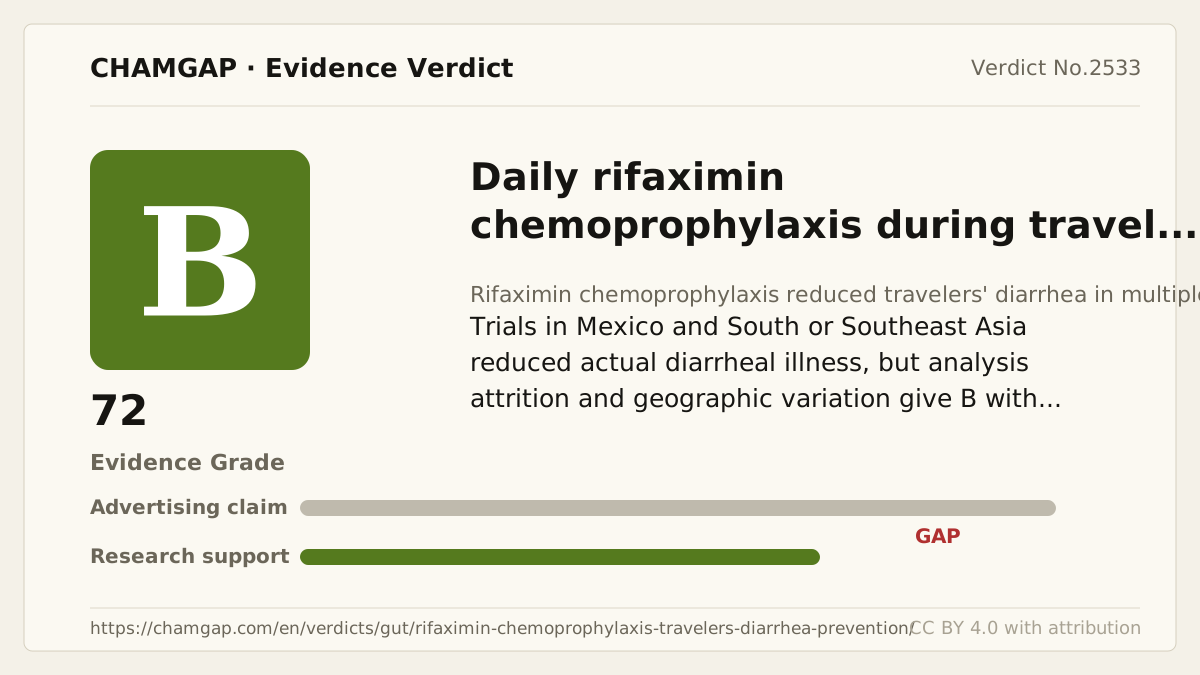
research showsThe grade is B. In travelers to Mexico, rifaximin 600 mg/day for 14 days reduced travelers' diarrhea to 20% versus 48%. Zanger's separate German trial in South and Southeast Asia found 30/122 (25%) versus 48/117 (41%), incidence-rate ratio 0.52 (95% CI 0.32-0.84), P=0.005, and NNT 5.70 (95% CI 3.44-16.69). Actual illness reduction was reproduced, but funding independence is not established and diary attrition and geographic variation give B with 72 points.
ads claimEvidence that prophylaxis reduces illness is not the same as a recommendation that every traveler take a daily antibiotic. Destination pathogens, invasive diarrhea, underlying risk, itinerary importance, antimicrobial resistance, and microbiome harms must be balanced.
Useful facts when choosing a product
- The Mexico trial used rifaximin 600 mg once daily for 14 days; the South and Southeast Asia trial used 200 mg twice daily during travel.
- The Asian trial's three-week NNT was 5.70 (95% CI 3.44-16.69).
- The target brief's Martinez-Sandoval PMID 20136989 was corrected to PMID 20412178, and registration NCT00742469 was verified.
- Existing rifaximin verdicts in other indications and acute diarrhea treatment address different claims; no direct duplicate of the selected PMIDs or DOIs was found.
What the research actually shows
Martinez-Sandoval randomized 210 US adults traveling in Mexico to rifaximin 600 mg/day or placebo for 14 days; NCT00742469 lists Bausch Health Americas as sponsor and Salix employees were coauthors. Armstrong 2010 was labeled US Government work, but Salix supplied study drug and placebo in kind. Zanger randomized 258 adults traveling to South or Southeast Asia; NCT00979056 and the EU registry list Universitätsklinikum Tübingen as sponsor, but the monetary or material support field was blank and the rifaximin source could not be confirmed. Under precedent 29, unconfirmed support was not relabeled independent. Zanger analyzed only 239 complete-diary returners.
Why this is classified as B (72)
Double-blind trials by separate investigators showed fewer actual cases in Mexico and South or Southeast Asia. Armstrong had Salix in-kind support, Martinez-Sandoval had a Bausch sponsor and Salix coauthors, and Zanger's monetary or material source was unconfirmed. This funding uncertainty, complete-diary analysis, and geographic variation give B with 72 points.
Counterpoint. This is an evidence grade for whether prophylaxis reduces illness. Whether routine antibiotic prophylaxis is worthwhile for an individual traveler is a separate risk-benefit decision.
Rejudgment record. Cross-check applied — We cross-checked doses, illness definitions, denominators, sponsors, Salix in-kind support and coauthorship, and unconfirmed funding sources against PubMed and the trial registries.
| Endpoint | H | Hard endpoint - actual events such as death |
| Replication | R2 | Independently replicated across trials |
| Independence | I1 | Mixed funding sources |
| Effect size | E+ | Meets the clinically important threshold |
The scoring table and the verdict agree (B).
Sub-claim grades by effect
This ingredient is marketed for several effects. A single overall grade blends strong and weak claims together, so each effect is graded separately here. The overall grade reflects the strongest disconfirming or core claim.
| Effect (sub-claim) | Grade | Basis |
|---|---|---|
| Rifaximin chemoprophylaxis reduces travelers' diarrhea. | B | Separate double-blind trials in Mexico and South or Southeast Asia found reductions in the same direction. |
| Protection is identical across all high-risk destinations. | D | Protection was smaller in South or Southeast Asia than Mexico, and a small dry-season trial was null. |
Cross-check — Codex and Claude
Evidence Table
| Study | Design | Sample | Funding | Endpoint | Result | Weight |
|---|---|---|---|---|---|---|
| Study 1 | Randomized double-blind placebo-controlled trial | 104 | Registry sponsor Bausch Health Americas; Salix employees were coauthors | Cumulative occurrence of travelers' diarrhea during 14 days of treatment | Rifaximin 20% versus placebo 48%; treated travelers' diarrhea 14% versus 32% | Positive confirmatory trial from the manufacturer program |
| Study 2 | Single-center randomized double-blind placebo-controlled phase 3 trial | 117 | Registry sponsor was Universitätsklinikum Tübingen, but monetary or material support and the rifaximin supplier were not confirmed | Time to first episode of classic travelers' diarrhea | 30/122 (25%) versus 48/117 (41%); incidence-rate ratio 0.52 (95% CI 0.32-0.84), P=0.005; NNT 5.70 (95% CI 3.44-16.69) | Replication by separate investigators, but funding independence was unconfirmed and analysis used diary completers |
| Study 3 | Randomized double-blind placebo-controlled trial | 47 | Published as US Government work; a separate disclosure states Salix supplied study drug and placebo in kind | Occurrence of travelers' diarrhea over 14 days | 3/48 (6.3%) versus 9/47 (19.2%); protective efficacy 67% (95% CI -13 to 91), P=0.07 | Supportive same-direction evidence with a small sample and wide interval |
Receipt — 3 References
Of 3 cited sources, 2 had limited original-page access (blocked or summary-only) and were verified via index/summary, marked partial; the rest were verified at the original page. As of 2026-08-14.
Reviewed and approved: Chamgap Editorial Team · Approval date: 2026-08-14 · Corrections: none
Cite this verdict
[Chamgap] Rifaximin chemoprophylaxis x prevention of travelers' diarrhea — Evidence Grade B·72. 3 cited sources checked. Source: https://chamgap.com/en/verdicts/gut/rifaximin-chemoprophylaxis-travelers-diarrhea-prevention/ · CC BY 4.0CC BY 4.0 — free to use with attribution; do not distort grades, numbers, or verdict meaning.
What this document does and does not do
Chamgap is an information source. It reports what research has and has not confirmed; it does not tell readers what to take or buy. That decision belongs to readers and, when needed, medical or legal professionals. This verdict reflects literature available up to the search date and may change as new research appears. Nothing here is medical advice.