
Home syrup of ipecac,
does it really help with Reduced emergency-department referral or use and fewer adverse outcomes?
research showsThe grade is D. Across 752,602 unintentional pharmaceutical exposures in children younger than six reported to 64 US poison centers in 2000-2001, mean home ipecac use was 1.8% and mean emergency-department referral was 9%. Center-level rates were not inversely associated, r=0.18 (95% CI -0.06 to 0.41), and high-use versus low-use centers did not differ in referral or adverse outcomes. Because this was a center-level observational comparison rather than individual randomization, it gives D with 28 points.
ads claimIpecac induces vomiting, but that pharmacologic action does not establish lower emergency use or better clinical outcomes after childhood poisoning. The large observational dataset did not show those benefits.
Useful facts when choosing a product
- Syrup of ipecac is an emetic; this verdict addresses home use after unintentional pharmaceutical ingestion in children younger than six.
- The unit of analysis was the poison center, not the individual child.
- The paper compared 32 higher-use with 32 lower-use centers, but absolute group event counts and confidence intervals were not verified in the accessible record.
- No duplicate ipecac-childhood-poisoning outcome verdict or reuse of PMID 14595046 or DOI 10.1542/peds.112.5.1061 was found in the existing list.
What the research actually shows
Bond compared blinded center-level data from 64 US poison centers for 752,602 unintentional pharmaceutical ingestions in children younger than six whose calls originated at home in 2000-2001. The primary outcome was the correlation between home ipecac use and recommendation for emergency-department referral. Adverse outcomes and high-versus-low center groups were also examined, but this was not an individual-level treatment-effect analysis. There was no trial registration, and the primary-paper funding statement was not verified in the accessible record.
Why this is classified as D (28)
Reduced emergency use and adverse outcomes were not observed in a dataset exceeding 750,000 exposures. However, center-level exposure and outcome rates were not linked at the individual level and major confounding remained, so this is null evidence rather than definitive refutation, giving D with 28 points.
Counterpoint. This verdict concerns routine home stocking and use after unintentional childhood poisoning. Rare scenarios narrowly defined by substance, timing, and delayed access to care cannot be settled by these data alone.
Rejudgment record. Cross-check applied — We verified the 64-center unit of analysis, prespecified correlation, exposure count, and outcome ranges while accounting for the lack of individual treatment comparisons and unverified group-level precision.
| Endpoint | P | Patient-reported treatment goal - the symptom is the goal |
| Replication | R1 | Single confirmatory trial |
| Independence | I1 | Mixed funding sources |
| Effect size | E0 | Null |
| Precision | C0 | The confidence interval leaves room for benefit |
The scoring table and the verdict agree (D).
Sub-claim grades by effect
This ingredient is marketed for several effects. A single overall grade blends strong and weak claims together, so each effect is graded separately here. The overall grade reflects the strongest disconfirming or core claim.
| Effect (sub-claim) | Grade | Basis |
|---|---|---|
| Home ipecac reduces emergency-department referral or use after childhood poisoning. | D | Center-level use was not associated with lower referral. |
| Home ipecac reduces adverse outcomes after childhood poisoning. | D | Adverse-outcome rates did not differ between higher- and lower-use centers, and precise group event counts were not verified. |
Cross-check — Codex and Claude
Evidence Table
| Study | Design | Sample | Funding | Endpoint | Result | Weight |
|---|---|---|---|---|---|---|
| Bond, Pediatrics 2003 | Center-level cohort comparison across 64 US poison centers | 64 | The primary-paper funding statement was not verified in the accessible record | Recommended referral and actual emergency-department use, plus adverse outcomes | Correlation between ipecac use and emergency referral r=0.18 (95% CI -0.06 to 0.41); no difference in referral or adverse outcomes between higher- and lower-use center groups | Only large direct dataset, but ecological rather than individual-level comparison |
Receipt — 1 References
Of 1 cited sources, 1 had limited original-page access (blocked or summary-only) and were verified via index/summary, marked partial; the rest were verified at the original page. As of 2026-08-14.
Reviewed and approved: Chamgap Editorial Team · Approval date: 2026-08-14 · Corrections: none
Cite this verdict
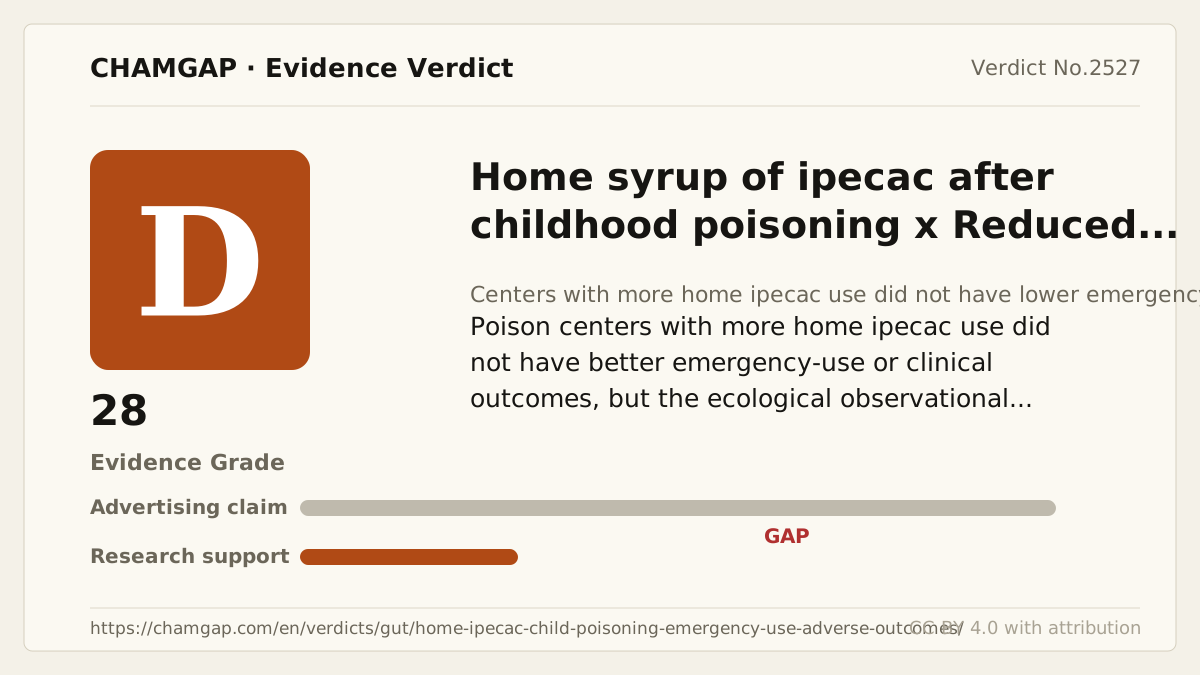
[Chamgap] Home syrup of ipecac x emergency use and harm after childhood poisoning — Evidence Grade D·28. 1 cited sources checked. Source: https://chamgap.com/en/verdicts/gut/home-ipecac-child-poisoning-emergency-use-adverse-outcomes/ · CC BY 4.0CC BY 4.0 — free to use with attribution; do not distort grades, numbers, or verdict meaning.
What this document does and does not do
Chamgap is an information source. It reports what research has and has not confirmed; it does not tell readers what to take or buy. That decision belongs to readers and, when needed, medical or legal professionals. This verdict reflects literature available up to the search date and may change as new research appears. Nothing here is medical advice.