
Titrated oxygen during acute COPD transport,
does it really help with Reduced prehospital or in-hospital mortality versus routine high-flow oxygen?
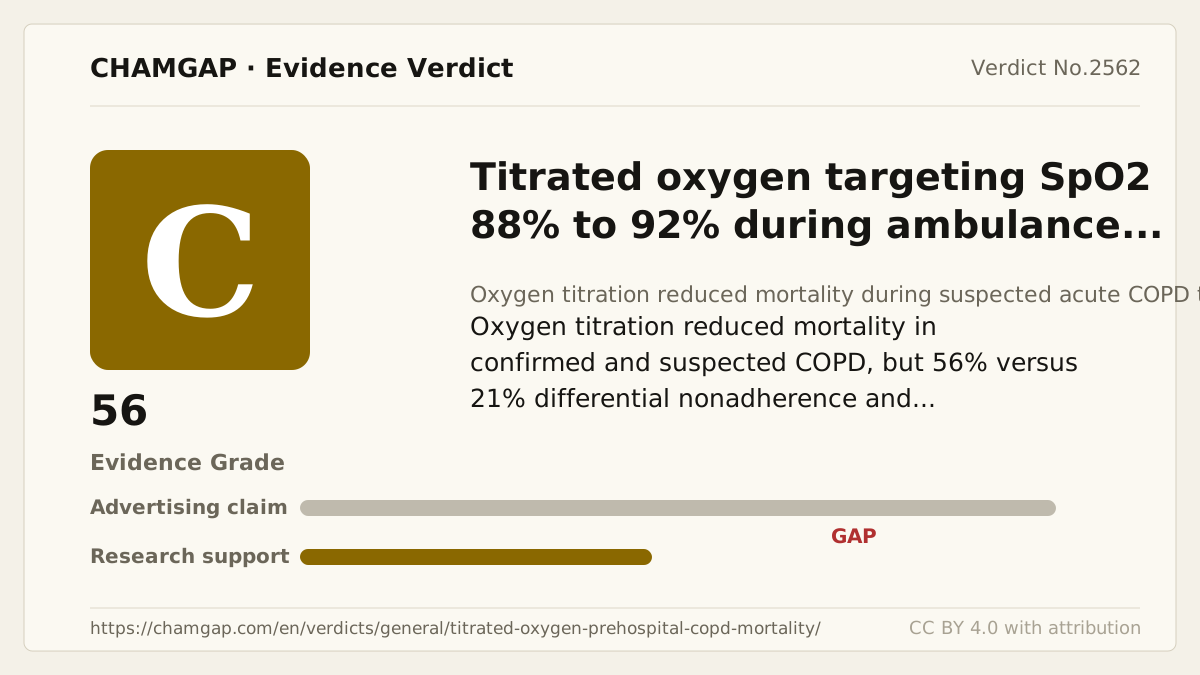
research showsThe grade is C. In a paramedic-cluster trial, mortality among 214 patients with spirometry-confirmed COPD was 2/97 (2.1%) with oxygen titrated to 88% to 92% versus 11/117 (9.4%) with high-flow oxygen, RR 0.22 (95% CI 0.05 to 0.91). Among all 405 suspected cases, rates were 7/179 (3.9%) versus 21/226 (9.3%), RR 0.42 (0.20 to 0.89). Hard outcomes, public funding, a large effect, and trial size are strengths, but differential protocol nonadherence and retrospective registration give C with 56 points.
ads claimThe intervention did not withhold oxygen. It titrated delivery by pulse oximetry to 88% to 92%. This does not justify tolerating severe hypoxemia or independently reducing prescribed long-term home oxygen.
Useful facts when choosing a product
- The titrated arm used nasal cannulae to target SpO2 88% to 92%; the control arm used a nonrebreather mask at 8 to 10 L/min.
- Verdict 1303 concerns long-term home oxygen for severe chronic hypoxemia. Verdict 2562 concerns oxygen concentration during ambulance transport for a suspected acute exacerbation.
- Funding came from a nonprofit professional body; the donated compressors were nebulizer equipment rather than the tested oxygen strategy.
What the research actually shows
Austin MA, Wills KE, Blizzard L, Walters EH and colleagues cluster-randomized paramedics and analyzed 405 suspected cases by assignment, adjusting standard errors for clustering. Treatment allocation was concealed before randomization. Among confirmed COPD patients, protocol nonadherence was 37% overall and 56% versus 21% by arm; all titrated-arm violations involved high-flow oxygen at some point, and the authors said this likely attenuated the effect. Recruitment ran in 2006-2007, whereas ACTRN12609000236291 was registered in 2009. The Australian College of Ambulance Professionals provided funding, while FlaemNova donated nebulizer compressors; neither sponsor was reported to have a role in conduct or analysis.
Why this is classified as C (56)
H, R1, I2, E+, and a large hard-outcome trial are strengths, but differential protocol nonadherence of 56% versus 21% and 2009 registration after 2006-2007 recruitment establish two defects and B2, giving C with 56 points. The authors judged nonadherence likely to attenuate the effect, and allocation was concealed before randomization.
Counterpoint. Titration prevents excess oxygen; it does not permit untreated hypoxemia.
Rejudgment record. Editor ruling applied — We cross-checked cluster allocation, concealment before randomization, assignment-based mortality, 56% versus 21% differential nonadherence and its conservative direction, retrospective registration, funding, and donated equipment against the original article.
| Endpoint | H | Hard endpoint - actual events such as death |
| Replication | R1 | Single confirmatory trial |
| Independence | I2 | Decisive evidence is publicly or non-profit funded |
| Effect size | E+ | Meets the clinically important threshold |
The scoring table and the verdict agree (C).
Sub-claim grades by effect
This ingredient is marketed for several effects. A single overall grade blends strong and weak claims together, so each effect is graded separately here. The overall grade reflects the strongest disconfirming or core claim.
| Effect (sub-claim) | Grade | Basis |
|---|---|---|
| Reduced mortality in spirometry-confirmed COPD | C | Mortality was 2.1% versus 9.4%, RR 0.22, with the verdict's two performance defects retained. |
| Reduced mortality among all transported patients with suspected COPD | C | Mortality was 3.9% versus 9.3%, RR 0.42, with the verdict's two performance defects retained. |
Cross-check — Codex and Claude
Evidence Table
| Study | Design | Sample | Funding | Endpoint | Result | Weight |
|---|---|---|---|---|---|---|
| Study 1 | Paramedic-cluster randomized parallel trial | 117 | Australian College of Ambulance Professionals funding; FlaemNova donated nebulizer compressors | Death before hospital arrival or during admission | Confirmed COPD: 2/97 (2.1%) versus 11/117 (9.4%), RR 0.22 (95% CI 0.05 to 0.91); all suspected cases: 7/179 (3.9%) versus 21/226 (9.3%), RR 0.42 (0.20 to 0.89) | Only direct confirmatory mortality trial |
Receipt — 1 References
All 1 cited sources were verified for existence at the original page (as of 2026-08-14).
Reviewed and approved: Chamgap Editorial Team · Approval date: 2026-08-14 · Corrections: none
Cite this verdict
[Chamgap] Titrated oxygen during acute COPD transport x mortality — Evidence Grade C·56. 1 cited sources checked. Source: https://chamgap.com/en/verdicts/general/titrated-oxygen-prehospital-copd-mortality/ · CC BY 4.0CC BY 4.0 — free to use with attribution; do not distort grades, numbers, or verdict meaning.
What this document does and does not do
Chamgap is an information source. It reports what research has and has not confirmed; it does not tell readers what to take or buy. That decision belongs to readers and, when needed, medical or legal professionals. This verdict reflects literature available up to the search date and may change as new research appears. Nothing here is medical advice.