
Smart home medication dispenser,
does it really help with Improved medication adherence in adults with chronic conditions and polypharmacy?
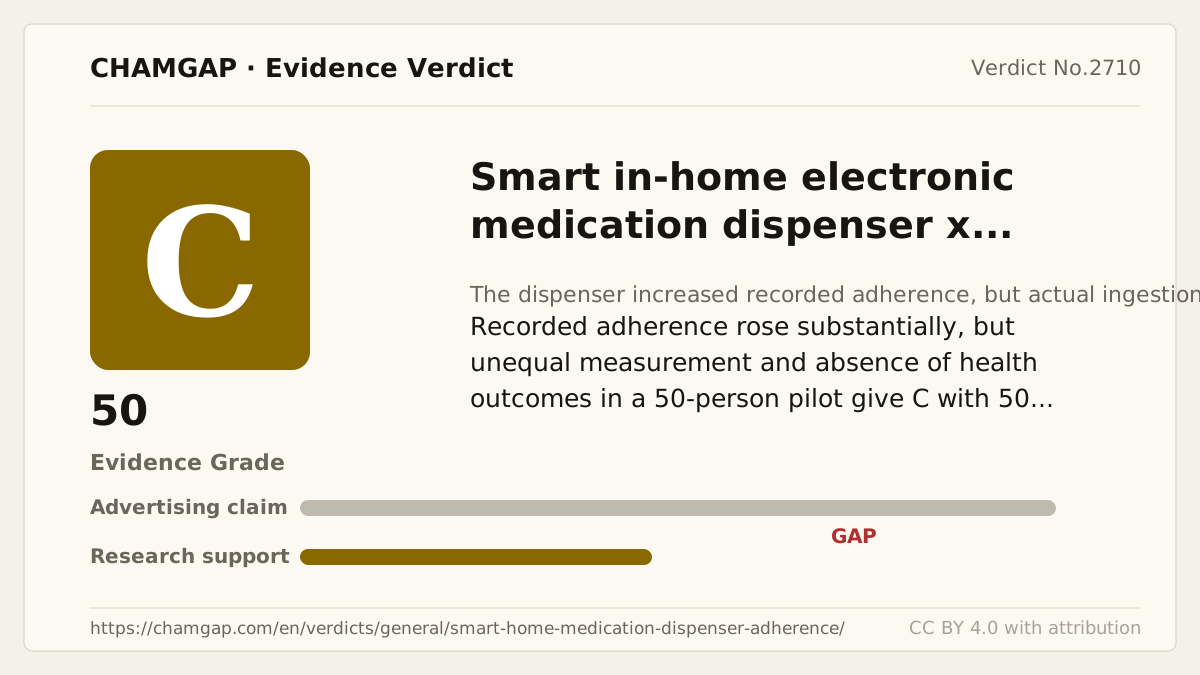
research showsThe grade is C with 50 points. In a 50-person pilot RCT, mean recorded adherence over 26 weeks was 98.35% with the dispenser versus 91.17% with control, a 7.18-point difference (P<.01). The standardized difference was about 1.00 SD, but it compared electronic pouch removal with self-recorded calendars and measured a process surrogate rather than actual ingestion or health events.
ads claimMore medication pouches were removed on schedule, but the study did not establish actual swallowing, fewer admissions, or fewer complications.
Useful facts when choosing a product
- Spencer issues audiovisual alerts and records pouch removal within a two-hour window as adherence.
- Missed-dose data can be shared with pharmacists and caregivers, with remote consultation features.
- NCT04339296 was registered after recruitment began and was not treated as prospective registration.
What the research actually shows
This was an open-label proof-of-concept RCT at one Canadian primary-care site. An independent assistant generated variable computer blocks and used sequential opaque envelopes to allocate 50 participants; 48, 23 versus 25, entered primary recorded-adherence analysis. Enrollment below 200, an unmasked behavioral process outcome, and different measurement methods between arms are central limitations. The paper called the analysis intention to treat, but two randomized participants and some monthly data were missing. CABHI's public Industry Innovation Partnership Program funded Catalyst Healthcare, while the manufacturer and a partner pharmacy provided study support, creating mixed public-industry involvement.
Why this is classified as C (50)
A large process-surrogate difference in a 50-person open trial with unequal measurement and no health outcomes gives C with 50 points.
Counterpoint. The device may be practically useful but cannot replace medication review, adverse-effect monitoring, or confirmation of actual ingestion.
Rejudgment record. Cross-check applied — Cross-checked the article, NCT04339296, and protocol for 48-person analysis, 26-week adherence, arm-specific measurement, allocation concealment, post-recruitment registration, and mixed support
| Endpoint | S | Surrogate marker - laboratory or imaging measures |
| Replication | R1 | Single confirmatory trial |
| Independence | I1 | Mixed funding sources |
| Effect size | E+ | Meets the clinically important threshold |
The scoring table and the verdict agree (C).
Sub-claim grades by effect
This ingredient is marketed for several effects. A single overall grade blends strong and weak claims together, so each effect is graded separately here. The overall grade reflects the strongest disconfirming or core claim.
| Effect (sub-claim) | Grade | Basis |
|---|---|---|
| Improved recorded medication adherence | C | The 26-week means were 98.35% versus 91.17%, but recording methods differed by arm. |
| Improved actual ingestion, hospitalization, or complications | ? | Actual ingestion and health outcomes were not measured. |
Cross-check — Codex and Claude
Evidence Table
| Study | Design | Sample | Funding | Endpoint | Result | Weight |
|---|---|---|---|---|---|---|
| Arain MA, Ahmad A, Chiu V, Kembel L. 2021 | Single-center open-label pilot randomized parallel trial | 25 | CABHI Industry Innovation Partnership Program funding to Catalyst Healthcare, with study support from the company and partner pharmacy | Mean recorded adherence over 26 weeks, defined as pouch removal within two hours | 98.35% (SD 2.15, n=23) vs 91.17% (SD 9.76, n=25), P<.01 | Large process-surrogate signal in a small pilot with arm-specific measurement |
Receipt — 1 References
All 1 cited sources were verified for existence at the original page (as of 2026-08-17).
Reviewed and approved: Chamgap Editorial Team · Approval date: 2026-08-17 · Corrections: none
Cite this verdict
[Chamgap] Smart home medication dispenser x medication adherence — Evidence Grade C·50. 1 cited sources checked. Source: https://chamgap.com/en/verdicts/general/smart-home-medication-dispenser-adherence/ · CC BY 4.0CC BY 4.0 — free to use with attribution; do not distort grades, numbers, or verdict meaning.
What this document does and does not do
Chamgap is an information source. It reports what research has and has not confirmed; it does not tell readers what to take or buy. That decision belongs to readers and, when needed, medical or legal professionals. This verdict reflects literature available up to the search date and may change as new research appears. Nothing here is medical advice.