
Percutaneous tibial nerve stimulation,
does it really help with Relief of urgency, frequency, urgency urinary incontinence, and quality-of-life impairment in overactive bladder?
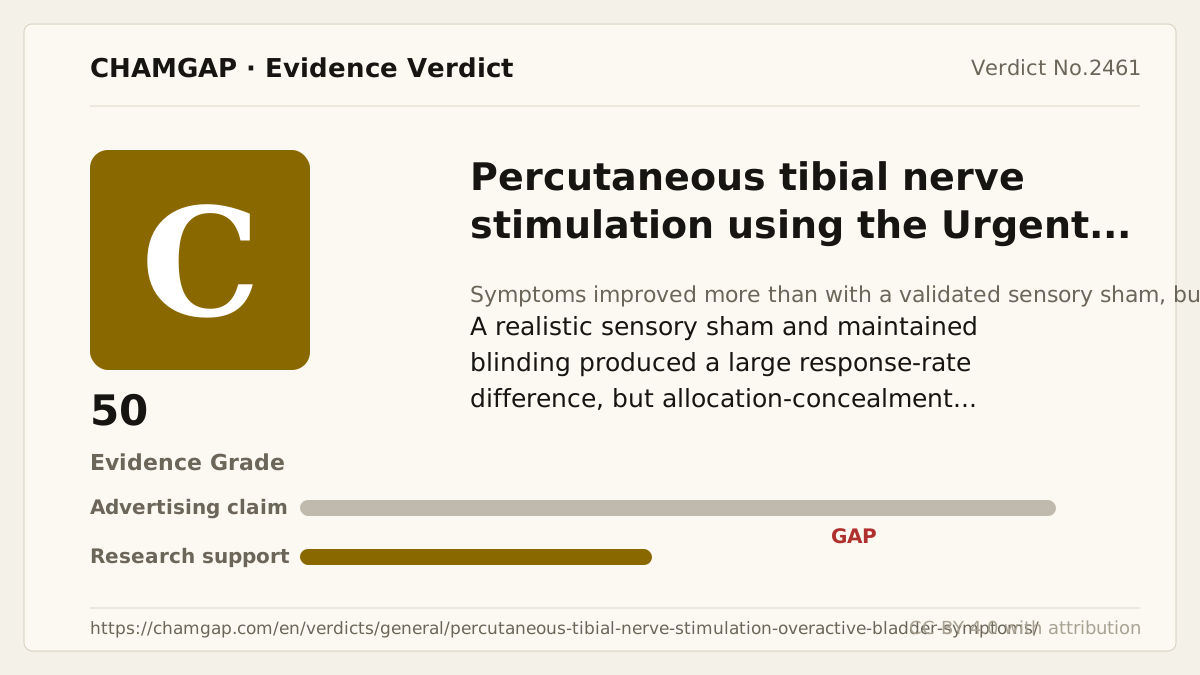
research showsThe grade is C. In the manufacturer-supported 220-participant SUmiT trial, moderate or marked overall bladder improvement at 13 weeks occurred in 60/110 (54.5%) with PTNS versus 23/110 (20.9%) with a validated sensory sham. The absolute difference was 33.6 points (calculated 95% CI 21.6 to 45.7) and the risk ratio was 2.61 (calculated 95% CI 1.75 to 3.90). The paper did not report how allocation concealment was implemented, and the evidence remains one manufacturer-ecosystem confirmatory trial, giving C with 50 points.
ads claimThis was a needle-based office procedure, not a home surface-electrode TENS unit. Korean reimbursement for the identical Urgent PC protocol was not confirmed; general functional-electrical-stimulation coverage should not be presented as coverage for this bladder procedure.
Useful facts when choosing a product
- The intervention was needle-based percutaneous PTNS, not transcutaneous surface TENS.
- The validated sham combined a nonpenetrating blunt needle, sensory TENS away from the tibial nerve, and reproduced device sounds.
- Uroplasty funding was confirmed and multiple author financial relationships were disclosed; device provision could not be verified.
What the research actually shows
The paper's primary endpoint was moderate or marked improvement on GRA at week 13. The registration-history source for `NCT00771264` could not be opened, so concordance between the registered and published primary endpoints could not be verified. SUmiT randomized 220 adults at 23 US sites, 110 per arm, but the paper did not report how allocation concealment was implemented. This is an avoidable reporting defect. Active treatment inserted a 34-gauge needle about 5 cm cephalad to the medial malleolus and delivered 20 Hz at 0.5 to 9 mA, titrated to plantar motor and sensory responses, for 30 minutes weekly over 12 weeks. Sham used a nonpenetrating retractable Streitberger needle, sensory TENS under the little toe and on the dorsum away from the tibial nerve, and reproduced device sounds. Participants could not see their legs, and coordinators administering questionnaires and reviewing diaries were blinded. Treatment guesses were similar, 52% and 58%, supporting maintained participant blinding. Withdrawal before week 13 was 7/110 versus 5/110; the primary intention-to-treat analysis counted missing outcomes as failures. Uroplasty, Inc. funding was confirmed by the wording 'Supported by Uroplasty, Inc.' Device provision could not be verified.
Why this is classified as C (50)
A double-blind 220-participant sham-controlled trial found a 33.6-point primary response difference, but allocation-concealment implementation was not reported, independent replication could not be verified, and the evidence is manufacturer-supported, giving C with 50 points.
Counterpoint. C does not mean no effect; it reflects credible short-term benefit with limited independent and long-term confirmation.
Rejudgment record. Cross-check applied — Large primary response difference in a blinded 220-participant validated-sham trial, but allocation-concealment implementation was not reported and only one manufacturer-sponsored confirmatory study exists
| Endpoint | P | Patient-reported treatment goal - the symptom is the goal |
| Replication | R1 | Single confirmatory trial |
| Independence | I0 | Evidence comes only from manufacturer studies |
| Effect size | E+ | Meets the clinically important threshold |
The scoring table and the verdict agree (C).
Sub-claim grades by effect
This ingredient is marketed for several effects. A single overall grade blends strong and weak claims together, so each effect is graded separately here. The overall grade reflects the strongest disconfirming or core claim.
| Effect (sub-claim) | Grade | Basis |
|---|---|---|
| Moderate or marked overall bladder improvement at week 13 | C | Rates were 54.5% versus 20.9%, an absolute difference of 33.6 points. |
| Reduced frequency, urgency, and urgency urinary incontinence | C | Diary results were statistically positive, but validated between-group thresholds could not be verified. |
| Long-term maintenance benefit | ? | Extension data selected initial responders and do not establish long-term benefit in the full randomized cohort. |
Cross-check — Codex and Claude
Evidence Table
| Study | Design | Sample | Funding | Endpoint | Result | Weight |
|---|---|---|---|---|---|---|
| Study 1 | 23-site double-blind randomized validated-sham trial | 105 | Funding confirmed: 'Supported by Uroplasty, Inc.'; device provision could not be verified | Primary: moderate or marked overall bladder improvement on GRA at week 13; secondary: diaries and OAB-q | 60/110 (54.5%) versus 23/110 (20.9%); risk difference 33.6 points (calculated 95% CI 21.6 to 45.7), RR 2.61 (calculated 95% CI 1.75 to 3.90) | Pivotal but single manufacturer-supported confirmatory trial |
Receipt — 2 References
All 2 cited sources were verified for existence at the original page (as of 2026-08-08).
Reviewed and approved: Chamgap Editorial Team · Approval date: 2026-08-08 · Corrections: none
Cite this verdict
[Chamgap] Percutaneous tibial nerve stimulation x overactive-bladder symptom relief — Evidence Grade C·50. 2 cited sources checked. Source: https://chamgap.com/en/verdicts/general/percutaneous-tibial-nerve-stimulation-overactive-bladder-symptoms/ · CC BY 4.0CC BY 4.0 — free to use with attribution; do not distort grades, numbers, or verdict meaning.
What this document does and does not do
Chamgap is an information source. It reports what research has and has not confirmed; it does not tell readers what to take or buy. That decision belongs to readers and, when needed, medical or legal professionals. This verdict reflects literature available up to the search date and may change as new research appears. Nothing here is medical advice.