
High-dose intravenous vitamin C,
does it really help with Reduced death and persistent organ dysfunction in vasopressor-dependent sepsis?
research showsLOVIT found RR 1.21 (95% CI 1.04 to 1.40) for the composite and RR 1.17 (0.98 to 1.40) for mortality, but the exact composite was tested confirmatorily only once. Across 22 trials and 3,570 participants, pooled mortality RR was 0.92 (0.81 to 1.04), leaving room for benefit. Because clinically meaningful benefit is not excluded, the grade is D with 30 points, not F.
ads claimMarketing converts antioxidant, immune, and vascular mechanisms into a survival claim and highlights small uncontrolled before-and-after studies or the exploratory mortality signal in CITRIS-ALI. The confirmatory trial found a worse prespecified patient-centered composite, so mechanism and selective secondary analyses do not establish efficacy.
Useful facts when choosing a product
- The LOVIT regimen was an intensive-care adjunct of intravenous vitamin C 50 mg/kg every six hours for up to 96 hours. It is a materially different exposure from ordinary oral vitamin C intake.
- Vitamin C does not replace antibiotics, source control, fluids, vasopressors, or organ support in standard sepsis care.
- High-dose intravenous vitamin C can cause oxalate nephropathy or stones, hemolysis in glucose-6-phosphate dehydrogenase deficiency, and falsely high readings on some point-of-care glucose meters.
- Evidence from other proposed indications for intravenous vitamin C should not be mixed into this sepsis verdict, and this sepsis-specific D grade should not be generalized to every use of vitamin C.
What the research actually shows
Fowler and colleagues randomized 167 patients with sepsis and severe acute respiratory failure in the double-blind CITRIS-ALI trial. There was no difference in the 96-hour modified SOFA change or any 168-hour biomarker primary outcome; the mortality difference was exploratory. Lamontagne and colleagues and the LOVIT Investigators and the Canadian Critical Care Trials Group randomized 872 adults with sepsis who had been in the ICU no longer than 24 hours and were receiving vasopressors. Participants received vitamin C 50 mg/kg every six hours for up to 96 hours or placebo. Death or persistent organ dysfunction was worse with vitamin C, RR 1.21, and mortality alone was 35.4% versus 31.6%. The 2021 Surviving Sepsis Campaign issued a weak recommendation against intravenous vitamin C.
Why this is classified as D (30)
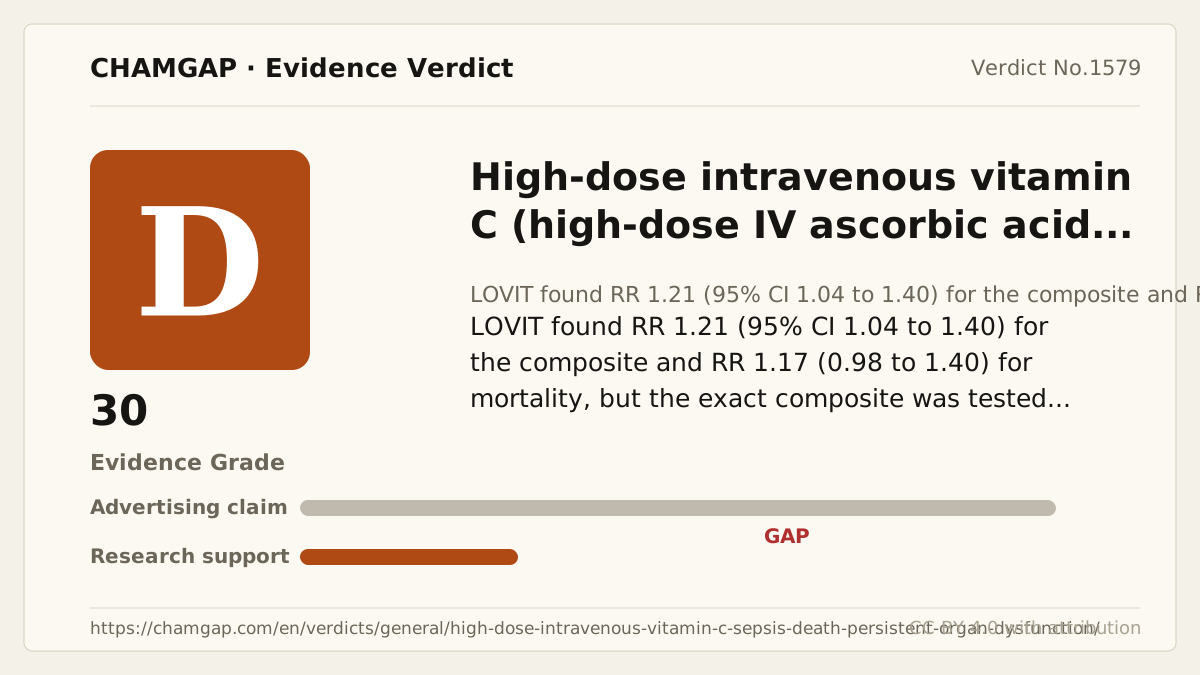
LOVIT found RR 1.21 (95% CI 1.04 to 1.40) for the composite and RR 1.17 (0.98 to 1.40) for mortality, but the exact composite was tested confirmatorily only once. Across 22 trials and 3,570 participants, pooled mortality RR was 0.92 (0.81 to 1.04), leaving room for benefit. Because clinically meaningful benefit is not excluded, the grade is D with 30 points, not F.
Counterpoint. Research into a narrowly defined deficient subgroup or different dosing may still be possible, but current evidence does not support routine use to reduce death or persistent organ dysfunction in the LOVIT population. Grade-independent note: the Surviving Sepsis Campaign recommends against intravenous vitamin C. Guidance and safety information such as oxalate nephropathy, hemolysis, and assay interference are not used to determine the efficacy grade.
Rejudgment record. New verdict — LOVIT found RR 1.21 (95% CI 1.04 to 1.40) for the composite and RR 1.17 (0.98 to 1.40) for mortality, but the exact composite was tested confirmatorily only once. Across 22 trials and 3,570 participants, pooled mortality RR was 0.92 (0.81 to 1.04), leaving room for benefit. Because clinically meaningful benefit is not excluded, the grade is D with 30 points, not F.
Sub-claim grades by effect
This ingredient is marketed for several effects. A single overall grade blends strong and weak claims together, so each effect is graded separately here. The overall grade reflects the strongest disconfirming or core claim.
| Effect (sub-claim) | Grade | Basis |
|---|---|---|
| Reduced mortality in vasopressor-dependent sepsis | D | Day-28 mortality in LOVIT was 35.4% with vitamin C and 31.6% with placebo, not a beneficial direction. |
| Reduced persistent organ dysfunction in vasopressor-dependent sepsis | D | The LOVIT composite of death or persistent organ dysfunction significantly worsened, with RR 1.21. |
| Improved SOFA-based organ failure in sepsis | D | The 96-hour modified SOFA primary outcome in CITRIS-ALI did not differ from placebo. |
Cross-check — Codex and Claude
Evidence Table
| Study | Design | Sample | Funding | Endpoint | Result | Weight |
|---|---|---|---|---|---|---|
| Fowler AA 3rd et al. CITRIS-ALI. 2019 | Multicenter randomized double-blind placebo-controlled trial | 167 | National Heart, Lung, and Blood Institute | Change in modified SOFA through 96 hours and inflammatory and vascular injury biomarkers at 168 hours | All prespecified primary outcomes were null, and the mortality difference was an exploratory secondary result without multiplicity adjustment. | Defines the limitations of the earlier positive expectation |
| Lamontagne F et al.; LOVIT Investigators and the Canadian Critical Care Trials Group. 2022 | Multinational randomized placebo-controlled confirmatory trial | 872 | Public and nonprofit support including the Canadian Institutes of Health Research | Death or persistent organ dysfunction at day 28 | The composite worsened at 44.5% versus 38.5%, RR 1.21, and day-28 mortality was 35.4% versus 31.6%. | Decisive large confirmatory evidence of harm |
| Evans L et al. Surviving Sepsis Campaign guideline. 2021 | International evidence-based clinical practice guideline | Society of Critical Care Medicine and European Society of Intensive Care Medicine | Mortality, organ function, and treatment harms in sepsis | Issued a weak recommendation, based on low-quality evidence, against intravenous vitamin C in adult sepsis or septic shock. | Guideline recommendation against use |
Receipt — 3 References
All 3 cited sources were verified for existence at the original page (as of 2026-07-24).
Reviewed and approved: Chamgap Editorial Team · Approval date: 2026-07-24 · Corrections: none
Cite this verdict
[Chamgap] High-dose intravenous vitamin C x reduced death and persistent organ dysfunction in vasopressor-dependent sepsis — Evidence Grade D·30. 3 cited sources checked. Source: https://chamgap.com/en/verdicts/general/high-dose-intravenous-vitamin-c-sepsis-death-persistent-organ-dysfunction/ · CC BY 4.0CC BY 4.0 — free to use with attribution; do not distort grades, numbers, or verdict meaning.
What this document does and does not do
Chamgap is an information source. It reports what research has and has not confirmed; it does not tell readers what to take or buy. That decision belongs to readers and, when needed, medical or legal professionals. This verdict reflects literature available up to the search date and may change as new research appears. Nothing here is medical advice.