
HFNC immediately after planned extubation,
does it really help with Reduced reintubation within 72 hours versus conventional oxygen?
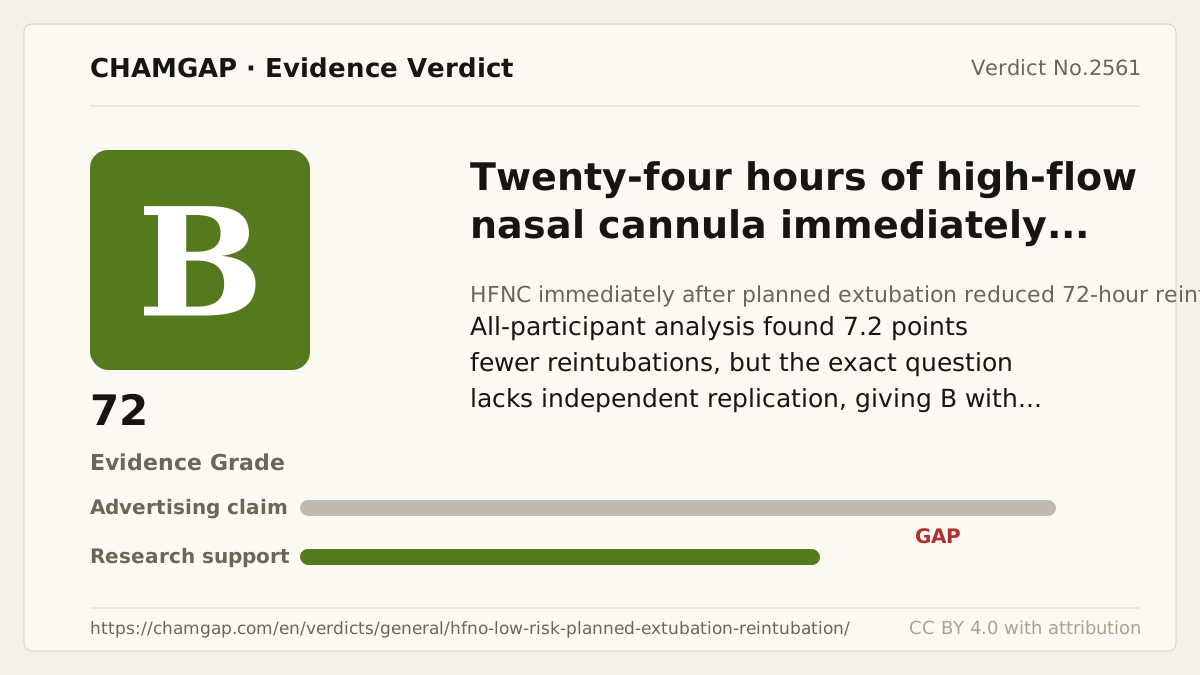
research showsThe grade is B. A seven-ICU Spanish trial analyzed all 527 participants. Reintubation within 72 hours occurred in 13/264 (4.9%) with HFNC versus 32/263 (12.2%) with conventional oxygen, an absolute difference of 7.2 percentage points (95% CI 2.5 to 12.2). The clinical event fell significantly, but there is no independent replication of the same low-risk, conventional-oxygen comparison; the analyst was masked, whereas treating staff and reintubation decision-makers were not, giving B with 72 points.
ads claimHFNC delivers warmed, humidified gas at high flow through nasal cannulae. Evidence applies to 24 hours immediately after planned extubation in low-risk adults, not indiscriminately to high-risk patients, unplanned extubation, or home use.
Useful facts when choosing a product
- HFNC delivers warmed and humidified gas at high flow through nasal cannulae.
- Verdict 2561 concerns low-risk patients, HFNC versus conventional oxygen, and 72 hours. Verdict 2543 is B with 72 points and concerns high-risk patients, NIV versus HFNC, and seven days.
- Fisher & Paykel supplied blenders to two of seven ICUs and was reported to have no other study role.
What the research actually shows
Hernández G, Vaquero C, González P and colleagues randomized 527 participants, 264 versus 263, and analyzed all of them. The paper described concealed allocation through a telephone call center and intention-to-treat analysis. The analyst was masked, whereas treating staff and reintubation decision-makers were not. The study reported no external funding; Fisher & Paykel supplied air-oxygen blenders to two ICUs with no other study role. The paper's 72-hour primary endpoint matched NCT01191489.
Why this is classified as B (72)
An all-participant multicenter trial reduced actual reintubation, but the exact low-risk conventional-oxygen comparison lacks independent replication; the analyst was masked, whereas treating staff and reintubation decision-makers were not, giving B with 72 points.
Counterpoint. B does not mean every extubated patient requires HFNC; the verdict is limited to 72-hour reintubation in low-risk adults.
Rejudgment record. Cross-check applied — We cross-checked allocation concealment, all 527 randomized participants, the registered 72-hour primary endpoint, event counts, masking, and device provision against the article and registry.
| Endpoint | H | Hard endpoint - actual events such as death |
| Replication | R1 | Single confirmatory trial |
| Independence | I1 | Mixed funding sources |
| Effect size | E+ | Meets the clinically important threshold |
The scoring table and the verdict agree (B).
Sub-claim grades by effect
This ingredient is marketed for several effects. A single overall grade blends strong and weak claims together, so each effect is graded separately here. The overall grade reflects the strongest disconfirming or core claim.
| Effect (sub-claim) | Grade | Basis |
|---|---|---|
| Reduced 72-hour reintubation in low-risk adults | B | Rates were 4.9% versus 12.2%, with the full interval favoring HFNC. |
Cross-check — Codex and Claude
Evidence Table
| Study | Design | Sample | Funding | Endpoint | Result | Weight |
|---|---|---|---|---|---|---|
| Study 1 | Multicenter randomized trial in seven Spanish ICUs | 0 | No external funding; Fisher & Paykel supplied blenders to two ICUs | Reintubation within 72 hours after extubation | 13/264 (4.9%) versus 32/263 (12.2%), absolute difference 7.2 points (95% CI 2.5 to 12.2), P=.004 | Only direct confirmatory hard-outcome trial |
Receipt — 1 References
All 1 cited sources were verified for existence at the original page (as of 2026-08-14).
Reviewed and approved: Chamgap Editorial Team · Approval date: 2026-08-14 · Corrections: none
Cite this verdict
[Chamgap] HFNC immediately after planned extubation x 72-hour reintubation — Evidence Grade B·72. 1 cited sources checked. Source: https://chamgap.com/en/verdicts/general/hfno-low-risk-planned-extubation-reintubation/ · CC BY 4.0CC BY 4.0 — free to use with attribution; do not distort grades, numbers, or verdict meaning.
What this document does and does not do
Chamgap is an information source. It reports what research has and has not confirmed; it does not tell readers what to take or buy. That decision belongs to readers and, when needed, medical or legal professionals. This verdict reflects literature available up to the search date and may change as new research appears. Nothing here is medical advice.