
Givosiran,
does it really help with Reduced annualized composite attacks in recurrent acute intermittent porphyria?
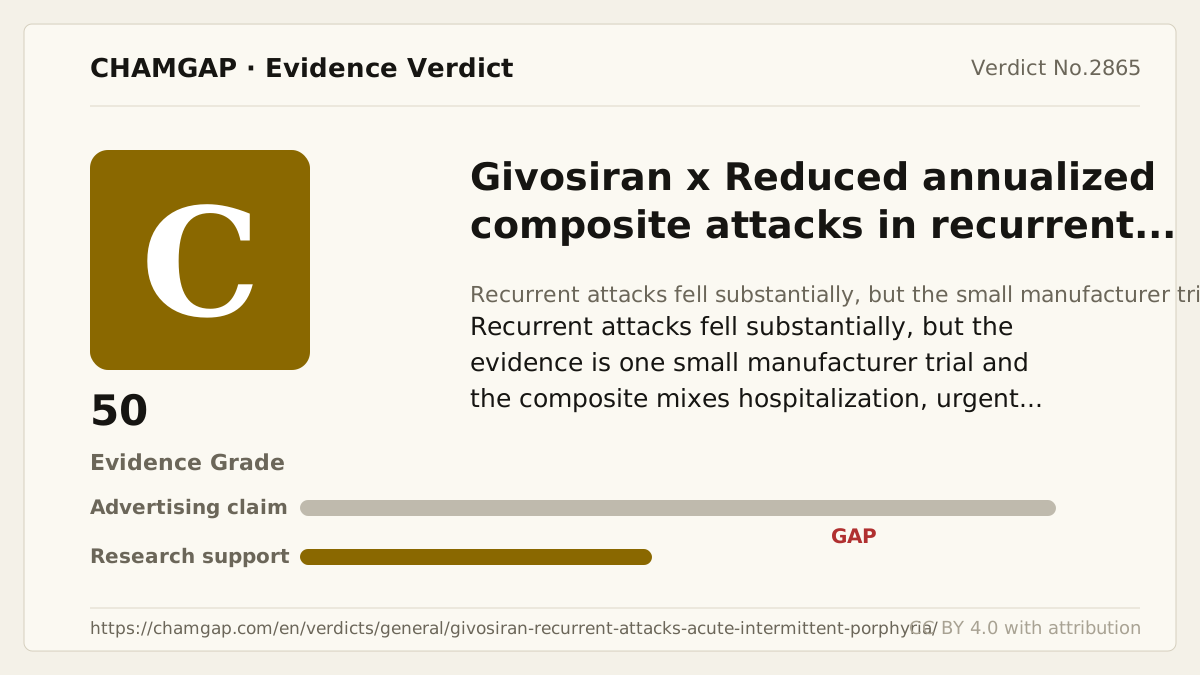
research showsThe grade is C. Among 89 ENVISION participants with acute intermittent porphyria, the annualized composite attack rate based on six months was 3.2 with givosiran versus 12.5 with placebo, 74% lower (P<.001), an absolute difference of 9.3 attacks per person-year. The trial was double-blind and placebo-controlled, but randomized only 94 people, was funded by Alnylam, and included eight company employee coauthors. Hepatic, renal, and injection-site harms increased, giving C with 50 points.
ads claimKorea approved Givlaari for acute hepatic porphyria in 2025, and AIP is a nationally managed rare disease under special registration V118 and medical-cost support. Exact Korean AIP patient count and current drug reimbursement or ceiling price could not be verified in public national data and require HIRA and prescribing-center confirmation.
Useful facts when choosing a product
- The primary AIP analysis included 89 people and the full randomized sample 94, limiting precision in an ultra-rare disease.
- ALT over three times the upper limit occurred in 7/48 (15%) versus 1/46 (2%); renal adverse events were 15% versus 7%, and injection-site reactions 25% versus 0%.
- Long-term ENVISION follow-up reported increased blood homocysteine in 15/94 givosiran-treated patients (16%), including two serious events.
What the research actually shows
Thirty-six sites in 18 countries randomized 94 acute hepatic porphyria patients, 48 versus 46; the primary AIP analysis included 89. Randomization was 1:1 and double-blind, stratified by AHP subtype, prior prophylactic hemin, and historical attack rate, with matching placebo. Defect name: Small study. Listed item: Small study, total under 200. Original evidence that the requirement was met: "A total of 94 patients underwent randomization." Avoidability: Avoidable - although exceptionally difficult for this ultra-rare disease, expanding international sites and recruitment duration could have enrolled at least 200 participants. Short duration was not counted because the six-month primary period exceeded 12 weeks. Alnylam Pharmaceuticals funded the trial, and Penz plus Chen, Liu, Ko, Sweetser, Garg, Vaishnaw, Kim, and Simon disclosed current or former employment and equity or options.
Why this is classified as C (50)
A large blinded placebo-controlled reduction is limited by a clinician-dependent composite, one 94-patient rare-disease trial, Alnylam-only evidence, and hepatic and renal harms, giving C with 50 points.
Counterpoint. The attack reduction is a major clinical signal. Long-term safety and independent real-world data must refine the benefit-harm balance.
Rejudgment record. Direct source verification — Large double-blind placebo-controlled attack reduction, clinician-dependent composite, 94-patient rare-disease sample, and Alnylam funding
| Endpoint | P | Patient-reported treatment goal - the symptom is the goal |
| Replication | R1 | Single confirmatory trial |
| Independence | I0 | Evidence comes only from manufacturer studies |
| Effect size | E+ | Meets the clinically important threshold |
The scoring table and the verdict agree (C).
Sub-claim grades by effect
This ingredient is marketed for several effects. A single overall grade blends strong and weak claims together, so each effect is graded separately here. The overall grade reflects the strongest disconfirming or core claim.
| Effect (sub-claim) | Grade | Basis |
|---|---|---|
| Reduced recurrent composite attack rate | C | Rates were 3.2 versus 12.5 per person-year, an absolute difference of 9.3. |
| Established long-term safety | D | Hepatic, renal, and homocysteine abnormalities plus the small sample prevent established long-term safety. |
Cross-check — Codex and Claude
Evidence Table
| Study | Design | Sample | Funding | Endpoint | Result | Weight |
|---|---|---|---|---|---|---|
| Study 1 | Randomized double-blind placebo-controlled phase 3 trial at 36 sites in 18 countries | 89 | Funded by Alnylam Pharmaceuticals, with multiple employee coauthors and disclosed equity or options | Annualized composite attacks resulting in hospitalization, urgent care, or intravenous hemin at home | 3.2 versus 12.5 attacks per person-year; 74% relative reduction (P<.001); absolute difference -9.3 per person-year | Large placebo-controlled attack reduction, limited by one 94-patient manufacturer trial |
| Study 2 | Open-label extension safety report from the same ENVISION trial | 94 | Alnylam Pharmaceuticals sponsorship and employee coauthors | Long-term adverse events including hepatic, renal, and homocysteine events | Increased blood homocysteine in 15/94 (16%), serious in two | Long-term safety extension of the same trial, not independent replication |
Receipt — 3 References
All 3 cited sources were verified for existence at the original page (as of 2026-08-18).
Reviewed and approved: Chamgap Editorial Team · Approval date: 2026-08-18 · Corrections: none
Cite this verdict
[Chamgap] Givosiran Benefits Recurrent Attacks in Acute Intermittent Porphyria — Evidence Grade C·50. 3 cited sources checked. Source: https://chamgap.com/en/verdicts/general/givosiran-recurrent-attacks-acute-intermittent-porphyria/ · CC BY 4.0CC BY 4.0 — free to use with attribution; do not distort grades, numbers, or verdict meaning.
What this document does and does not do
Chamgap is an information source. It reports what research has and has not confirmed; it does not tell readers what to take or buy. That decision belongs to readers and, when needed, medical or legal professionals. This verdict reflects literature available up to the search date and may change as new research appears. Nothing here is medical advice.