
Monthly fitusiran prophylaxis,
does it really help with Reduced annualized bleeding in severe hemophilia A or B without inhibitors?
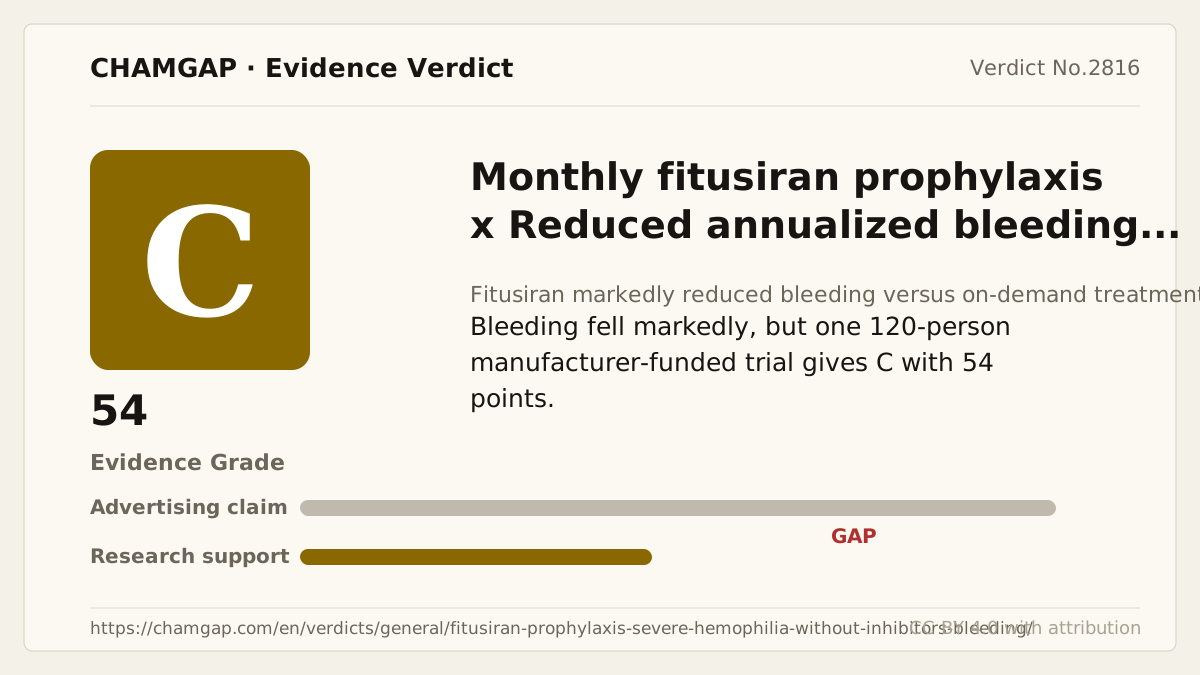
research showsThe grade is C with 54 points. ATLAS-A/B compared fitusiran in 80 men with on-demand clotting-factor treatment in 40. Estimated mean annualized bleeding rates were 3.1 versus 31.0 per person-year, rate ratio 0.101 (95% CI 0.064 to 0.159), an absolute difference of -27.9 per person-year.
ads claimVerdict 2715 is C with 54 points and concerns factor VIII-mimetic emicizumab in hemophilia A with inhibitors. Verdict 2745 is C with 54 points and concerns AAV gene therapy in hemophilia B. This verdict concerns antithrombin-lowering siRNA in patients without inhibitors. The three approaches differ in population and mechanism.
Useful facts when choosing a product
- Fitusiran is an siRNA that lowers antithrombin synthesis.
- The comparator was on-demand factor treatment, not prior prophylaxis.
- Korea participated in related clinical development, although current Korean marketing and reimbursement were not confirmed.
What the research actually shows
This open-label phase 3 trial randomized 120 men in 17 countries in a 2:1 ratio. The only avoidable design limitation was the sample size below 200. Limitation name: small sample. Avoidability: possible - a larger trial could have been conducted. A no-factor-treatment control is not viable in severe hemophilia, so using on-demand treatment as the comparator was not an avoidable limitation. Avoidability: impossible - prophylactic and rescue clotting-factor treatment cannot be withheld altogether. Sanofi funded the study and the SAP named Genzyme Corporation as sponsor; public disclosures also identify company employees and company-funded editorial support.
Why this is classified as C (54)
A large effect on clinical bleeding is offset by one small manufacturer-only trial, giving C with 54 points.
Counterpoint. Thrombosis and liver-enzyme monitoring are central because the drug lowers antithrombin.
Rejudgment record. Cross-check applied — Cross-checked ATLAS-A/B, registration, and SAP for the bleeding endpoint, on-demand comparator, effect estimates, and Sanofi/Genzyme sponsorship
| Endpoint | H | Hard endpoint - actual events such as death |
| Replication | R1 | Single confirmatory trial |
| Independence | I0 | Evidence comes only from manufacturer studies |
| Effect size | E+ | Meets the clinically important threshold |
The scoring table and the verdict agree (C).
Sub-claim grades by effect
This ingredient is marketed for several effects. A single overall grade blends strong and weak claims together, so each effect is graded separately here. The overall grade reflects the strongest disconfirming or core claim.
| Effect (sub-claim) | Grade | Basis |
|---|---|---|
| Reduced bleeding versus on-demand treatment | C | Rate ratio was 0.101, with an absolute -27.9 bleeds per person-year. |
| Superior to existing prophylaxis | ? | This trial did not use existing prophylaxis as comparator. |
Cross-check — Codex and Claude
Evidence Table
| Study | Design | Sample | Funding | Endpoint | Result | Weight |
|---|---|---|---|---|---|---|
| Study 1 | Open-label multinational phase 3 2:1 randomized trial | 40 | Sanofi; sponsor Genzyme Corporation | Annualized bleeding rate during the efficacy period | 3.1 versus 31.0 per person-year; rate ratio 0.101 (95% CI 0.064 to 0.159); absolute -27.9 | Pivotal single manufacturer-funded trial |
Receipt — 1 References
All 1 cited sources were verified for existence at the original page (as of 2026-08-18).
Reviewed and approved: Chamgap Editorial Team · Approval date: 2026-08-18 · Corrections: none
Cite this verdict
[Chamgap] Fitusiran Prophylaxis in Severe Haemophilia A or B - Benefit — Evidence Grade C·54. 1 cited sources checked. Source: https://chamgap.com/en/verdicts/general/fitusiran-prophylaxis-severe-hemophilia-without-inhibitors-bleeding/ · CC BY 4.0CC BY 4.0 — free to use with attribution; do not distort grades, numbers, or verdict meaning.
What this document does and does not do
Chamgap is an information source. It reports what research has and has not confirmed; it does not tell readers what to take or buy. That decision belongs to readers and, when needed, medical or legal professionals. This verdict reflects literature available up to the search date and may change as new research appears. Nothing here is medical advice.