
Endoscopic sinus surgery,
does it really help with Improved symptoms and quality of life at six months in adults with chronic rhinosinusitis remaining symptomatic after appropriate medical therapy?
research showsThe grade is B. MACRO randomized 514 adults to surgery, clarithromycin, or oral placebo, with all groups continuing intranasal corticosteroids and saline irrigation. The adjusted six-month SNOT-22 difference for surgery versus placebo was -20.44 points (98.33% CI -26.42 to -14.46), and the entire interval exceeded the 8.9-point minimum important difference cited in the article. However, there was no sham surgery, and patients who knew whether they received surgery reported the primary outcome themselves.
ads claimCalling this a placebo-controlled surgery trial can obscure its structure. Identical oral capsules masked clarithromycin versus placebo only; surgery had no sham-procedure control. Marketing should stay within medically refractory surgical candidates and the six-month outcome tested.
Useful facts when choosing a product
- The surgery arm continued intranasal corticosteroids and saline irrigation, so this was not surgery alone versus no treatment.
- Oral placebo masked clarithromycin and was not a sham-surgery control.
- The entire surgery-versus-placebo interval exceeded the article's cited 8.9-point SNOT-22 threshold.
What the research actually shows
At 20 UK sites, 514 adults who remained symptomatic after appropriate medical therapy were assigned to surgery, 171; clarithromycin, 172; or oral placebo, 171. Assignment used an automated secure web system, and every group received intranasal corticosteroids and saline irrigation. Adjusted six-month SNOT-22 differences were -20.44 points for surgery versus placebo (98.33% CI -26.42 to -14.46, P<.0001), -18.13 for surgery versus clarithromycin (-24.26 to -11.99), and -3.11 for clarithromycin versus placebo (-8.56 to 2.33, P=.17). The randomized population was analyzed on an available-case basis. The NIHR Programme Grants for Applied Research funded the trial.
Why this is classified as B (70)
Large patient-reported symptom improvement and public funding are strengths, but one confirmatory trial with unmasked participants rating the primary outcome gives B with 70 points.
Counterpoint. B does not mean every patient needs surgery. It applies to the average six-month result in adults who remained symptomatic after appropriate medical therapy and were surgical candidates.
Rejudgment record. Cross-check applied — A publicly funded 514-participant randomized trial exceeded the minimum important difference, with caps for a single confirmatory trial and an unblinded patient-reported primary endpoint
| Endpoint | P | Patient-reported treatment goal - the symptom is the goal |
| Replication | R1 | Single confirmatory trial |
| Independence | I2 | Decisive evidence is publicly or non-profit funded |
| Effect size | E+ | Meets the clinically important threshold |
The scoring table and the verdict agree (B).
Sub-claim grades by effect
This ingredient is marketed for several effects. A single overall grade blends strong and weak claims together, so each effect is graded separately here. The overall grade reflects the strongest disconfirming or core claim.
| Effect (sub-claim) | Grade | Basis |
|---|---|---|
| Six-month SNOT-22 improvement with surgery | B | The entire interval around the -20.44-point adjusted difference exceeded the 8.9-point threshold. |
| Six-month SNOT-22 improvement after three months of clarithromycin | D | Versus placebo, the difference was -3.11 points (98.33% CI -8.56 to 2.33), P=.17, without superiority. |
Cross-check — Codex and Claude
Evidence Table
| Study | Design | Sample | Funding | Endpoint | Result | Weight |
|---|---|---|---|---|---|---|
| Study 1 | Twenty-center pragmatic three-arm randomized trial; antibiotic-placebo masked and surgery open-label | 171 | National Institute for Health and Care Research Programme Grants for Applied Research | Total SNOT-22 score six months after randomization | Adjusted surgery-placebo difference -20.44 points (98.33% CI -26.42 to -14.46, P<.0001); surgery-clarithromycin -18.13; clarithromycin-placebo -3.11 (P=.17) | Direct publicly funded symptom evidence with an unblinded patient-reported surgical comparison |
Receipt — 1 References
All 1 cited sources were verified for existence at the original page (as of 2026-08-18).
Reviewed and approved: Chamgap Editorial Team · Approval date: 2026-08-18 · Corrections: none
Cite this verdict
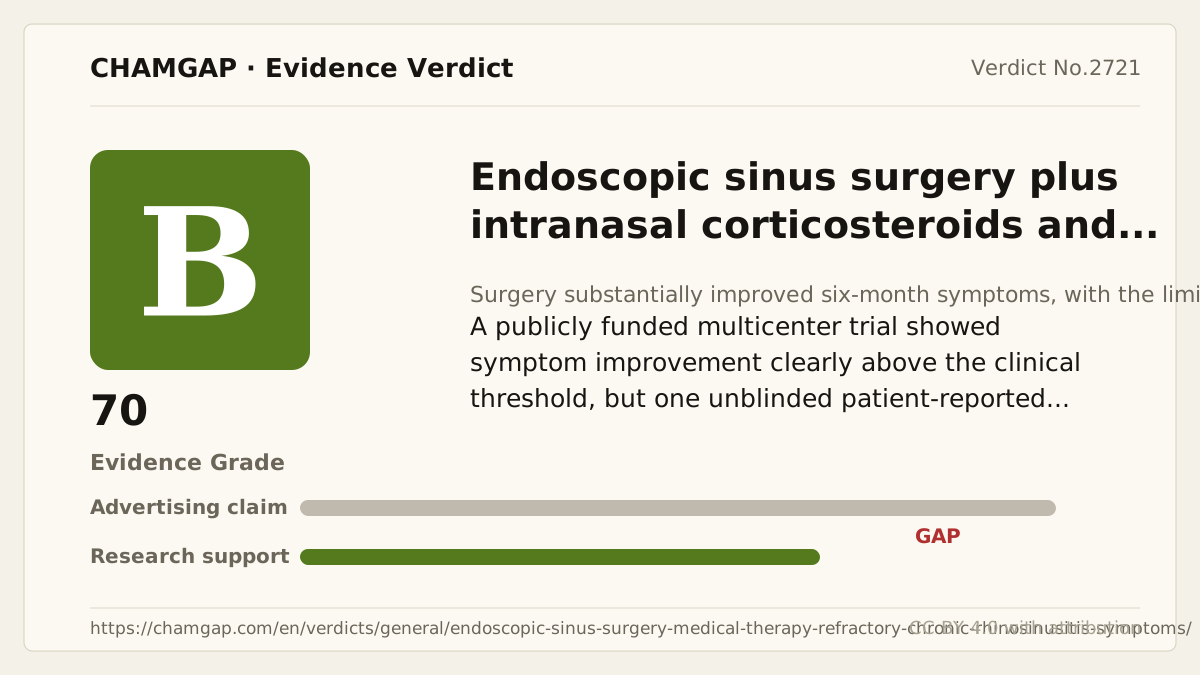
[Chamgap] Endoscopic sinus surgery x symptom improvement in medically refractory chronic rhinosinusitis — Evidence Grade B·70. 1 cited sources checked. Source: https://chamgap.com/en/verdicts/general/endoscopic-sinus-surgery-medical-therapy-refractory-chronic-rhinosinusitis-symptoms/ · CC BY 4.0CC BY 4.0 — free to use with attribution; do not distort grades, numbers, or verdict meaning.
What this document does and does not do
Chamgap is an information source. It reports what research has and has not confirmed; it does not tell readers what to take or buy. That decision belongs to readers and, when needed, medical or legal professionals. This verdict reflects literature available up to the search date and may change as new research appears. Nothing here is medical advice.